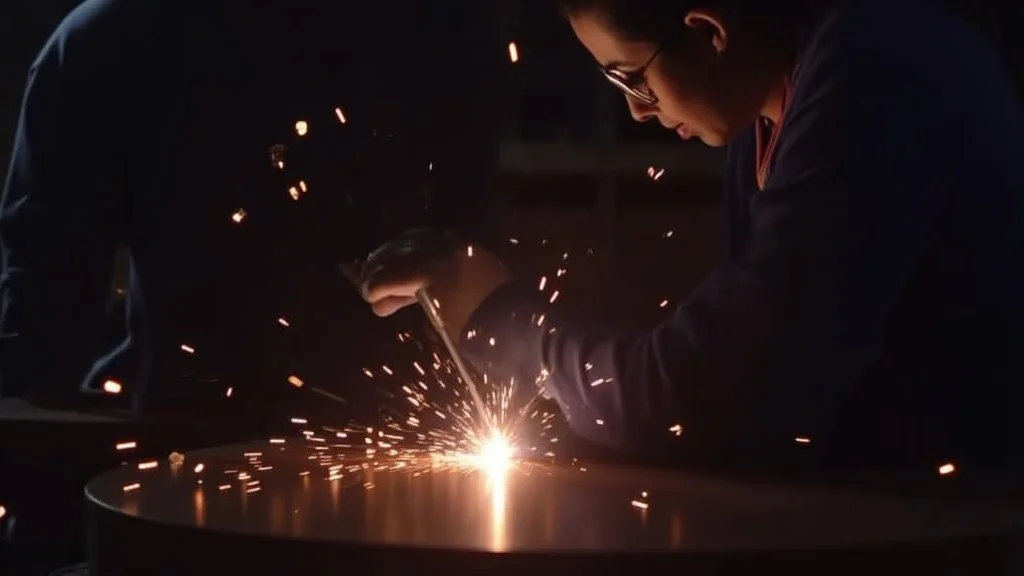
When you’re just starting out with a MIG welder, you might run into a problem where the wire melts right back into the welding tip. It’s called burnback, and it can be super frustrating! Don’t worry, though.
This is really common for new welders, and we’ll walk you through exactly why it happens and how to fix it, step by step. We’ll also look at how to stop it from happening again so you can get back to making great welds.
Key Takeaways
- Burnback happens when the welding wire melts too far back, sticking to the tip.
- Understanding wire speed and voltage is key to preventing burnback.
- Using the wrong wire or gas can also cause this problem.
- Checking your equipment regularly helps avoid burnback issues.
- Simple adjustments can quickly fix most burnback problems.
What is MIG Welder Burnback?
Understanding the Problem
MIG welder burnback is a common issue, especially for those new to welding. It’s that annoying moment when your welding wire melts back too far and sticks to the metal tip of your MIG gun. This stops your weld from happening and can even damage your equipment if it keeps happening.
It’s a sign that something isn’t quite right with your welding setup or technique. But don’t get discouraged; it’s a learning curve that most welders go through.
Why Does It Happen?
At its heart, burnback is about heat. Too much heat causes the wire to melt too fast, before it can be properly fed through the gun and into the weld puddle. This can be due to a few things.
The welding machine’s settings might be off, the wire itself could be causing trouble, or there might be something wrong with your welding gun or its consumables.
Common Causes of Burnback
Incorrect Machine Settings
The most frequent reason for burnback is how you set up your MIG welder. Think of wire speed and voltage like the gas pedal and the engine power of a car. They need to be balanced perfectly for smooth operation.
Wire Speed Too High
If you have your wire speed turned up too high, the machine feeds the wire out very quickly. If the heat from the arc isn’t enough to melt this fast-moving wire at the right spot, it will start to melt back up towards the tip. It’s like trying to fill a bucket with a fire hose – too much flow!
Voltage Too High
Voltage controls the arc length and the heat of the weld. If your voltage is set too high, you’re putting excessive heat into the weld. This extra heat can cause the wire to melt too early, even before it leaves the welding tip, leading to burnback.
Voltage Too Low (Less Common for Burnback)
While less common for causing burnback, voltage that is too low can sometimes contribute if other factors are also off. A low voltage might not generate enough heat to keep up with a fast wire speed, indirectly leading to issues. The key is finding that sweet spot where wire speed and voltage work together.
Wire Issues
Sometimes, the problem isn’t with your settings but with the welding wire itself.
Incorrect Wire Diameter
Your MIG welder is set up to work with a specific size of welding wire. If you’re using a wire that’s too thick or too thin for the machine’s settings, it can cause feeding problems and affect how it melts. Always use the wire diameter recommended for your machine and welder settings.
Poor Quality Wire
Not all welding wire is created equal. Cheap or low-quality wire can have inconsistencies in its diameter or surface. This can lead to erratic feeding, which in turn can cause burnback.
The wire might get stuck, then surge forward, leading to melting issues at the tip.
Wrong Type of Wire for Gas
MIG welding uses shielding gas to protect the weld from air. Different types of wire are designed to work with specific gases. For example, solid steel wire usually needs a mix of argon and CO2.
If you use the wrong gas, or no gas at all, the weld can be weak, and it can also affect how the wire melts, potentially causing burnback.
Problems with Welding Gun and Consumables
The parts of your MIG gun that actually touch the wire and the metal are called consumables. If these are worn out or damaged, they can cause burnback.
Worn-Out Contact Tip
The contact tip is a small piece of brass or copper that the welding wire passes through. Its job is to transfer electricity to the wire and guide it. When this tip wears out, the hole gets larger and can become irregular.
This allows the wire to move around too much, and it can also overheat, leading to burnback.
Dirty or Damaged Liner
The liner is a flexible tube inside the MIG gun that the wire travels through. If it gets kinked, dirty, or damaged, the wire won’t feed smoothly. This can cause jams and surges, which can result in burnback.
Nozzle Issues
The nozzle is the outer shield on the MIG gun that helps direct the shielding gas. If it’s clogged with spatter (weld material that splatters), it can disrupt the gas flow. This can lead to poor shielding and affect the arc, potentially causing burnback.
Ground Clamp Problems
A good electrical connection is vital for welding. If your ground clamp isn’t making solid contact with the metal you’re welding, the electrical current can’t flow properly.
Poor Ground Connection
A loose or dirty ground clamp means the circuit is not complete. This can cause the arc to be unstable and the heat distribution to be off, which can lead to burnback. Always ensure your ground clamp is firmly attached to clean metal.
How to Troubleshoot MIG Welder Burnback
Dealing with burnback is all about making small adjustments and checking your gear. Let’s go through a simple process to get your welding back on track.
Step 1: Check Your Machine Settings
This is the first place to look. Your welder’s manual will have recommended settings for different types of metal and wire sizes. Start there.
Adjust Wire Speed
If you suspect the wire speed is too high, try turning it down a bit. Make a small adjustment, try welding, and see if the burnback stops. You want the wire to feed smoothly and melt at the tip, not backtrack.
Adjust Voltage
If you think the voltage is too high, lower it slightly. Again, make a small change and test. The goal is a nice, stable arc that melts the wire just right.
You’re looking for a “frying bacon” sound – a smooth sizzle.
Step 2: Inspect Your Consumables
Your welding gun has parts that wear out. Burnback is a common sign that it’s time for a change.
Examine the Contact Tip
Take out the contact tip and look at the hole. If it looks enlarged, off-center, or burnt, it’s time for a new one. Replacing the contact tip is a cheap and easy fix that solves a lot of problems.
Check the Liner
You might need to remove the contact tip and nozzle to see the liner. If it looks dirty or you feel resistance when pushing wire through it, it might need cleaning or replacement. Sometimes, just blowing compressed air through it can help.
Clean the Nozzle
Use a wire brush or a chipping hammer to clean out any spatter that’s built up inside or outside the nozzle. Make sure the shielding gas can flow freely.
Step 3: Verify Your Wire and Gas
Make sure you’re using the right materials for the job.
Confirm Wire Type and Diameter
Double-check that the wire you’re using is the correct size for your machine and your contact tip. If you’re unsure, consult your welder’s manual.
Check Shielding Gas
Ensure your gas cylinder is open and the regulator is set correctly. If you’re using flux-cored wire, you might not need gas, but if you’re using solid wire, the gas is essential.
Step 4: Secure Your Ground Connection
A solid connection is non-negotiable.
Clean and Tighten
Make sure your ground clamp is attached to a clean, bare metal surface. Remove any paint, rust, or dirt. Ensure the clamp is tight and making good contact.
Step 5: Test and Fine-Tune
After making any adjustments, always test your welder on a scrap piece of metal. Listen to the sound of the arc and look at the weld. You’re aiming for a smooth, consistent weld with no burnback.
It often takes a few small tweaks to get it just right.
Preventing Burnback in the Future
Once you’ve fixed the burnback, you’ll want to keep it from coming back. A little bit of regular maintenance goes a long way.
Consistent Equipment Checks
Make it a habit to check your welding gun’s consumables before each welding session. A quick look at the contact tip and nozzle can catch issues early.
Proper Machine Setting Habits
Pay attention to the settings you use for different jobs. Keeping notes can help you remember what works best. Don’t be afraid to test settings on scrap metal before starting your main project.
Cleanliness is Key
Keep your welding area clean, and that includes your equipment. Spatter can build up quickly, and a clean gun works better. Regularly cleaning your wire feed system, liner, and gun can prevent many feeding problems.
Using the Right Consumables
Always use parts that are designed for your specific welder and wire. Using generic or incorrect parts can lead to performance issues and problems like burnback.
Troubleshooting Table: MIG Burnback Issues
| Problem | Likely Cause | Solution |
|---|---|---|
| Wire melts back into tip | Wire speed too high | Reduce wire speed |
| Wire melts back into tip | Voltage too high | Reduce voltage |
| Wire melts back into tip | Worn contact tip | Replace contact tip |
| Wire melts back into tip | Dirty or damaged liner | Clean or replace liner |
| Wire melts back into tip | Poor ground connection | Clean and tighten ground clamp |
| Wire melts back into tip | Incorrect wire diameter for settings | Adjust settings or use correct wire |
| Wire melts back into tip | Nozzle clogged with spatter | Clean nozzle |
Frequently Asked Questions
Question: What does burnback look like on a MIG welder?
Answer: Burnback is when the welding wire melts too far back and sticks to the tip of your MIG gun, often preventing you from welding. You might see the wire glowing red inside the gun or stuck to the metal tip.
Question: Can I fix burnback while welding?
Answer: Usually, you need to stop welding, release the trigger, and pull the wire back slightly. Then, you might need to trim the wire, clear the tip, and adjust your machine settings before starting again.
Question: How often should I change my contact tip?
Answer: The life of a contact tip depends on how much you weld and the type of work you do. However, it’s a good idea to inspect it regularly, and replace it when the hole looks worn or distorted, which is often after just a few hours of heavy use.
Question: Does the type of metal affect burnback?
Answer: Yes, different metals can require different settings. Thicker metals generally need more heat (higher voltage and wire speed), while thinner metals need less. Incorrect settings for the metal thickness can contribute to burnback.
Question: Is burnback bad for my welder?
Answer: While a little burnback is usually just an annoyance, frequent or severe burnback can potentially damage the contact tip, liner, and even the nozzle of your MIG gun over time, leading to more costly repairs.
Final Thoughts
Dealing with MIG Welder Burnback Damage? Troubleshoot is a common learning step. You’ve learned that burnback happens because of heat issues, often linked to machine settings like wire speed and voltage being out of balance.
We also covered how worn-out parts, wrong wire, or bad gas can cause it. By checking your equipment, making small adjustments to your settings, and keeping things clean, you can easily fix and prevent burnback. Keep practicing, and you’ll be welding smoothly in no time!