Is your MIG welder’s arc acting up, making a mess and hard to control? You’re not alone! Many beginners struggle with this problem, often called arc blow.
It can be frustrating when your weld seems to have a mind of its own. But don’t worry, fixing it is usually quite simple. We’ll walk through easy steps to get your arc behaving perfectly again.
Let’s fix that MIG welder arc blowing out!
Key Takeaways
- You will learn what causes MIG welder arc blow.
- We will cover simple, practical ways to stop arc blow.
- Understanding magnetic forces helps solve this problem.
- You will find out how to adjust your welding setup.
- This guide offers clear steps for beginners to follow.
Understanding MIG Welder Arc Blowing Out? Step Fix
What is Arc Blow?
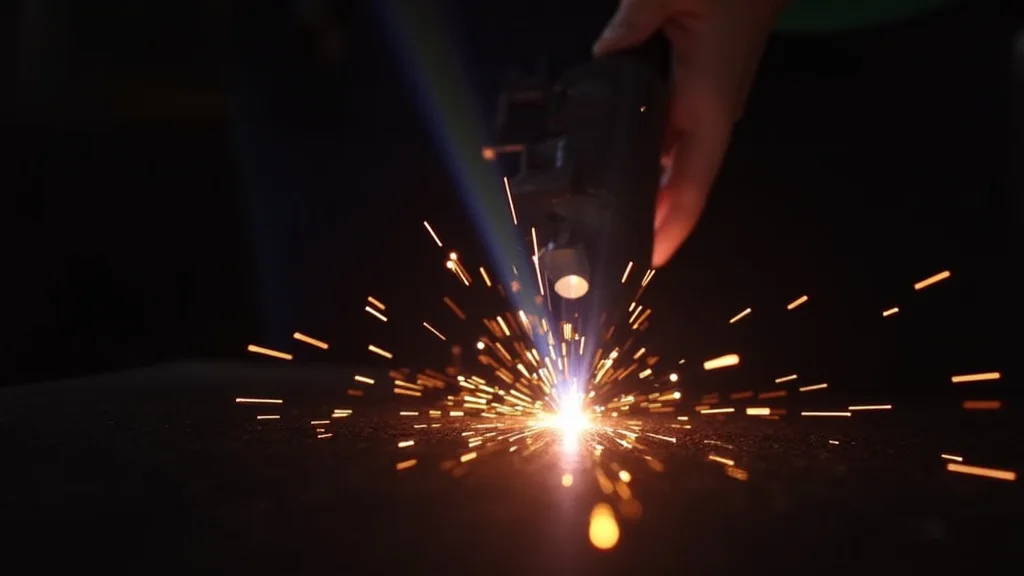
Arc blow happens when the welding arc seems to pull or push away from where you want it. It can make your weld look messy, with spatter everywhere. The arc might jump around unpredictably.
For someone new to MIG welding, this can be confusing and make it hard to get a good weld. It feels like the arc is fighting you.
Why Does Arc Blow Happen?
The main reason for arc blow is magnetism. When electricity flows through the welding cable and the metal you’re welding, it creates a magnetic field. This magnetic field can interact with other magnetic fields, like the ones created by the metal itself or by stray currents.
These interactions push or pull the arc in a certain direction. It’s like a tiny invisible force messing with your weld.
Magnetic Fields in Welding
Think about how magnets work. If you bring two north poles together, they push apart. If you bring a north and a south pole together, they pull.
In welding, the electricity creates these magnetic fields. When you’re welding on a piece of metal, especially thicker steel, the metal can become temporarily magnetized. This, along with the magnetic field from your welding current, can cause the arc to move unexpectedly.
Common Causes of Arc Blow
Several things can make arc blow worse:
- Work Clamp Placement: Where you attach the clamp that connects your welder to the metal is super important. If it’s too close to where you’re welding, it can create a strong magnetic field that pulls the arc.
- Welding Current Too High: If you use more amps than you need, you create a stronger magnetic field, which can lead to more arc blow.
- Material Thickness: Thicker pieces of metal can hold a magnetic charge better, making arc blow more likely.
- Type of Metal: Some metals, like steel, are more prone to becoming magnetic than others.
- Joint Design: Welding around corners or in tight spots can sometimes encourage arc blow.
The MIG Welder Arc Blowing Out? Step Fix: Simple Solutions
1. Adjust Your Work Clamp Position
This is often the easiest fix. Try moving your work clamp. The best spot is usually on the opposite side of the metal from where you are welding, and as far away as possible.
This helps to spread out the magnetic field and reduce its effect on the arc. Imagine creating a longer path for the magnetic force to travel, so it’s less concentrated where you’re welding.
If you’re welding a long seam, you might even need to move the clamp as you go. For small parts, try clamping to a separate piece of steel that’s touching your workpiece, rather than directly to the part itself.
2. Reduce Welding Current (Amperage)
A lower amperage means a weaker magnetic field. While you need enough heat to melt the metal, sometimes beginners use too much power. Try turning down your amps slightly.
You want the arc to be stable and have a nice, cone-like shape, not a wide, bushy flame. If you have to crank up the amps, you might be moving too fast or have too much stick-out.
Experiment with slightly lower settings. You should still get good penetration, but the arc should be much more controllable.
3. Change Your Travel Speed
How fast you move your welding gun also plays a role. If you move too slowly, the heat builds up, and the magnetic forces have more time to affect the arc. If you move too fast, you won’t get enough penetration.
Find that sweet spot where the weld pool is molten and you’re getting good fusion without burning through.
A consistent travel speed is key. Try to keep your gun moving at a steady pace. Many welders find that a moderate speed works best to counteract arc blow.
4. Angle Your Welding Gun
The angle of your MIG gun can influence the arc. For most MIG welding, you’ll want to use a slight push angle, meaning you push the gun forward slightly. This can help to direct the molten metal and control the arc.
Sometimes, a slight change in angle can help stabilize the arc.
Experiment with pushing versus pulling. Pushing is generally preferred for MIG because it can lead to better gas coverage and less spatter. However, in some cases of arc blow, a slight adjustment might be necessary.
5. Use a Longer Wire Stick-out
The “stick-out” is the length of welding wire that extends from the contact tip of your gun. A longer stick-out can sometimes help reduce arc blow. This is because the wire heats up more before it reaches the arc, which can alter the magnetic forces.
Aim for about 1/2 inch to 3/4 inch of stick-out for most MIG welding.
However, be careful not to have too much stick-out, as this can lead to poor gas coverage and a weaker weld. It’s a balance.
6. Consider Your Ground Clamp Wire Size
Make sure your ground clamp wire is thick enough for the amperage you’re using. A wire that’s too small can overheat and create its own magnetic field, contributing to arc blow. Use the recommended wire size for your welder’s amperage rating.
7. Clamp to a Separate Grounding Tab
For critical welds or when dealing with persistent arc blow, you can use a grounding tab. This is a scrap piece of metal clamped to your workpiece. You then attach your ground clamp to this tab, rather than directly to the main piece you’re welding.
This helps to isolate the magnetic fields.
8. Switch Polarity (for some welders)
Most MIG welding uses Direct Current Electrode Positive (DCEP). However, some welding machines allow you to switch polarity. While less common for basic MIG, understanding polarity is key.
In some specific situations, changing to Direct Current Electrode Negative (DCEN) might help, but this is usually for specific wire types and applications. Always check your welder and wire manufacturer’s recommendations before changing polarity.
9. Avoid Welding Near Sharp Corners
Sharp corners on metal can create concentrated magnetic fields. If possible, try to avoid starting or ending your weld directly on a sharp edge. If you must, be extra mindful of your work clamp placement and welding parameters.
10. Use a Demagnetizer (Advanced)
For serious, ongoing issues, especially in production environments, a demagnetizer can be used on the workpiece. This tool removes residual magnetism from the metal. This is usually not necessary for home or hobbyist welders but is a professional solution.
When Arc Blow is Stronger
Arc blow can be more noticeable when welding thick materials or long seams. The accumulated magnetic forces can be stronger. In these cases, a combination of the above steps is often needed.
For instance, you might need to adjust your clamp, lower your amps, and maintain a steady travel speed.
Testing Your Fixes
The best way to know if your changes are working is to make a test weld on some scrap metal. Observe the arc. Does it seem more stable?
Is there less spatter? Make small adjustments one at a time and see how it affects the weld. This trial and error is a normal part of learning to weld.
Frequently Asked Questions
Question: What is the most common cause of arc blow in MIG welding?
Answer: The most common cause is improper placement of the work clamp, which creates a concentrated magnetic field near the welding area.
Question: Can I fix arc blow by just changing one setting?
Answer: Often, yes. Adjusting the work clamp position or reducing the amperage can solve the problem. Sometimes, a combination of small adjustments works best.
Question: Does the type of metal affect arc blow?
Answer: Yes. Steel, especially thicker steel, is more prone to becoming magnetized and causing arc blow compared to some other metals.
Question: Is arc blow dangerous?
Answer: Arc blow itself isn’t directly dangerous, but it can lead to poor quality welds, excessive spatter, and make welding difficult and frustrating. Poor welds can fail under stress.
Question: How do I know if I have arc blow?
Answer: You’ll see the welding arc jump or pull away from where you intend to weld. You’ll also likely experience excessive spatter and a less controlled weld bead.
Final Thoughts
When your MIG welder’s arc blows out, it’s usually due to magnetic forces. The good news is, you have simple ways to fix it. Try moving your work clamp farther away and on the opposite side of your weld.
Lowering your welding current can also help a lot. Keep your travel speed steady, and you’ll notice a big difference. These steps will help you get a clean, strong weld every time.
You can master your MIG welder!