Are you new to welding and finding that your MIG welder’s arc keeps blowing out? It can be frustrating when the spark jumps around or just won’t stay steady, especially when you’re trying to learn. Don’t worry, this is a super common problem for beginners, and it doesn’t have to be difficult.
We’ve got simple fixes that will get you welding smoothly in no time. Let’s look at the MIG Welder Arc Blowing Out Issue? Solutions and make things easier for you.
Key Takeaways
- Arc blow happens when the welding arc is pulled or pushed away from its intended path.
- Several factors, including magnetism, welding position, and gas flow, can cause arc blow.
- Simple adjustments to your welding technique and equipment can often resolve arc blow.
- Understanding how magnetic fields affect the arc is key to solving this problem.
- Proper gas flow is essential for a stable arc and good weld quality.
- Correct grounding and wire speed play a significant role in preventing arc blow.
What is MIG Welder Arc Blowing Out?
Understanding the Basics
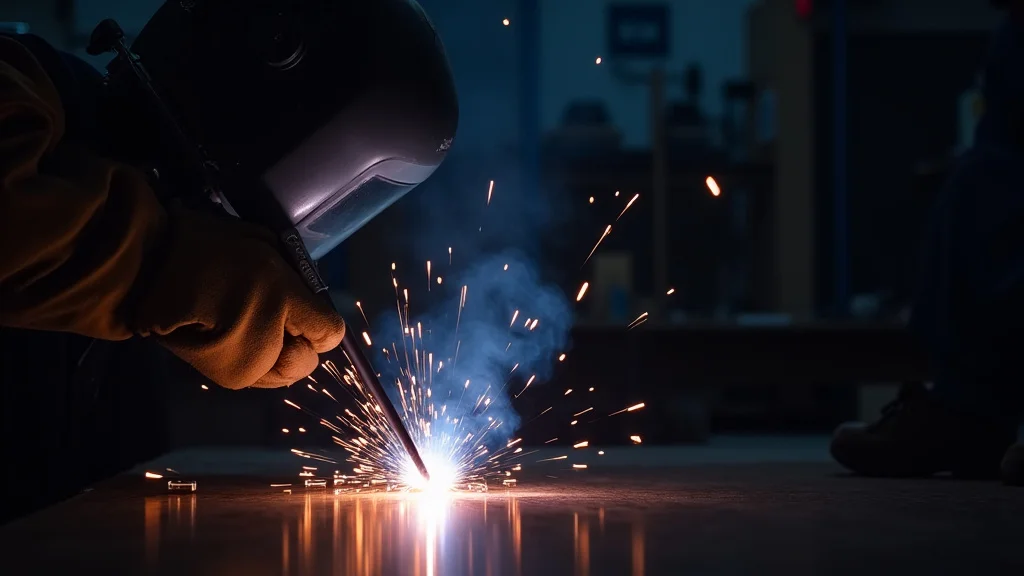
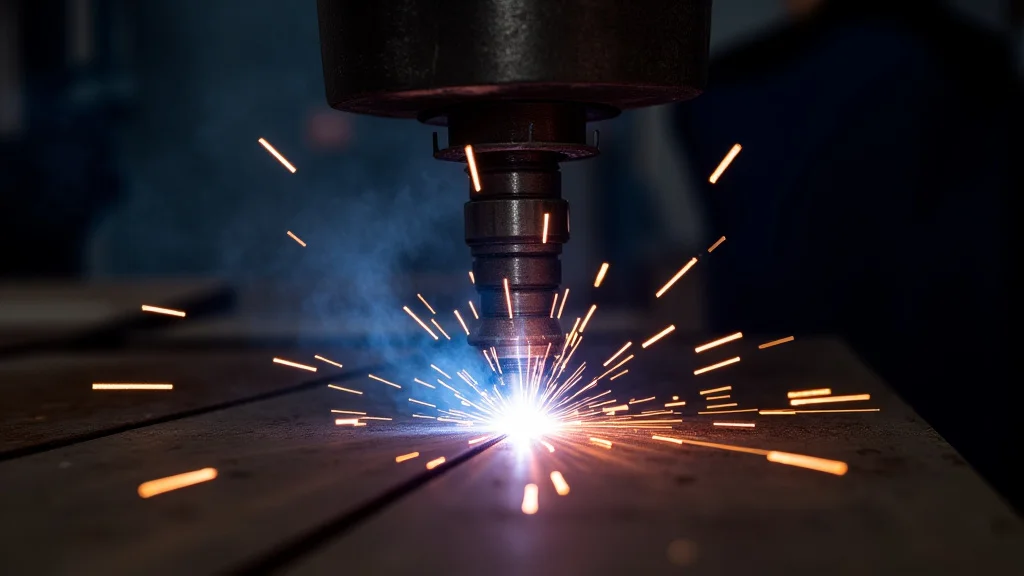
When you’re MIG welding, you create an arc between a wire electrode and the metal you’re joining. This arc is a super hot stream of electricity. Normally, this arc stays right where you want it, creating a nice, stable weld.
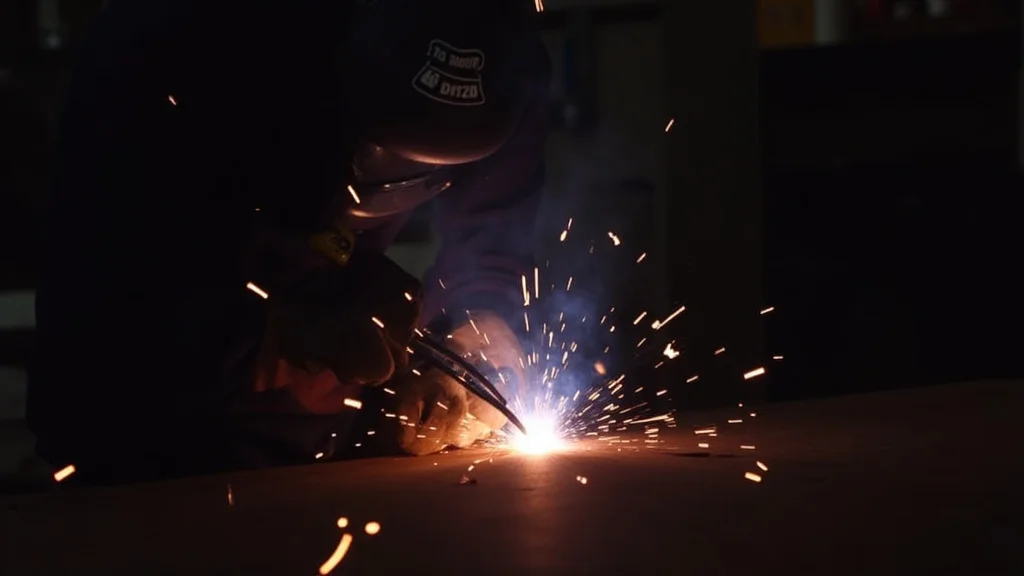
But sometimes, for reasons we’ll get into, this arc seems to have a mind of its own. It can jump around, get pushed away from your workpiece, or even seem to “blow out” like a candle in the wind. This is what we call arc blow.
Why Does it Happen?
Arc blow is mostly caused by magnetic forces. Think of your MIG welder like a little electromagnet when it’s running. The electricity flowing through the welding gun and the metal creates magnetic fields.
These magnetic fields can interact with each other and with any existing magnetic fields in the metal you’re welding. This interaction can push or pull the arc away from the joint.
It’s kind of like trying to push two magnets together that are trying to repel each other. The arc is trying to stay in one spot, but these invisible forces are fighting against it. This can make your weld look messy, cause spatter, and make it really hard to get a good, strong bond.
Common Causes of Arc Blow
Magnetic Fields: The Big Culprit
The most frequent reason for arc blow is magnetic fields. These can come from a few places. If you’re welding on thick steel, especially if it’s been used before or is made of certain alloys, it might have its own magnetic properties.
When you introduce the magnetic field from your welding current, it can get strong enough to push the arc.
Another source of magnetic fields is the current flowing through your welding leads. If your ground clamp is too far away from your weld, the current has to travel a longer path. This longer path creates a stronger magnetic field around the welding cable, which can influence the arc.
Think of it like a big loop of wire carrying electricity – it creates a magnetic field around it.
Ground Clamp Placement
Where you place your ground clamp is super important. If the ground clamp is far from the weld area, the magnetic field created by the current traveling through the workpiece back to the clamp can be quite strong. This field can pull or push the arc, causing it to blow out.
Ideally, the ground clamp should be as close to the weld you’re making as possible. This keeps the magnetic field localized and less likely to affect the arc.
Welding Position
Believe it or not, the position you’re welding in can also affect arc blow. When you’re welding in certain positions, like downhill on a joint or when you have a lot of molten metal built up, the forces acting on the arc can change. The way gravity and molten metal flow can sometimes combine with magnetic forces to push the arc around.
Gas Flow Issues
While not a magnetic issue, improper gas flow can also make the arc unstable and seem like it’s blowing out. If you don’t have enough shielding gas, the air can get into your weld, causing porosity and an inconsistent arc. Too much gas can also be a problem; it can create turbulence around the arc, making it flutter and jump around.
Wire Feed Speed and Voltage Settings
Your welder’s settings matter a lot. If your wire feed speed or voltage is set too high or too low for the material you’re welding, it can lead to an unstable arc. An unstable arc is more prone to blowing out.
Finding the right balance for your material thickness and type is key.
Solutions for a Stable MIG Arc
Optimize Ground Clamp Placement
This is often the easiest fix. Move your ground clamp as close to the weld as you can. If you’re welding on a large piece of metal, try to clamp it directly to the part you’re working on.
If you’re welding multiple parts together, ensure each part has a good ground connection or that the clamp is very near the point where you’ll be welding.
Don’t just clamp it anywhere! Make sure the clamp has clean, bare metal to grip. Rust, paint, or dirt can create a poor connection, and that can lead to other problems, including arc instability.
Change Your Welding Direction
Sometimes, you can trick the magnetic forces. If the arc is blowing out in a specific direction, try welding in the opposite direction. For example, if you’re welding from left to right and the arc is being pushed to the right, try welding from right to left.
This can sometimes counteract the magnetic pull or push.
Another technique is to oscillate your welding gun slightly. Instead of a straight line, move the gun back and forth in a small, controlled pattern. This can help keep the arc centered and stable.
Use a Different Ground Point
If you can’t get the ground clamp close enough, consider using a different ground point altogether. If you’re welding on a large structure, you might be able to clamp the ground to a sturdy part of the structure that’s closer to your weld. This can reduce the length of the current path and minimize magnetic interference.
Wrap the Welding Cable
This is a bit more advanced, but it can be effective. Sometimes, wrapping the welding cable around the workpiece can help cancel out some of the magnetic field. You’d typically wrap it around the workpiece in a direction that’s opposite to the magnetic field created by the welding current.
It’s like creating an opposing magnetic force to balance things out.
Be careful with this technique. Make sure the cable isn’t too tight or stressed, and it doesn’t interfere with your welding movement.
Reduce Welding Current or Voltage
Lowering your welding current or voltage can sometimes reduce the magnetic field strength. If your arc blow is happening because the magnetic forces are too strong, dialing down the power can help. You’ll need to adjust your wire feed speed to match, of course, to maintain a good weld puddle.
Experiment with slightly lower settings to see if it calms the arc.
Check and Adjust Your Shielding Gas
Make sure your gas flow rate is set correctly for the type of metal and thickness you’re welding. For most MIG welding, a flow rate between 15 and 25 cubic feet per hour (CFH) is common, but it can vary. Too little gas won’t protect your weld from the air, and too much can cause turbulence.
A steady, consistent gas flow helps keep the arc stable.
You can test your gas flow by briefly squeezing the trigger (without welding) and feeling the gas flow out of the nozzle. You should feel a steady stream of gas, not a gusty or weak flow.
Use a Shorter Stick-Out
The “stick-out” is the length of the welding wire that extends out of the welding gun nozzle. Keeping a shorter stick-out (usually around 1/2 inch to 3/4 inch) can help create a more stable arc. It also helps to get the shielding gas closer to the weld puddle.
A longer stick-out can sometimes lead to a less focused arc and increased spatter, which can make arc blow problems worse.
Clean Your Contact Tip
A dirty or worn contact tip can cause inconsistent wire feeding, which can lead to arc instability. Make sure your contact tip is clean and not damaged. If it’s worn out, replace it.
A clean tip ensures smooth wire delivery.
Consider Different Filler Wire
While less common, some filler wires might be more prone to arc blow than others. If you’re using a specialized wire, ensure it’s appropriate for your application and that you’re using the correct settings for it. Sometimes, switching to a more standard wire can help diagnose the issue.
Avoid Welding on Corners (if possible)
When you have sharp corners or edges, the magnetic field can get concentrated. If you’re experiencing arc blow when welding near a sharp corner, try to adjust your position or slightly round off the edge if the design allows. This can help distribute the magnetic field more evenly.
Use AC or Pulsed MIG (for advanced users)
For certain types of welding or very difficult situations, some advanced MIG welders offer AC (alternating current) or pulsed welding modes. These modes can help control the arc and reduce arc blow by rapidly switching current direction or pulsing the current. However, these are usually found on more sophisticated machines and require a good understanding of their settings.
Frequently Asked Questions
Question: Why does my MIG arc seem to push away from the weld?
Answer: This is a common form of arc blow, usually caused by magnetic forces. The magnetic field created by the welding current interacts with other magnetic fields, pushing the arc away. Poor ground clamp placement is a frequent reason for this.
Question: Can the metal I’m welding affect arc blow?
Answer: Yes, thicker metals or metals with strong magnetic properties can be more prone to arc blow. The current flowing through these metals can create stronger magnetic fields that interact with your welding arc.
Question: How do I know if my shielding gas is causing the problem?
Answer: If your arc is unstable, sputtering, or seems to flutter inconsistently, it might be a gas issue. Check your flow rate, ensure there are no leaks, and make sure your gas nozzle isn’t blocked or damaged.
Question: Is it okay to have a little bit of arc blow?
Answer: A very slight arc wander might not be a major issue, but significant arc blow makes it difficult to control your weld puddle, can cause spatter, and lead to weak welds. It’s best to address and eliminate it.
Question: What if changing the ground clamp position doesn’t fix it?
Answer: If moving the ground clamp doesn’t help, the issue might be related to the material’s magnetism, your welding technique, or other settings. Try adjusting your welding direction, reducing current/voltage, or checking your gas flow.
Final Thoughts
Dealing with a MIG welder arc blowing out can be confusing at first, but it’s a solvable problem. Remember, it’s usually about managing magnetic forces. A good ground connection, close to your weld, is your first line of defense.
Experimenting with your welding direction, settings like wire speed and voltage, and ensuring proper gas flow will make a big difference. Don’t get discouraged; with these simple adjustments, you’ll find your arc stays where you want it, leading to cleaner, stronger welds. Keep practicing, and you’ll be welding like a pro.