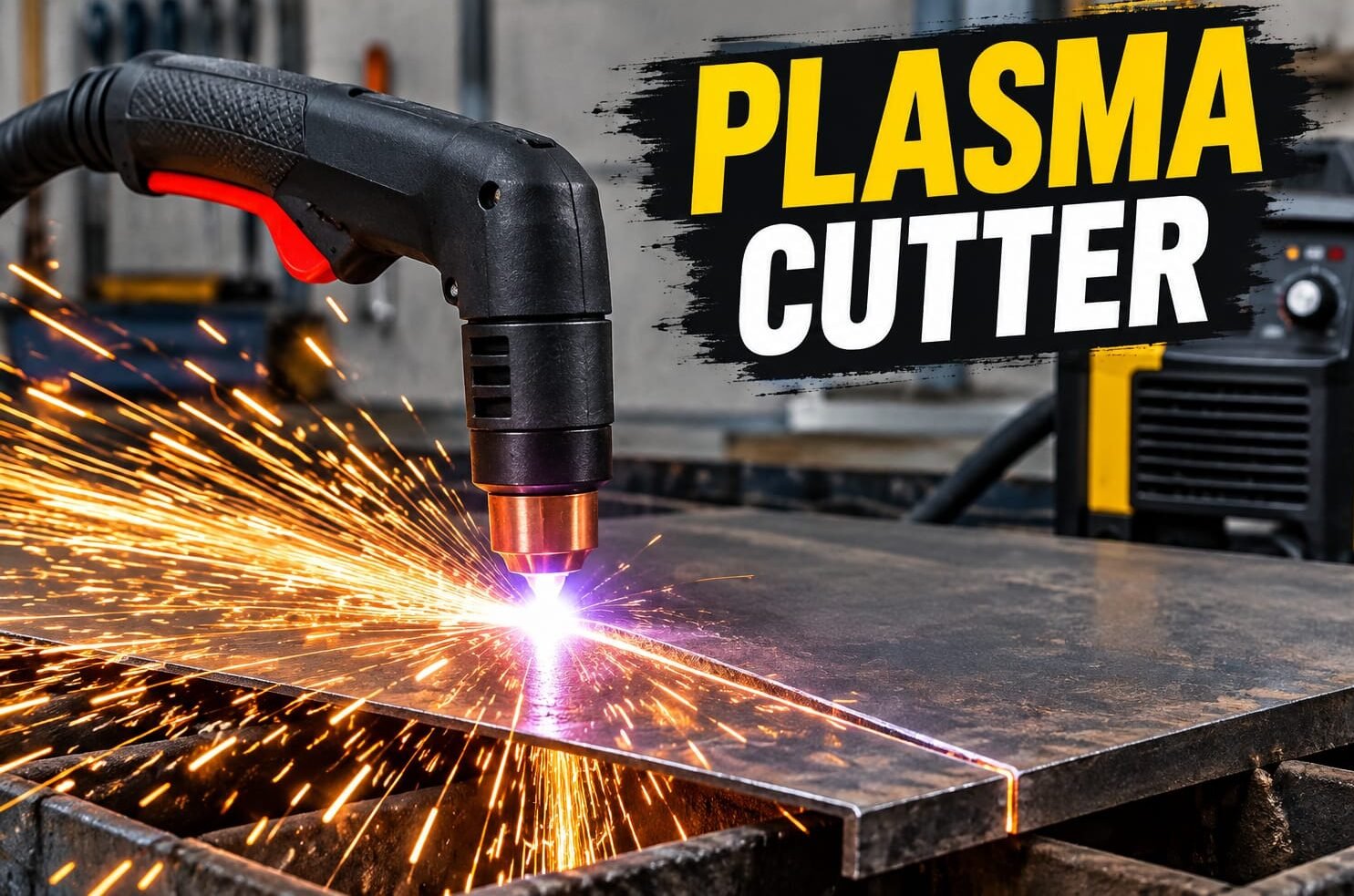
Choosing the right plasma cutter can be difficult, especial all if you are buy your first machine. There are dozens of models available, with different amperage ratings, cutting capacities, duty cycles, input voltages, torch designs, and features.
A plasma cutter that looks power full on paper may not necessarily be the right machine for your workshop.
The best plasma cutter is not always the most expensive or the one with the highest amperage. The right choice depends on what you plan to cut, how often you will use the machine, the thickness of your materials, your available power supply, and your budget.
For example, a homeowner cutting thin sheet metal occasionally has very different needs from a professional fabrication shop cutting thick steel every day.
Buying a machine that is too small can lead to slow cutting, poor cut quality, overheating, and excessive consumable wear. On the other hand, buying an over sized industrial plasma cutter for occasional die work may waste money and electricity.
This complete guide explains how to best choose the right plasma cutter by looking at the most important factors, including cutting capacity, amperage, duty cycle, power requirements, air supply, pilot arc technology, portability, consumables, ENC compatibility, and overall cost of ownership.
Buy the end of this guide, you should have a much clearer idea of what type of plasma cutter is best for your needs.
Table of Contents
- What Is a Plasma Cutter?
- How Does Plasma Cutting Work?
- Why Choosing the Right Plasma Cutter Matters
- Determine What Type of Metal You Will Cut
- Understand Cutting Capacity
- Clean Cut vs Maximum Severance Cut
- Choosing the Right Amperage
- Understanding Plasma Cutter Duty Cycle
- 120V vs 240V Plasma Cutters
- Single-Phase vs Three-Phase Power
- Dual-Voltage Plasma Cutters
- Air Compressor Requirements
- Why Clean and Dry Air Matters
- Pilot Arc vs Contact Start
- Inverter vs Transformer Plasma Cutters
- Handheld vs ENC Plasma Cutters
- Portability and Machine Weight
- Torch Quality and Design
- Consumables and Operating Costs
- Plasma Cutter Safety Features
- Choosing a Plasma Cutter for Home Use
- Choosing a Plasma Cutter for Automotive Work
- Choosing a Plasma Cutter for Farm Repairs
- Choosing a Plasma Cutter for Fabrication
- Choosing a Plasma Cutter for Industrial Work
- Common Plasma Cutter Buying Mistakes
- Step-by-Step Buying Checklist
- Frequently Asked Questions
- Final Thoughts
What Is a Plasma Cutter?
A plasma cutter is a machine used to cut electrically conductive metals.
Plasma cutting works on materials such as:
- Mild steel
- Stainless steel
- Aluminum
- Copper
- Brass
- Other conductive metals
The machine creates an extremely hot electrical arc and uses compressed gas to form plasma.
This plasma melts the metal while the high-speed gas blows the molten material away from the cut.
The result is a fast and efficient cutting process.
Plasma cutters are widely used in:
- Welding shops
- Automotive repair
- Metal fabrication
- Construction
- Manufacturing
- Farm repairs
- Home workshops
- Industrial facilities
One of the biggest advantages of plasma cutting is speed.
Compared with many traditional metal-cutting methods, plasma can cut metal quickly while producing a relatively narrow cut.
The correct machine, however, must be matched to the work you plan to do.
How Does Plasma Cutting Work?
Plasma is often described as the fourth state of matter.
When a gas receives enough energy, it becomes electrically conductive.
Inside a plasma cutter, electricity and compressed gas work together to create a high-temperature plasma arc.
The basic process works like this:
- Compressed air enters the plasma cutter.
- Electricity creates an arc.
- The gas becomes ionized.
- A high-temperature plasma stream forms.
- The plasma melts the metal.
- High-speed gas removes molten material from the cut.
Because the plasma arc is extremely hot, it can cut conductive metals quickly.
However, cutting performance depends heavily on the machine’s power, air supply, torch condition, and the thickness of the metal.
Why Choosing the Right Plasma Cutter Matters
Many buyers focus only on one number:
Amperage.
While amperage is important, it is not the only specification that matters.
A good plasma cutter should match your:
- Typical material thickness
- Maximum material thickness
- Type of metal
- Frequency of use
- Available electrical power
- Air compressor capacity
- Portability requirements
- Budget
Two machines with the same advertised amperage can perform differently because of differences in output design, duty cycle, torch technology, and cutting capacity. Manufacturer cutting-capacity charts and cutting-speed data are often more useful than comparing amperage alone.
The goal is to buy a plasma cutter that performs comfortably within your normal working range.
Do not buy a machine based only on the maximum thickness you might cut once.
Instead, focus on the thickness you cut regularly.
1. Determine What Type of Metal You Will Cut
The first step is identifying the materials you plan to cut.
Plasma cutters are designed for electrically conductive metals.
Common examples include:
- Mild steel
- Stainless steel
- Aluminum
- Copper
- Brass
Different metals behave differently during cutting.
Mild Steel
Mild steel is one of the most common materials cut with plasma.
It generally offers excellent cutting performance.
A properly sized plasma cutter can produce fast cuts with relatively manageable cleanup.
Stainless Steel
Plasma cutters can cut stainless steel effectively.
However, thicker stainless steel may require more power than a similar thickness of mild steel.
Aluminum
Aluminum can also be cut with plasma.
Because aluminum conducts heat efficiently, cutting performance can differ from mild steel.
If you regularly cut thick aluminum, choose a machine with additional capacity rather than operating constantly at its limit.
Copper and Brass
Plasma can cut copper and brass because they are electrically conductive.
However, their thermal properties can make them more demanding to cut.
Ventilation is also important when cutting different metals and coatings.
Before buying a plasma cutter, identify the materials you use most frequently.
2. Understand Cutting Capacity
Cutting capacity is one of the most important specifications when choosing a plasma cutter.
Manufacturers often provide multiple thickness ratings.
These may include:
- Recommended cut capacity
- Maximum cut capacity
- Severance capacity
These numbers are not the same.
This is one of the biggest areas where buyers make mistakes.
Clean Cut Capacity vs Severance Capacity
A plasma cutter may technically cut through a thick piece of metal.
However, that does not mean it will produce a clean, high-quality cut.
Recommended or Clean Cut Capacity
This refers to the thickness the machine can cut efficiently while producing a relatively clean edge.
This is the most important number for normal work.
A machine should ideally be selected based on the thickness you regularly cut cleanly.
Maximum Cut Capacity
This usually represents a thicker material that the machine can cut under favorable conditions.
The cut may be slower and require additional cleanup.
Severance Capacity
Severance capacity is generally the maximum thickness the machine can physically cut through.
The cut may be:
- Slow
- Rough
- Full of dross
- Difficult to control
You should not buy a plasma cutter based on severance capacity alone.
For everyday work, choose a machine based on its realistic recommended cutting capacity. Industry buying guides consistently distinguish between clean/rated cutting capacity and maximum or severance capacity, advising buyers to size the machine for the thickness they cut routinely.
3. Choose the Right Amperage
Amperage gives you a general idea of a plasma cutter’s cutting power.
Generally:
Higher amperage = greater cutting capacity.
However, more amperage is not always necessary.
Low-Amperage Plasma Cutters
Smaller plasma cutters are suitable for:
- Thin sheet metal
- Automotive work
- Small repairs
- DIE projects
- Light fabrication
A machine in the lower amperage range may be sufficient if you primarily cut thin metal.
Medium-Amperage Plasma Cutters
Medium-duty machines are useful for:
- General fabrication
- Farm repairs
- Garage workshops
- Trailer repairs
- Moderate steel thickness
These machines often provide a good balance between power and portability.
High-Amperage Plasma Cutters
Larger machines are designed for:
- Thick steel
- Heavy fabrication
- Industrial work
- Production environments
They generally require more powerful electrical systems and stronger air supplies.
Important Rule
Do not choose a plasma cutter that barely meets your requirements.
Buying some additional capacity can help improve:
- Cutting speed
- Cut quality
- Duty cycle
- Consumable life
A useful approach is to select a machine with enough headroom above the thickness you cut most often rather than operating constantly at its maximum rating.
4. Understand Duty Cycle
Duty cycle is one of the most important specifications that many beginners ignore.
It tells you how long a plasma cutter can operate during a specific period before requiring cooling.
Duty cycle is commonly expressed as a percentage.
For example:
60% duty cycle at maximum output
This generally means the machine can operate for approximately six minutes during a ten-minute period at the stated conditions before requiring cooling time.
Low Duty Cycle
A lower duty cycle may be acceptable for:
- Home use
- Occasional repairs
- DIE projects
You may spend more time measuring, positioning, and preparing material than actually cutting.
Medium Duty Cycle
A medium duty cycle works well for:
- Regular workshop use
- Light fabrication
- Small businesses
High Duty Cycle
High duty cycles are important for:
- Production work
- Heavy fabrication
- Continuous cutting
A machine with a high duty cycle can work longer without frequent thermal shutdowns. Duty cycle should be checked at the actual amperage you expect to use, not just as a headline specification.
5. Check Your Available Power Supply
Before buying a plasma cutter, check the electrical power available in your workshop.
This is extremely important.
A powerful plasma cutter is useless if your electrical system cannot support it.
Common power options include:
- 120V
- 240V
- Single-phase power
- Three-phase power
120V Plasma Cutters
A 120V plasma cutter can be convenient because it may work with suitable standard household electrical circuits.
These machines are often useful for:
- Home garages
- Small workshops
- Mobile work
- Light fabrication
However, 120V machines generally have lower cutting capacity than larger 240V systems.
They are best suited to lighter-duty work.
Always check the manufacturer’s required circuit, breaker, plug type, and input current. The amperage shown on the machine’s cutting controls is not necessarily the same as the electrical current the machine draws from the wall.
240V Plasma Cutters
A 240V plasma cutter generally provides more power for heavier work.
These machines are often suitable for:
- Fabrication shops
- Thick steel
- Frequent cutting
- Professional workshops
A 240V machine can offer better cutting performance and duty cycle for demanding applications.
However, you must ensure that your electrical system is properly configured.
Single-Phase vs Three-Phase Power
Single-Phase
Single-phase machines are common in:
- Homes
- Small workshops
- Garages
- Mobile applications
They can provide excellent performance for many cutting jobs.
Three-Phase
Three-phase power is more common in industrial environments.
It can support larger equipment and high-output plasma systems.
If you plan to use a large industrial plasma cutter or ENC system, your available electrical supply becomes a major purchasing factor.
6. Consider a Dual-Voltage Plasma Cutter
A dual-voltage plasma cutter can operate on more than one input voltage.
For example, a machine may be designed to work with both:
- 120V
- 240V
This can be extremely useful.
At home, you may use the machine with one power source.
In a professional workshop, you may use the higher-voltage option for greater performance.
Dual-voltage machines are especially useful for welders and fabricators who need flexibility and portability.
However, performance may be reduced when operating on lower voltage.
Always compare the cutting specifications for each voltage.
7. Check Air Compressor Requirements
A plasma cutter requires more than electricity.
It also needs a suitable gas supply.
For many standard plasma cutters, that means compressed air.
Before buying a plasma cutter, check:
- Required PSI
- Required airflow
- Required CF
- Air quality requirements
Your compressor must be able to supply enough air continuously.
A compressor may show the correct pressure on its gauge but still fail to provide enough airflow during continuous cutting.
This can cause:
- Poor cut quality
- Arc problems
- Machine shutdowns
- Consumable damage
Industry guidance emphasizes matching the compressor’s continuous airflow capacity to the plasma cutter’s specified requirements rather than looking at pressure alone.
8. Why Clean and Dry Air Is Important
Air quality can dramatically affect plasma cutting performance.
Compressed air should be as clean and dry as practical for the machine’s requirements.
Moisture and oil contamination can create problems such as:
- Poor arc stability
- Difficult starting
- Poor cut quality
- Rapid consumable wear
Consider using appropriate:
- Air filters
- Moisture separators
- Air dryers
Drain your air compressor regularly.
Water can accumulate inside the compressor tank.
If moisture enters the plasma cutter, it can reduce performance and increase operating costs.
Clean, dry air is one of the most important factors in extending consumable life and maintaining stable cuts.
9. Pilot Arc vs Contact Start
The arc-starting system is another important feature.
Pilot Arc
A pilot arc allows the plasma cutter to start the arc without directly touching the work piece in the same way as a basic contact-start system.
This can be especially useful when cutting:
- Rusty steel
- Painted surfaces
- Expanded metal
- Grating
Pilot arc technology can make cutting more convenient and versatile.
Contact Start
A contact-start system may be found on simpler or lower-cost machines.
These systems can work effectively for clean metal but may be less convenient for certain cutting situations.
If you plan to do a variety of fabrication and repair work, a pilot arc system can be a valuable feature. Buying guides commonly highlight pilot or non-touch arc capability as particularly useful for expanded metal and imperfect surfaces.
10. Inverter vs Transformer Plasma Cutters
Plasma cutters can use different internal technologies.
Inverter Plasma Cutters
Modern inverter-based machines are often:
- Smaller
- Lighter
- More portable
- More energy-efficient
They are popular for:
- Home workshops
- Mobile work
- Modern fabrication shops
Transformer-Based Machines
Traditional transformer machines are generally:
- Larger
- Heavier
- More durable in some industrial environments
They may be suitable for stationary heavy-duty applications.
For most homeowners and small workshops, portability and efficiency make inverter technology attractive.
11. Handheld vs ENC Plasma Cutters
Your cutting method should influence your purchasing decision.
Handheld Plasma Cutters
Handheld machines are ideal for:
- Repair work
- Home projects
- Mobile work
- General fabrication
They provide flexibility.
ENC Plasma Cutters
ENC plasma systems are designed for automated cutting.
They can be useful for:
- Production work
- Repeated parts
- Complex shapes
- High-volume fabrication
If you plan to connect your plasma cutter to a ENC table, verify compatibility before purchasing.
Important features may include:
- ENC interface
- Machine torch compatibility
- Start control
- Torch height control compatibility
Do not assume every handheld plasma cutter can easily be converted into a ENC system. ENC buyers should confirm the required machine interface and torch compatibility before purchasing.
12. Consider Portability
If you need to move your plasma cutter frequently, weight matters.
Ask yourself:
Will the machine stay in one workshop?
Or will you transport it between locations?
For mobile work, consider:
- Weight
- Carrying handle
- Cable length
- Dual-voltage capability
- Generator compatibility
A compact inverter plasma cutter can be significantly easier to transport than a large industrial machine.
13. Torch Quality and Design
The torch is one of the most important parts of a plasma cutting system.
A good torch should provide:
- Comfortable handling
- Good cable flexibility
- Reliable triggering
- Easy consumable replacement
Consider the torch length.
A longer torch lead can make it easier to move around large workplaces.
However, portability and cable management should also be considered.
For frequent cutting, ergonomics can reduce fatigue.
14. Consumables and Operating Costs
A plasma cutter does not have only an initial purchase price.
You must also consider ongoing operating costs.
Plasma cutting consumables may include:
- Electrodes
- Nozzles
- Shields
- Swirl rings
These components wear over time.
Before purchasing a plasma cutter, check:
- Consumable prices
- Availability
- Local availability
- Online availability
A cheap plasma cutter can become expensive if replacement parts are difficult to find.
Choosing a machine with easily available consumables can save time and money.
Consumable life is strongly affected by operating current, arc-on time, cutting technique, and especially air quality.
15. Safety Features to Look For
A quality plasma cutter should include useful protection systems.
Potential features include:
- Thermal overload protection
- Over current protection
- Over voltage protection
- Under-voltage protection
- Air pressure warnings
- Automatic shutdown protection
These features can help protect the machine.
However, safety features do not replace proper operating practices.
Always follow the manufacturer’s safety instructions.
Choosing a Plasma Cutter for Home Use
For home use, you probably do not need an industrial machine.
A good home plasma cutter should provide:
- Suitable cutting capacity
- Easy setup
- Reasonable portability
- Compatible household or workshop power
- Affordable consumables
Typical home projects may include:
- Metal furniture
- Brackets
- Automotive parts
- Small repairs
- Steel fabrication
For occasional use, an extremely high duty cycle may not be necessary.
Focus instead on getting reliable performance for your typical material thickness.
Choosing a Plasma Cutter for Automotive Work
Automotive work often involves:
- Thin sheet metal
- Body panels
- Brackets
- Exhaust components
- Rusty parts
For this type of work, consider:
- Low-amperage control
- Clean cutting performance
- Pilot arc capability
- Portability
You may not need an extremely high-amperage machine.
A smaller, well-controlled plasma cutter may be more useful than a massive industrial system.
Choosing a Plasma Cutter for Farm Repairs
Farm work can involve:
- Rusty machinery
- Thick brackets
- Equipment repairs
- Trailer repairs
- Heavy steel
A medium-duty plasma cutter can be an excellent choice.
Look for:
- Good cutting capacity
- Durable construction
- Pilot arc
- Strong duty cycle
- Portable design
Farm environments can be demanding.
Make sure your electrical and air systems can support the machine.
Choosing a Plasma Cutter for General Fabrication
General fabrication shops often need versatility.
A good fabrication plasma cutter should provide:
- Medium-to-high cutting capacity
- Good duty cycle
- Reliable air requirements
- Good consumable availability
- Quality torch design
The best machine should comfortably cut your normal material thickness.
Do not choose based only on maximum severance capacity.
Choosing a Plasma Cutter for Industrial Work
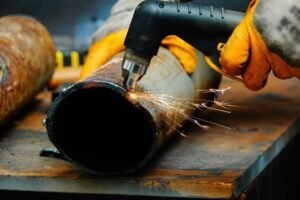
Industrial cutting operations may require:
- High amperage
- High duty cycle
- Heavy-duty torch
- Three-phase power
- Large air supply
- ENC compatibility
Production environments should prioritize reliability.
Machine downtime can cost money.
Therefore, industrial buyers should consider:
- Service support
- Replacement parts
- Consumable availability
- Long-term reliability
The cheapest machine may not always provide the lowest total cost of ownership.
Common Plasma Cutter Buying Mistakes
Mistake 1: Buying Based Only on Maximum Thickness
A plasma cutter may technically cut through thick metal.
That does not mean it will cut it efficiently.
Focus on clean-cut capacity.
Mistake 2: Ignoring Duty Cycle
A machine with a low duty cycle may constantly require cooling.
This can slow down your work.
Mistake 3: Ignoring the Air Compressor
Your plasma cutter needs enough airflow.
An undersized compressor can create serious performance problems.
Mistake 4: Buying Too Much Machine
More power is not always better.
A large industrial plasma cutter may be unnecessary for occasional home use.
Mistake 5: Buying Too Little Machine
Buying a machine that constantly operates at its maximum capacity can lead to:
- Slow cuts
- Thermal shutdowns
- Poor edge quality
- Faster consumable wear
Mistake 6: Ignoring Consumable Availability
Always check replacement part availability before buying.
Mistake 7: Ignoring Input Power
Check your electrical system first.
Never assume that a machine will work safely with your existing outlet.
Step-by-Step Guide to Choosing the Right Plasma Cutter
Follow these steps.
Step 1: Identify Your Typical Metal Thickness
What thickness do you cut most frequently?
Do not focus only on rare jobs.
Step 2: Choose Appropriate Cutting Capacity
Select a machine that can comfortably clean-cut your normal material thickness.
Step 3: Check Amperage
Make sure the machine provides enough output for your work.
Step 4: Check Duty Cycle
If you cut frequently, choose a higher duty cycle.
Step 5: Check Your Electrical Power
Determine whether you have:
- 120V
- 240V
- Single-phase
- Three-phase
Step 6: Check Your Air Compressor
Verify:
- PSI
- CF
- Continuous airflow
Step 7: Decide Whether You Need Pilot Arc
Pilot arc can provide greater flexibility for:
- Rust
- Expanded metal
- Painted surfaces
Step 8: Check Portability
If you travel with your machine, choose a lighter design.
Step 9: Check Consumable Costs
Make sure replacement parts are affordable and easy to find.
Step 10: Consider Your Future Needs
Will your projects become larger?
If so, buying a machine with reasonable extra capacity may be a smart investment.
Plasma Cutter Buying Checklist
Before purchasing, ask yourself:
Material
- What metals will I cut?
- How thick are they?
Cutting Capacity
- What is the rated clean-cut capacity?
- What is the severance capacity?
Electrical Power
- What voltage is available?
- Is my circuit suitable?
Air Supply
- Does my compressor provide enough airflow?
- Is my air clean and dry?
Workload
- How often will I use the machine?
- Do I need a high duty cycle?
Features
- Do I need pilot arc?
- Do I need ENC compatibility?
- Do I need portability?
Operating Costs
- Are consumables affordable?
- Are replacement parts easy to find?
Answering these questions will help you avoid buying the wrong machine.
Frequently Asked Questions
What Size Plasma Cutter Do I Need?
The correct size depends primarily on the thickness of metal you cut regularly.
Choose a machine based on realistic clean-cut capacity rather than maximum severance capacity.
Is a 120V Plasma Cutter Good Enough?
A 120V machine can be excellent for:
- Home projects
- Thin metal
- Automotive work
- Light fabrication
However, heavier work may require a higher-power electrical system.
Is 240V Better Than 120V?
For demanding cutting applications, a properly installed 240V supply can support larger and more powerful machines.
However, the best choice depends on your needs.
How Important Is Duty Cycle?
Duty cycle is extremely important if you cut frequently.
For occasional work, a lower duty cycle may be acceptable.
For production work, higher duty cycle becomes much more important.
Do Plasma Cutters Need an Air Compressor?
Many plasma cutters use compressed air.
However, some machines may have different gas systems or built-in solutions.
Always check the manufacturer’s requirements.
Why Is My Plasma Cutter Producing Poor Cuts?
Possible causes include:
- Worn consumables
- Incorrect amperage
- Poor air supply
- Moisture in the air
- Incorrect cutting speed
- Damaged torch components
Is Pilot Arc Worth It?
For many users, yes.
Pilot arc technology can make cutting easier on:
- Rusty metal
- Painted surfaces
- Expanded metal
It can be particularly useful for general fabrication and repair work.
Can I Use a Plasma Cutter for Aluminum?
Yes.
Plasma cutting works on electrically conductive aluminum.
However, cutting performance depends on thickness and machine capacity.
Can a Plasma Cutter Cut Stainless Steel?
Yes.
Plasma cutters can cut stainless steel effectively.
Choose enough capacity for the thickness you plan to cut.
H3:Final Thoughts: How to Choose the Right Plasma Cutter
Choosing the right plasma cutter does not have to be complicated.
The key is to match the machine to your actual work.
Start by asking:
What metal will I cut?
How thick is it?
How often will I use the plasma cutter?
What electrical power is available?
Can my air compressor support the machine?
Once you know these answers, selecting the right plasma cutter becomes much easier.
For most buyers, the most important factors are:
- Clean-cut capacity
- Amperage
- Duty cycle
- Input voltage
- Air compressor requirements
- Pilot arc technology
- Consumable costs
- Portability
Remember that the most powerful plasma cutter is not automatically the best.
The best plasma cutter is the one that provides reliable, efficient performance for the type of work you actually do.
For occasional DIE projects, a compact and portable machine may be ideal.
For automotive work, good low-amperage control and pilot arc capability may be more important.
For fabrication, choose enough cutting capacity and duty cycle for regular use.
For industrial applications, prioritize power, reliability, duty cycle, service support, and long-term operating costs.
By carefully comparing these factors before buying, you can choose a plasma cutter that delivers clean cuts, reliable performance, and excellent value for years to come.
For more information about this rtical Click Here
For more information Click Here