It’s frustrating when your stick welder electrode keeps breaking, right? Many folks starting out run into this. You’re trying to make a nice weld, and snap!
The rod breaks. Don’t worry, it’s a common snag, and we’ll walk through it simply. We’ll break down what’s happening and how to fix it, so you can get back to welding smoothly.
Let’s figure out why this is happening.
Key Takeaways
- You will learn the main reasons stick welder electrodes break.
- We will explain how your welding angle affects electrode breakage.
- You will discover the impact of welding speed on rod integrity.
- We will cover how too much or too little heat causes electrodes to snap.
- You will understand how electrode angle influences how it melts.
- We will show you how to choose the right electrode for your job.
Why Is My Stick Welder Electrode Breaking? Common Causes
Too Much Heat (Amperage)
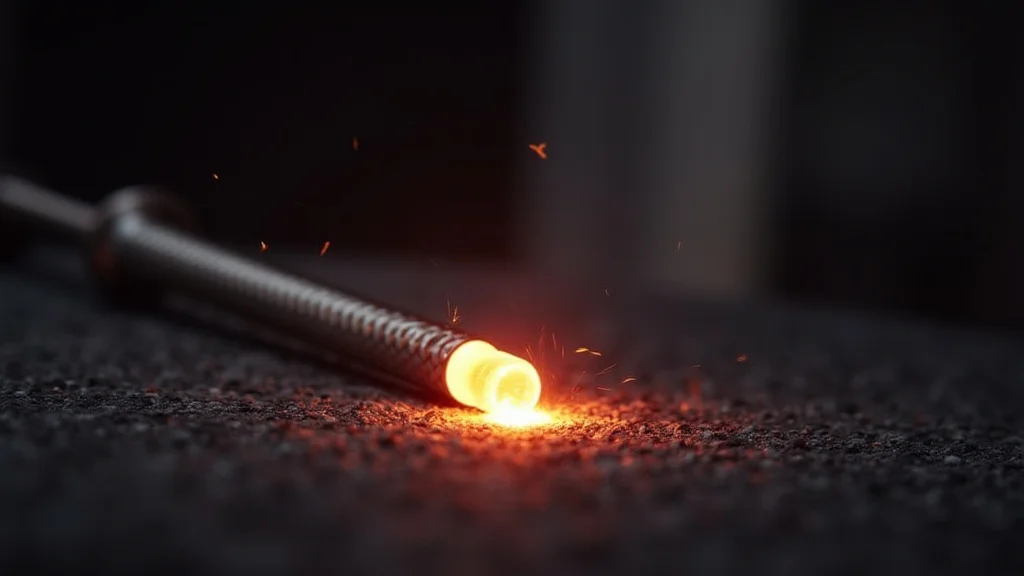
One big reason your stick welder electrode breaks is simply too much heat. This happens when your welder is set to a higher amperage than the electrode can handle. Think of it like trying to melt a crayon too close to a fire.
The crayon (your electrode) gets too hot, too fast, and breaks or melts away unevenly before it can form a good weld. You might see the flux coating bubble and crack, or the metal rod itself start to bend and then snap.
When the amperage is too high, the metal electrode melts way too quickly. It doesn’t have time to join the base metals properly. Instead, it just turns into molten metal that drips away.
This can also cause a lot of spatter, those little hot metal bits that fly around.
Too Little Heat (Amperage)
On the flip side, too little heat can also cause your electrode to break, but in a different way. If the amperage is too low, the electrode won’t melt properly. Instead of a smooth melt, it might stick to the metal surface.
This is called “sticking.” When you try to pull the electrode away, it can bend and break because it hasn’t formed a good connection.
With low heat, you might also notice the arc is weak and unstable. The electrode might just sit there without melting much, and you’ll have to force it. This leads to a weak, bumpy weld and can easily snap the rod when you’re trying to move it.
Incorrect Electrode Angle
The angle you hold your electrode makes a big difference. If you tilt it too far forward or backward, it can cause problems. When you tilt it too far forward, in the direction you are welding, the heat can concentrate on the tip.
This makes the tip melt faster than the rest of the rod, leading to breakage. It’s like leaning a pencil over a flame; one side gets hotter.
Holding the electrode too far back can also be an issue. This might cause the arc to be unstable and not direct the heat effectively. It can lead to inconsistent melting and also contribute to the electrode breaking or not welding well.
A good rule of thumb is to keep the electrode at a slight angle, usually around 10-15 degrees, in the direction of travel.
Moving Too Fast or Too Slow
Your welding speed is also important. If you move the electrode too fast across the metal, it doesn’t have enough time to melt and create a strong weld bead. The electrode will seem to be just scratching the surface, and the tip can get overloaded with heat and break off.
It’s like trying to draw a line too quickly; you don’t get a solid mark.
Moving too slowly can also be a problem, but it leads to different issues that can indirectly cause breakage. If you move too slowly, you’re essentially putting too much heat into one spot. This can overheat the electrode and the base metal, causing the electrode to melt too quickly and break.
It can also lead to a large, “washy” weld bead and potential burn-through of the base metal.
Wrong Electrode Type for the Job
Different welding jobs need different types of electrodes. Stick welding has many types of rods, like 6010, 6013, 7018, and others. Each is designed for specific metals, welding positions, and types of power (AC or DC).
Using the wrong rod for the job is like trying to hammer a screw; it just won’t work right.
For example, some rods are better for thin metal, while others are for thick metal. Some are good for rusty or dirty surfaces, and others need clean metal. If you use a rod that’s too hot for thin metal, it will burn through quickly.
If you use a rod that’s not strong enough for heavy work, it might not hold. This can lead to poor welds and breakages.
Dirty Base Metal
The surface you are welding on needs to be clean. Rust, paint, oil, or other dirt can get in the way of a good weld. When you try to weld over dirt, the arc can become unstable.
This instability can cause the electrode to melt unevenly. The impurities can also get into the weld, making it weak and prone to problems, including electrode breakage.
Cleaning the metal before you start is key. A wire brush or grinder can remove most of the unwanted stuff. This helps the arc focus on melting the metal for a strong bond, rather than fighting with contaminants.
Clean metal makes for a happier electrode.
Arc Length Issues
The distance between the electrode tip and the metal surface is called the arc length. Keeping this distance consistent is very important. If the arc is too long, the arc becomes unstable and you get a lot of spatter.
This means less heat is going into the weld, and the electrode can break or melt unevenly. It’s like a flame that flickers wildly; it doesn’t heat things up well.
If the arc is too short, the electrode can touch the molten metal. This causes it to stick. As mentioned before, when you pull a stuck electrode away, it can snap.
You want a steady, consistent arc length that’s just long enough for the electrode to melt smoothly into the base metal.
Lack of Penetration
Penetration is how deeply the weld metal fuses with the base metals. If you don’t have enough penetration, it means the weld isn’t biting into the metal properly. This can happen with low heat or moving too fast.
While this might not directly cause the electrode to snap mid-weld, it results in a weak weld. If you try to put more force on a weak weld, or if the electrode is not melting correctly due to low heat, it could break.
Good penetration ensures a strong bond. If you’re not getting it, you likely need to adjust your amperage, travel speed, or electrode angle to get the heat where it needs to be.
Electrode Rod Warping or Bending
Sometimes, the electrode itself might be faulty or damaged before you even start welding. If the rods have been stored improperly, exposed to moisture, or are old, they can become brittle. Bending the electrode slightly can also affect how it melts.
Moisture is a big enemy of some electrodes, like 7018. If these rods absorb moisture, they can create a very unstable arc and cause porosity (small holes) in the weld. This instability can lead to the electrode behaving erratically and breaking.
Frequently Asked Questions
Question: What is the most common reason for stick welder electrodes to break?
Answer: The most common reason is often too much heat, meaning the amperage is set too high for the electrode you are using.
Question: Should I use a long or short arc when stick welding?
Answer: You should aim for a consistent, medium arc length. Too long causes instability and spatter, too short causes sticking and breakage.
Question: Does the direction I hold the electrode matter?
Answer: Yes, the electrode angle is very important. Holding it too far forward or backward can cause it to melt unevenly and break.
Question: What should I do if my electrode keeps sticking?
Answer: If your electrode is sticking, your heat (amperage) might be too low, or your arc length is too short. Try increasing amperage slightly or adjusting your arc length.
Question: Can I weld on rusty metal with a stick welder?
Answer: Some electrodes, like 6010 or 6011, are designed to handle rusty or dirty surfaces better than others, but cleaning the metal always gives the best results.
Final Thoughts
So, when your stick welder electrode breaks, it’s usually because of heat settings, how you’re holding it, or how fast you’re moving. Getting the right amperage, a steady angle, and a consistent speed are key. Clean your metal, keep your arc length just right, and pick the rod meant for your job.
Practice these simple things, and you’ll see fewer broken rods and better welds. You’ve got this!