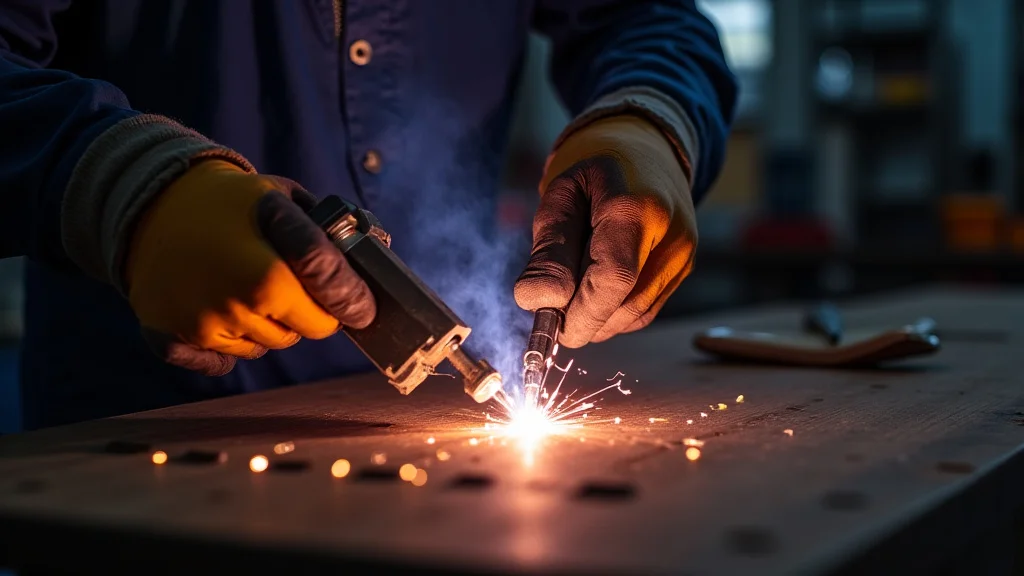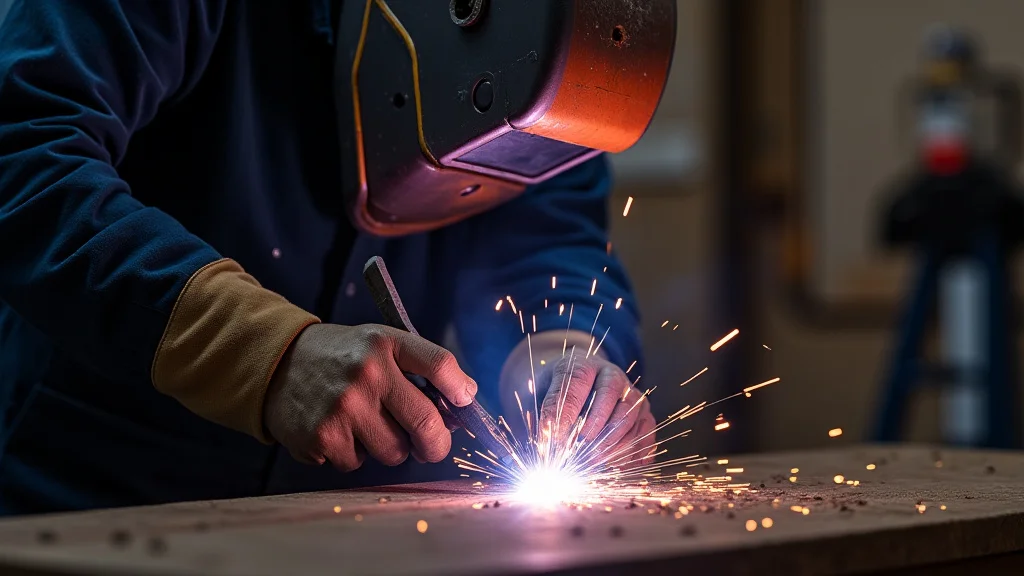
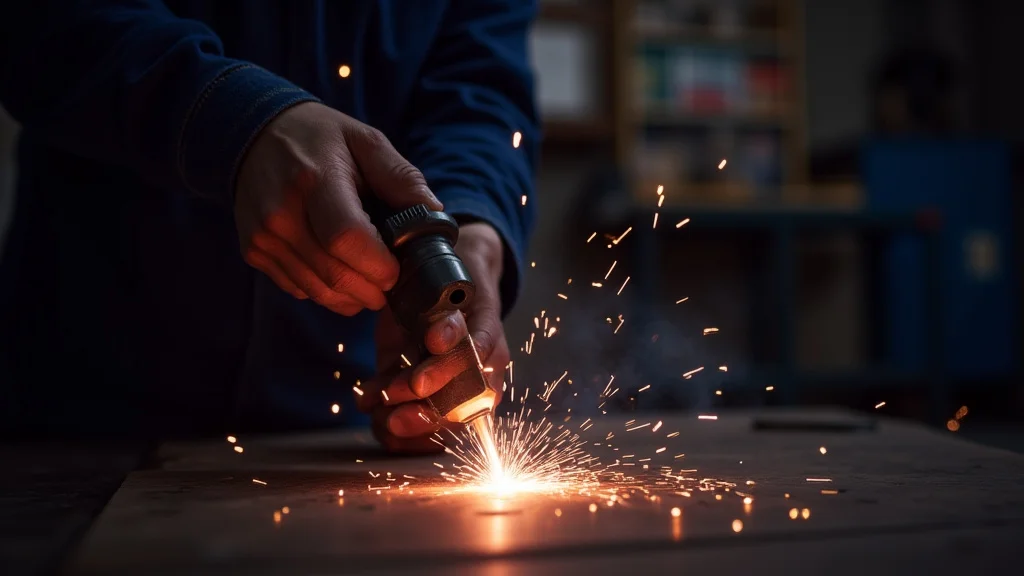
When you’re new to welding, seeing your welding machine sparks too much can be a bit alarming. It’s a common problem that trips up many beginners. You might wonder if you’re doing something wrong or if your equipment is faulty.
Don’t worry, this is often a simple fix! We’ll show you exactly what to check and how to adjust things so you can get back to clean, smooth welds. Get ready for a straightforward, step-by-step guide to solve this sparking issue and make your welding much better.
Key Takeaways
- You’ll learn why your welding machine might be sparking too much.
- We’ll explain how to adjust your welding machine settings to reduce sparks.
- You’ll discover the importance of proper electrode angle and travel speed.
- We’ll cover how different types of welding rods affect sparking.
- You’ll understand how to maintain your equipment for fewer sparks.
- We’ll provide quick solutions for common sparking problems.
Why Is My Welding Machine Sparks Too Much? Quick Fix Explained
It’s a frustrating sight: you strike an arc, and instead of a controlled weld pool, you’re met with an explosion of sparks. If your welding machine sparks too much, it can make precise welding nearly impossible and create a mess. This problem often pops up for beginners because they haven’t yet learned how different settings and techniques influence the arc.
It’s not usually a sign of a broken machine, but rather a matter of fine-tuning. Let’s break down the common reasons behind excessive sparking and how to fix them.
Understanding the Welding Arc
The welding arc is the heart of the welding process. It’s an electrical discharge between an electrode and the workpiece. This arc creates intense heat, melting the metal and allowing it to fuse together.
When things are just right, the arc is stable and controlled. But if the arc is too long, too short, or the electrical current isn’t flowing smoothly, it can become unstable. This instability is what leads to erratic sparks flying everywhere.
Think of it like a garden hose. If the nozzle is set to a fine mist, water sprays everywhere. If you set it to a strong, direct stream, it’s much more focused.
The welding arc is similar. We want a focused, stable stream of heat, not a wild spray of sparks.
Common Causes of Excessive Sparks
Several factors can contribute to your welding machine sparks too much. Most of these are simple adjustments you can make right at your welding machine or with how you hold your torch or electrode.
1. Incorrect Amperage Settings
The amperage setting on your welder controls the amount of electrical current. This is one of the most common culprits for excessive sparking. If the amperage is too high for the material you’re welding or the type of electrode you’re using, it will generate too much heat.
This leads to an overly aggressive arc and lots of sparks.
Too much amperage: Melts the metal too quickly, creating a large, unstable puddle. This causes spatter and excessive sparks as molten metal is flung away. The weld can also become too wide and shallow, with poor penetration.
Too little amperage: Leads to an arc that is hard to maintain and may not provide enough heat to fuse the metals properly. While this might not cause as many sparks as too much amperage, it can result in a weak weld and a “snowy” appearance from tiny bits of molten metal.
2. Improper Electrode Angle
The angle at which you hold your electrode or torch can significantly impact the arc. In stick welding (SMAW), the electrode is a consumable rod. In MIG welding (GMAW), you have a continuous wire.
The angle affects how the molten metal is directed and how the arc interacts with the base metal.
Pushing vs. Pulling: In MIG welding, pushing the gun can sometimes lead to more spatter and a wider bead. Pulling the gun usually provides better penetration and a more controlled arc with fewer sparks.
For stick welding, a consistent angle, usually slightly dragging the electrode, is important. An electrode angle that is too steep or too shallow can disrupt the arc.
3. Incorrect Travel Speed
How fast or slow you move your welding torch or electrode along the joint is critical. If you move too fast, you won’t deposit enough filler metal, and the arc might not be stable. If you move too slow, you can overheat the base metal and create a large, runny puddle, which inevitably leads to more spatter.
Too fast: The arc might “outrun” the molten puddle, leading to a narrow, weak bead with potential for porosity. You might see fewer large sparks but more of a fine, “dusty” spatter.
Too slow: This is a more common cause of excessive sparks. The excessive heat causes the molten metal to boil and splatter, leading to a wide, often flat bead with a lot of spatter. You’ll notice large, bright sparks flying.
4. Arc Length
The distance between the tip of the electrode (or wire) and the workpiece is called the arc length. This is another crucial setting that directly affects the arc’s stability and the amount of sparking.
Arc too long: A long arc is unstable. It allows more air to get into the weld pool, causing oxidation and contamination. This results in a “noisy” arc with lots of spatter and sparks.
It also leads to a wider, flatter bead and reduced penetration.
Arc too short: A short arc can cause the electrode to stick to the workpiece, a common issue in stick welding. While it might produce fewer large sparks, it can lead to a very narrow bead with deep penetration and a rough appearance. Sometimes, a short arc can create a very intense, bright light and a humming sound.
5. Type of Welding Electrode or Wire
Different welding consumables are designed for different applications and produce different arc characteristics. Using the wrong type can lead to excessive sparks.
Stick Welding (SMAW) Electrodes: Some electrodes, like certain E6010 or E6011 rods, are designed for all-position welding and can be “hotter,” producing more spatter. Others, like E7018, are designed for smoother welds with less spatter when used correctly. If you’re using a rod that’s not suited for your material or position, you might see more sparks.
MIG Welding (GMAW) Wires: Different wire types and diameters, along with the shielding gas used, will affect the arc. For example, using a solid wire with CO2 shielding gas generally produces more spatter than using a gas blend like 75% Argon/25% CO2.
6. Dirty Base Metal
The surface of the metal you are welding is very important. Rust, paint, oil, dirt, or any other contaminants on the base metal can interfere with the arc. When the arc hits these contaminants, it can cause them to burn and vaporize, leading to erratic arc behavior and increased spatter.
A clean surface allows for a smooth, stable arc. Contaminants can disrupt the electrical conductivity and create hotspots, leading to unstable melting and flying sparks.
7. Incorrect Shielding Gas (MIG Welding)
For MIG welding, the shielding gas is vital. It protects the molten weld pool from atmospheric contamination. The type and flow rate of the gas affect the arc and the amount of spatter.
Gas Flow Rate Too Low: Not enough gas means the weld pool is exposed to air, leading to porosity and increased spatter.
Gas Flow Rate Too High: Too much gas can create turbulence in the arc, which can also lead to spatter and porosity. It can also blow away the shielding gas, leaving the weld vulnerable.
Wrong Gas Type: Using pure CO2 will generally produce more spatter than Argon-based mixtures. Certain specialized gases are designed for specific metals and processes to minimize spatter.
The Welding Machine Sparks Too Much? Quick Fix Strategies
Now that we know the common causes, let’s look at how to fix them. These are practical steps you can take to calm down that sparking arc.
1. Adjust Your Amperage
This is often the first thing to check. If you’re welding thinner material, turn down the amperage. If you’re welding thicker material, you might need to increase it slightly, but always start conservative.
Rule of Thumb: For many common materials like mild steel, a good starting point is around 1 amp per thousandth of an inch of material thickness. For example, 1/8-inch steel (0.125 inches) might need 125 amps. Always consult your welding machine’s manual or general welding charts for specific recommendations based on your electrode/wire size and material.
For MIG welding: Adjust both amperage and wire feed speed. Often, these are linked. If you increase amperage, you might need to increase wire feed speed to match.
Some machines have a “settings chart” inside the cover.
2. Optimize Electrode/Torch Angle and Travel Speed
Experiment with your movement. For MIG welding, try pulling the gun slightly. For stick welding, maintain a consistent drag angle.
Find the sweet spot for your travel speed – not too fast, not too slow. You’re looking for a smooth, consistent bead that looks like a slight ripple.
Visual Cue: When the speed is right, the molten puddle will have a distinct shape. Too fast, it’s thin. Too slow, it’s overly wide and flat.
3. Control Arc Length
Try to maintain a consistent, short arc. For stick welding, this means keeping the electrode tip just a hair’s breadth away from the molten pool. For MIG welding, keep the nozzle close to the workpiece.
You should hear a consistent “sizzle” sound. If it sounds like frying bacon or popping corn, your arc length might be off.
MIG Welding Tip: Some welders prefer to keep the contact tip just barely away from the weld puddle, almost touching. This is called a “contact-tip-to-work distance.”
4. Select the Right Welding Consumable
If you’re using stick electrodes, check the recommended settings for the specific rod you have. If you consistently get excessive spatter, try a different type of rod known for a cleaner arc. For MIG welding, consider using a different wire diameter or a different gas blend if spatter is a major issue.
For example, switching from straight CO2 to an Ar/CO2 mix can significantly reduce spatter.
5. Clean Your Base Metal Thoroughly
This cannot be stressed enough. Before you start welding, use a wire brush, grinder, or degreaser to remove all rust, paint, oil, and dirt from the area you’ll be welding. A clean surface ensures a stable arc and a strong weld with minimal spatter.
Don’t forget the other side: If you’re welding two pieces together, clean both surfaces where the weld will be. Even if you’re only welding one side, cleaning the surrounding area helps.
6. Set Your Shielding Gas Correctly (MIG Welding)
Check your gas flow meter. For MIG welding, a common flow rate is between 15-25 cubic feet per hour (CFH). Consult your gas supplier or welder manual for specific recommendations.
Ensure your gas nozzle isn’t damaged or clogged.
Leak Check: Make sure there are no leaks in your gas hose or connections.
7. Check Your Equipment
Sometimes, equipment issues can cause problems. Check for a damaged contact tip (MIG), a worn electrode holder (stick), or frayed cables. A dirty contact tip in MIG welding can cause erratic wire feeding and arc instability.
Contact Tip Maintenance (MIG): Clean or replace the contact tip regularly. A small amount of anti-spatter spray can help prevent spatter from sticking to the tip and nozzle.
Troubleshooting Specific Scenarios
Let’s look at some common situations and their quick fixes for when your welding machine sparks too much.
Scenario 1: Stick Welding (SMAW) with Excessive Sparks
Problem: Sparks flying everywhere, molten metal raining down.
Likely Causes: Amperage too high, arc length too long, wrong electrode type, poor electrode angle.
Quick Fixes:
- Turn down amperage slightly.
- Shorten your arc – keep the electrode close to the puddle.
- Ensure you are using the correct electrode for the material and position. E7018 rods typically produce less spatter than E6010.
- Maintain a consistent drag angle (usually 10-15 degrees).
Scenario 2: MIG Welding (GMAW) with Excessive Sparks
Problem: Lots of spatter, messy welds, molten metal sticking to the nozzle.
Likely Causes: Amperage/wire feed speed too high, travel speed too slow, arc length too long, incorrect gas flow or type, dirty contact tip.
Quick Fixes:
- Adjust amperage and wire feed speed. Ensure they are balanced.
- Increase travel speed slightly.
- Shorten your arc.
- Check shielding gas flow rate and consider a different gas mix (e.g., Argon/CO2 blend instead of pure CO2).
- Clean or replace the contact tip. Apply anti-spatter spray.
Scenario 3: Welder is “Buzzy” and Sparky
Problem: The arc sounds unstable, like a buzzing or crackling sound, with lots of sparks.
Likely Causes: Arc length too long, wrong polarity setting (less common in modern machines, but possible), dirty metal, incorrect settings for the material.
Quick Fixes:
- Shorten the arc.
- Verify the polarity setting on your welder matches what your electrode or wire requires.
- Thoroughly clean the base metal.
- Refer to welding charts for correct settings for your specific setup.
The Importance of Cleanliness
A clean welding environment and clean base metal are crucial. This extends to your welding equipment as well. A build-up of spatter on your MIG gun nozzle or a dirty contact tip can disrupt the arc and cause problems.
Similarly, a clean welding area reduces the risk of fire hazards from flying sparks.
Always use a grinder or wire brush to clean your base metal. For MIG welding, keep your nozzle clean, use anti-spatter spray, and ensure your contact tip is in good condition. For stick welding, keep your electrodes dry in their original packaging, as moisture can affect their performance and arc stability.
Understanding Different Welding Processes
The way sparks behave can differ slightly depending on the welding process you’re using.
Stick Welding (SMAW)
Stick welding, or Shielded Metal Arc Welding, uses a consumable electrode coated in flux. This flux burns to create shielding gas and slag, protecting the weld. Some electrodes are known for producing more spatter, especially those designed for deep penetration or specific all-position welding.
The arc length is very sensitive in stick welding; keeping it short is key to minimizing spatter and achieving good welds.
MIG Welding (GMAW)
Gas Metal Arc Welding, or MIG welding, uses a continuous wire electrode fed through a gun. A shielding gas is supplied externally. MIG welding can produce a lot of spatter if settings are incorrect, especially with certain gas mixtures or if the wire feed speed doesn’t match the voltage/amperage.
The contact tip-to-work distance is very important here.
TIG Welding (GTAW)
Gas Tungsten Arc Welding, or TIG welding, uses a non-consumable tungsten electrode and a separate filler rod if needed. TIG welding is known for producing very clean, precise welds with minimal to no spatter. If you’re experiencing spatter with TIG, it’s almost always due to contamination of the tungsten electrode or the base metal, or an issue with the shielding gas.
Welding Machine Sparks Too Much? Quick Fix Checklist
When in doubt, run through this quick checklist:
- Amperage/Wire Speed: Is it set correctly for your material thickness and electrode/wire size?
- Arc Length: Are you maintaining a short, consistent arc?
- Travel Speed: Are you moving at a steady, appropriate pace?
- Electrode/Wire: Is it the right type? Is it in good condition?
- Base Metal: Is it clean and free of rust, paint, or oil?
- Shielding Gas (MIG): Is the flow rate correct? Is it the right type of gas?
- Equipment: Is your contact tip clean (MIG)? Is your electrode holder okay (Stick)? Are cables good?
Frequently Asked Questions
Question: What is the most common reason for a welding machine sparks too much?
Answer: The most common reason is incorrect amperage settings, either too high or too low for the material being welded or the type of welding consumable used. An arc that is too long is also a very frequent cause.
Question: Can I fix too many sparks by just changing one setting?
Answer: Often, yes. Adjusting the amperage or shortening the arc length can make a big difference. However, sometimes it’s a combination of settings and technique that needs fine-tuning.
Question: Will cleaning my metal help if my welding machine sparks too much?
Answer: Absolutely. Dirty metal can cause an unstable arc, leading to more sparks and spatter. Cleaning the surface is a fundamental step for good welds.
Question: Is it normal for a welding machine to spark a little?
Answer: A little bit of spatter is normal with some welding processes, like stick or MIG welding. However, excessive sparks that fly everywhere and make it hard to weld are a sign that something needs adjustment.
Question: How do I stop spatter from sticking to my MIG gun nozzle?
Answer: Use an anti-spatter spray or gel on the nozzle and contact tip. Also, ensure your amperage and wire feed speed are set correctly and that your shielding gas is flowing properly, as these factors can reduce spatter build-up.
Final Thoughts
When your welding machine sparks too much, it’s usually a sign that your settings or technique need a little adjustment. Don’t be discouraged; this is a common learning curve. By checking your amperage, arc length, travel speed, and ensuring your metal is clean, you can significantly reduce excessive sparking.
With these simple fixes, you’ll achieve smoother, cleaner welds and a much more enjoyable welding experience. Keep practicing these adjustments, and you’ll see great results.