Getting good welds means the metal melts deep enough. For beginners, learning How to Improve MIG Weld Penetration on Steel can seem tricky. You want strong joins that hold up, but sometimes the weld just sits on top.
Don’t worry, it’s a common challenge! We’ll walk through simple steps to help you get deeper, stronger welds every time. Ready to make your welds better?
Key Takeaways
- You’ll learn how voltage and amperage affect how deep your weld goes.
- Discover how the right wire speed is key for good penetration.
- Find out how travel speed changes your weld depth.
- Understand the importance of the correct shielding gas for strong welds.
- Learn how to check your weld’s penetration to see if it worked.
Understanding MIG Weld Penetration
Penetration is how deep the weld metal melts into the base metal. Think of it like sinking a nail into wood. If you just tap it, it won’t go far.
You need a good, solid hit to drive it in deep. For welding steel, good penetration means the melted filler metal mixes well with the base steel. This creates a strong bond that won’t break easily.
When you’re starting out with MIG (Metal Inert Gas) welding, getting this depth right can be a puzzle. You might be setting your machine, but the weld looks weak. It might even look like it’s just sitting on the surface.
This is a very common problem for new welders. It’s not about being bad at welding; it’s about learning the right settings and techniques.
Why Is Good Penetration Important?
Good penetration is vital for creating strong, reliable welds. When a weld has enough penetration, it fuses the two pieces of metal together properly. This is especially important for parts that will be under stress or load.
A weld that lacks penetration is weak. It might look okay on the surface, but it can fail under pressure.
Imagine welding two pieces of metal that will hold a shelf. If the weld is shallow, it might hold for a bit, but it could break when you put something heavy on the shelf. A weld with deep penetration becomes part of the metal itself, making it much stronger and safer.
Factors Affecting MIG Weld Penetration
Several things influence how deep your MIG weld goes. It’s like a recipe; you need the right ingredients in the right amounts. Changing one thing can have a big effect on the final result.
Let’s look at the main factors.
Voltage
Voltage is like the “push” behind the electricity. Higher voltage generally means more heat. More heat melts the metal more deeply.
When you turn up the voltage, the arc gets hotter and longer. This extra heat helps the molten metal sink into the base material.
Too little voltage, and your weld will be “cold.” This means the metal doesn’t melt enough, leading to shallow penetration and a weak weld. Too much voltage, and the arc can become unstable. You might get spatter (little bits of molten metal flying out) and the weld might look “washed out” or spread too thin, which can also affect strength.
Amperage (Wire Speed)
In MIG welding, amperage and wire speed are directly linked. The wire feeder pushes the welding wire through the gun at a certain speed. This wire carries the electrical current.
So, a faster wire speed means more wire is feeding into the weld, which requires more amperage (current) to melt it. More amperage means more heat, which leads to deeper penetration.
Think of it like trying to melt ice with a hairdryer. If you have a thin stream of warm air, it will melt the ice slowly. If you use a powerful blast of hot air, it will melt much faster and deeper.
Similarly, a higher wire speed (and thus higher amperage) creates more heat to melt the steel more deeply.
Many beginner welders struggle to get this balance right. They might have the voltage set okay, but if the wire speed is too low, they won’t get the heat they need for good penetration. It’s often easier to think of wire speed as the primary control for amperage in MIG welding.
Travel Speed
Your travel speed is how fast you move the welding gun along the joint. If you move too fast, the heat doesn’t have enough time to sink into the metal. This results in a shallow, “cold” weld bead.
It’s like trying to draw a deep line with a pencil; if you drag it too quickly, you won’t press hard enough to make a dark, deep mark.
On the other hand, if you move too slowly, you can overheat the metal. This can cause the metal to sag or even burn through, especially on thinner materials. You can also get too much weld metal deposited, which can look “fat” and may not be as strong as a well-formed bead.
Finding the sweet spot for travel speed is key. You want to move smoothly and steadily, allowing the arc to do its work. A good travel speed will create a weld bead that is neither too wide and flat nor too narrow and tall.
Contact Tip to Work Distance (CTWD)
This is the distance from the tip of your welding gun (the metal part that touches the wire) to the surface you are welding. CTWD plays a role in how the electricity flows and how the shielding gas covers the weld pool. A shorter CTWD generally leads to a more concentrated arc and better penetration.
If the CTWD is too long, the arc can spread out. This makes it less intense, reducing penetration. It can also allow air to get to the weld pool, which is bad for the weld quality.
Aim for a consistent CTWD, usually about 3/8 to 1/2 inch for most common welding wires and gases.
Shielding Gas
Shielding gas is super important for MIG welding. It protects the molten weld pool from the air. The air contains oxygen and nitrogen, which can weaken the weld if they get into it.
Common shielding gases for steel include pure argon, a mix of argon and CO2, or pure CO2.
For MIG welding steel, a gas mix with CO2 (like 75% Argon / 25% CO2) is often used. CO2 is an “active” gas. It helps to push the arc into the metal, which increases penetration.
Pure argon is a “neutral” gas. It gives a smoother arc but usually less penetration on steel compared to mixes with CO2. Using the wrong gas or not enough gas can lead to porosity (holes in the weld) and poor fusion, both of which affect strength and appearance.
Make sure your gas flow rate is set correctly. Too little gas won’t protect the weld. Too much gas can cause turbulence, pulling air into the weld and also affecting the arc.
The recommended flow rate is usually listed on your welding machine or gas cylinder regulator.
Electrode Angle
The angle of your welding gun also matters. You want to push the weld, not pull it. This is called a “push” angle.
Pushing the gun means the arc is directed into the direction you are traveling. This helps to get the heat deeper into the joint.
If you pull the gun (a “drag” angle), the arc is directed away from your travel direction. This tends to create a wider, flatter bead with less penetration. For steel, a slight push angle is generally best for good penetration.
Putting It All Together: Practical Steps
Now that you know what affects penetration, let’s talk about how to apply this. Remember, practice makes perfect!
1. Know Your Steel
The thickness of the steel you are welding is the first thing to consider. Thicker steel needs more heat and thus higher voltage and wire speed for good penetration. Thin steel can burn through easily if you use too much heat.
Always check the material thickness before you start.
2. Start with Recommended Settings
Most welding machines have charts that suggest starting settings based on the material thickness and wire diameter. Use these as a starting point. Don’t be afraid to adjust them slightly.
3. Fine-Tune Wire Speed and Voltage
Often, beginners focus too much on voltage. While voltage is important, wire speed is often the more direct way to control amperage and thus heat for penetration in MIG welding. If your welds are too shallow, try increasing the wire speed first.
Listen to the sound of the arc; it should be a smooth, steady sizzle.
If you increase wire speed and the arc sounds “buzzy” or too loud, you might need to increase voltage a bit to match. If the arc sounds “spitty” or weak, you might need to decrease voltage or wire speed.
4. Control Your Travel Speed
Focus on moving at a consistent pace. Try to keep the weld bead width fairly even. A good rule of thumb is to aim for a bead width that is about 1.5 to 2 times the diameter of the welding wire.
5. Maintain Proper CTWD
Keep your contact tip to work distance consistent. Avoid moving the gun too far away from the metal or getting it too close. A consistent distance helps create a consistent weld.
6. Check Your Shielding Gas
Ensure your gas is flowing correctly and that there are no drafts that could blow the gas away from the weld. You can test this by briefly running the gun near the metal (without welding) and listening for the hissing sound of the gas. You should see the gas flow out.
7. Practice on Scrap Metal
Before welding your actual project, grab some scrap pieces of the same steel. Practice welding them, making adjustments to your settings. This is the best way to see how changes affect penetration.
How to Check Your Weld Penetration
You need to know if your efforts are paying off. Here are a few ways to check:
- Visual Inspection: Look at the weld bead. Is it sitting on top, or does it look like it has melted into the base metal? For many joints, like a fillet weld (corner joint), you can often see a slight undercut on the toe of the weld, indicating good fusion.
- Grinding: Carefully grind away a small portion of the weld bead. You should see that the weld metal has blended into the base metal, not just sat on top.
- Destructive Testing: For critical applications, you might bend or break the weld (with proper tools and safety) to see how well the metals have fused. This is often done in professional testing scenarios.
Common Beginner Mistakes and How to Fix Them
Let’s address some frequent issues new welders face when trying to improve their MIG weld penetration on steel.
Mistake: Too Low Wire Speed
Problem: The weld looks thin and weak, not melted deep enough. You might see the wire bead sitting like a rope on top of the metal.
Fix: Increase your wire speed. This will increase amperage and heat, helping the weld to sink in better. Listen to the arc; it should sound like a strong sizzle.
Mistake: Too Fast Travel Speed
Problem: The weld bead is very narrow and tall. It looks like you just scribbled on the metal.
Fix: Slow down your travel speed. Give the arc more time to melt the metal. Aim for a consistent, steady movement.
Mistake: Incorrect Voltage
Problem: Either too low voltage leads to a cold, shallow weld with poor fusion, or too high voltage causes excessive spatter and a wide, flat bead with potential for lack of fusion.
Fix: Adjust voltage to match your wire speed. If increasing wire speed makes the arc sound buzzy, increase voltage slightly. If it sounds spitty, decrease voltage slightly.
Aim for a smooth, consistent arc sound.
Mistake: Incorrect CTWD
Problem: The arc might be unstable, penetration is inconsistent, or you’re getting lots of spatter.
Fix: Ensure your contact tip to work distance is consistent and within the recommended range (usually 3/8″ to 1/2″ for steel). Keep the gun steady.
Mistake: Not Enough Shielding Gas
Problem: The weld looks rough, might have holes (porosity), and lacks strength.
Fix: Check your gas flow rate. Make sure it’s set correctly and that there are no drafts blowing the gas away. A slight breeze can ruin a weld.
Advanced Tips for Even Better Penetration
Once you’ve got the basics down, you can try a few things to push your penetration even further.
Using Different Gas Mixes
As mentioned, gases with higher percentages of CO2 tend to give better penetration on steel than pure argon. Experiment with different Argon/CO2 mixes if your machine and gas supplier allow it. For example, an 80/20 mix might give more penetration than a 90/10 mix.
Deeper Dive with Pulsed MIG
If your MIG welder has a pulsed mode, this can offer excellent control over heat input. Pulsed MIG alternates between a high peak current and a lower background current. This allows the weld pool to cool slightly between pulses, reducing distortion and allowing for deeper penetration without burning through, especially on thinner materials.
Preheating
For very thick steel, preheating the metal before welding can help achieve deeper penetration. Heating the metal slightly reduces the amount of heat your arc needs to add to melt the base material. Be careful not to overheat, as this can also cause problems.
Joint Preparation
How you prepare your joint is crucial. For thicker steel, simple butt joints might not offer enough surface area for the weld to sink into. Consider beveling the edges of the steel to create a V-groove or U-groove.
This gives the weld more space to fill and fuse properly, leading to much stronger and deeper penetration.
Frequently Asked Questions
Question: What is the most common mistake beginners make with MIG weld penetration?
Answer: The most common mistake is using settings that are too low, especially wire speed and voltage. This results in shallow, cold welds.
Question: How can I tell if my MIG weld has enough penetration just by looking?
Answer: Look for a weld bead that appears to be fused with the base metal, not just sitting on top. For fillet welds, a slight concave shape on the inside corner can indicate good fusion. Avoid beads that are very narrow and tall, or very wide and flat without being fused.
Question: Does the type of welding wire affect penetration?
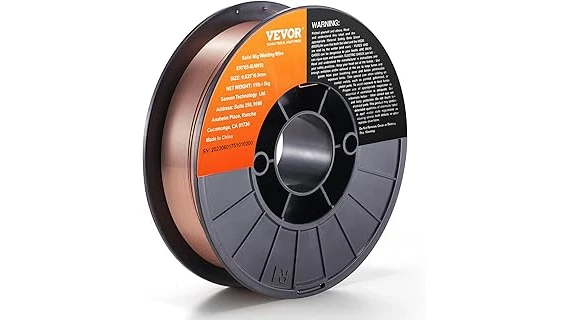
Answer: Yes, the diameter and type of solid wire can influence penetration. Smaller diameter wires (like 0.030″) generally require less amperage for good penetration compared to larger wires (like 0.045″). Different wire formulations also have slight effects.
Question: Can I fix a MIG weld that has too little penetration?
Answer: Yes, you can often fix it by welding over the existing bead with the correct settings to add more heat and fuse deeper. For critical welds, you might need to grind out the shallow weld and re-weld it properly.
Question: How important is the contact tip to work distance for penetration?
Answer: It is quite important. A consistent and correct contact tip to work distance (usually around 3/8″ to 1/2″ for steel) helps maintain a stable arc and focused heat, which is key for achieving good penetration.
Final Thoughts
Improving MIG weld penetration on steel comes down to understanding and adjusting a few key settings. You learned how voltage, wire speed, travel speed, CTWD, and shielding gas all play a part. Practice makes progress.
Keep adjusting your settings, focus on a steady hand, and watch your welds get stronger and deeper. You’ve got this!