Learning TIG welding can be a bit tricky, and one common hurdle beginners face is getting nice, even weld beads. It’s totally normal to wonder, How Do You Fix Uneven Weld Beads in TIG Welding? This guide will make it simple. We’ll break down why beads get uneven and give you easy steps to fix it.
Get ready to make your welds look smooth and clean.
Key Takeaways
- Understand the main reasons TIG weld beads become uneven.
- Learn how to control your torch angle for better bead consistency.
- Discover the impact of travel speed on weld bead shape.
- See how filler metal application affects bead evenness.
- Find out how to adjust amperage for a more uniform bead.
- Know the importance of proper cleaning and preparation for smooth welds.
Why Weld Beads Look Uneven
Lots of new TIG welders struggle with weld beads that aren’t straight or smooth. It’s a common problem, and it usually comes down to a few key things that happen during welding. When a bead looks lumpy, too wide in spots, or has dips, it’s a sign that something in the welding process wasn’t quite right.
But don’t worry, these are all fixable issues with a little practice and the right knowledge.
Torch Angle Matters
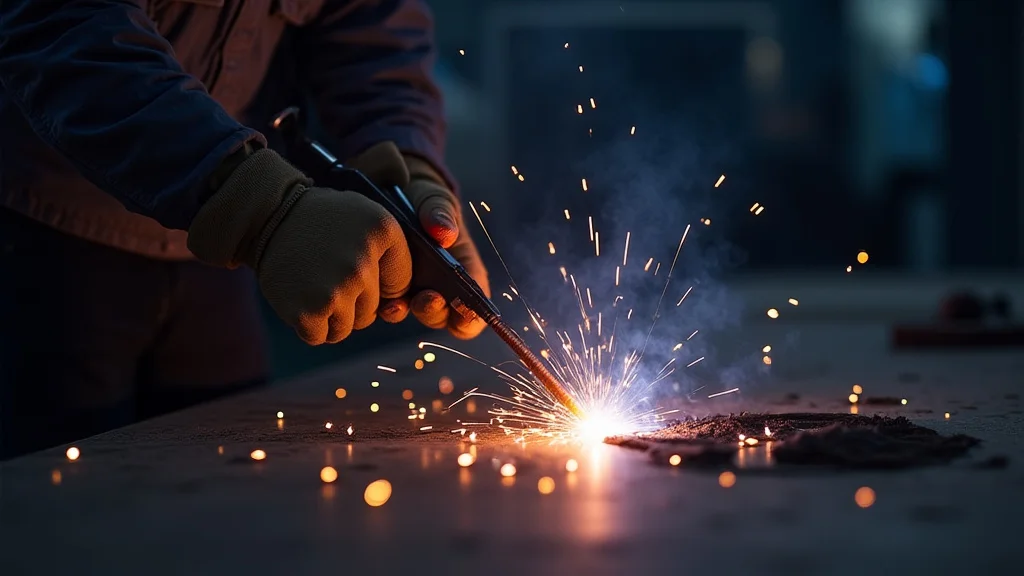
Your torch angle is a big deal for how your weld bead looks. If you tilt the torch too much to one side, the metal will flow that way, making one side of the bead wider and the other side narrower. For a nice, even bead, you want to hold the torch almost straight up and down, just a tiny bit tilted in the direction you’re moving.
Think of it like painting a straight line. If you hold your brush crooked, the paint goes everywhere. With TIG welding, if your torch is crooked, the molten metal pools unevenly.
This leads to those wavy lines instead of smooth, consistent welds.
Finding the Right Travel Speed
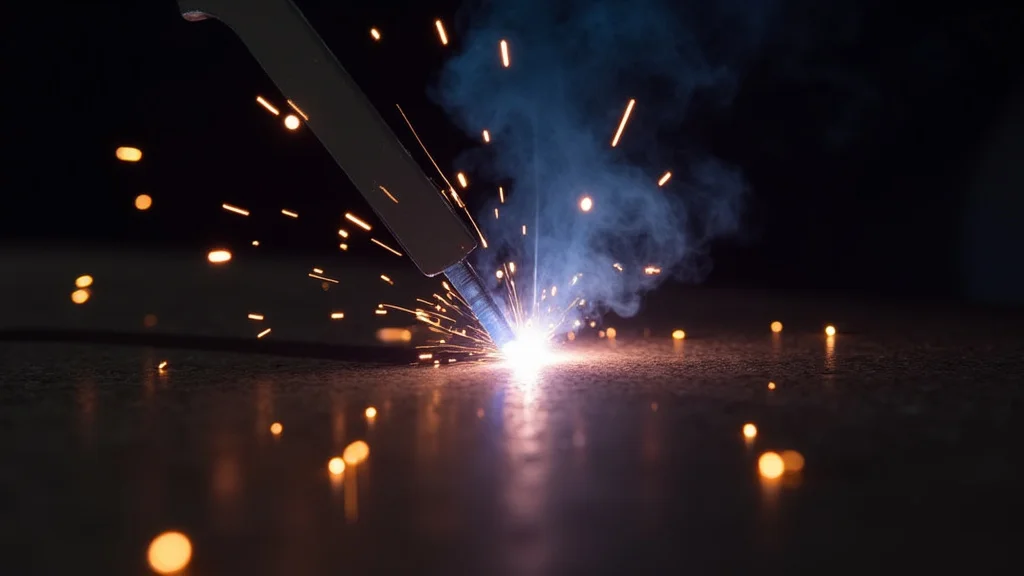
How fast you move your TIG torch along the joint has a huge effect. If you go too slow, the puddle gets too big and can overflow, creating a wide, messy bead. If you move too fast, the puddle doesn’t have enough time to form properly, and you end up with a narrow, tall bead, or even gaps.
The sweet spot for travel speed is when you can see the puddle forming just ahead of your filler rod (if you’re using one) and it’s a good, consistent size. You want to keep a steady pace. This takes practice to get a feel for, but it’s one of the most important skills for even beads.
Filler Metal Application
When you add filler metal, how you do it makes a difference. If you dip the filler rod into the puddle too much or too little, or if you move it in an inconsistent way, it will mess up the bead. You want to add the filler rod smoothly and consistently into the leading edge of the puddle.
Some welders like to dip the filler rod in a rhythmic pattern, like a gentle up-and-down motion. Others prefer a steady feed. The key is consistency.
Avoid jabbing the rod into the puddle or letting it sit too far away. Think of it as feeding a rope into a stream; you want a smooth, steady flow.
Amperage Settings
The amperage setting on your TIG welder controls how hot your arc is. Too much amperage and you’ll melt too much base metal, creating a huge, uncontrolled puddle that’s hard to manage and results in a wide, possibly burnt bead. Too little amperage and the puddle won’t form well, leading to a narrow, weak bead that might not fuse properly.
You need to find the right amperage for the metal thickness you’re welding. A good starting point is usually around 1 amp per thousandth of an inch of metal thickness. For example, if you’re welding 1/8-inch thick steel (which is about 125 thousandths), you’d start around 125 amps.
Always test on scrap pieces first to dial it in.
Cleaning and Preparation
This is a step many beginners overlook, but it’s super important. If the metal you’re welding is dirty, greasy, or has rust or paint on it, it will cause problems. This contamination gets into the weld puddle and can create porosity (little holes) or make the bead rough and uneven.
It also makes it hard for the metal to flow smoothly.
Always clean your metal thoroughly before welding. For steel, use a wire brush or a grinder. For aluminum, use a stainless steel brush dedicated only to aluminum to avoid contamination.
Degrease the area too. Clean metal lets the arc and puddle behave as they should, leading to much smoother welds.
Fixing Uneven Beads: Step-by-Step
Now that we know why beads get uneven, let’s look at how to fix them. It mostly comes down to controlling the factors we just talked about. The best way to fix uneven beads is to prevent them in the first place by doing things right from the start.
However, if you find yourself with an uneven bead, here’s how to adjust and improve.
Adjusting Torch Angle
If your bead is consistently wider on one side, your torch angle is likely the culprit. Try to hold the torch more perpendicular to the base metal. If you find yourself tilting it, consciously try to straighten it out.
Practice holding the torch steady and upright while moving. A slight forward angle in the direction of travel is okay, but avoid leaning it to the sides.
Sometimes, using a welding glove that allows for good wrist support can help you maintain a more consistent torch angle. Experiment with different grip positions to find what feels most natural and stable for you.
Controlling Travel Speed
To fix a bead that’s too wide and flat, you need to move a little faster. If the bead is too narrow and tall, you need to slow down. The goal is a steady rhythm.
Listen to the sound of the arc – it can often tell you if your speed is right. A consistent humming sound is usually good.
Visualize the puddle. You want it to be about as wide as the joint you’re welding. If it’s getting too big, speed up.
If it’s not growing enough, slow down. It’s a dynamic process; you’re constantly adjusting based on how the puddle behaves.
Consistent Filler Rod Feeding
For uneven filler metal, focus on a steady dip into the puddle. If you’re adding too much, reduce the frequency or amount you dip. If you’re not adding enough, increase it.
The filler rod should enter the front edge of the puddle, melting and flowing into it smoothly.
Try to keep the filler rod tip slightly above the puddle when you’re not actively dipping. This prevents contamination and makes it easier to control the flow. Many beginners find it helpful to practice feeding the filler rod without even striking an arc, just to get the motion down.
Dialing in Amperage
If your bead is consistently too wide and melt-through is an issue, lower your amperage. If it’s too narrow, not fusing well, or you’re having trouble melting the base metal, increase your amperage. Always start with a recommended setting and make small adjustments.
It’s better to make small changes and observe the effect than to make big jumps.
Remember that amperage needs change based on metal type, thickness, and joint type. A flat fillet weld might need a different amperage than a corner joint on the same material.
Ensuring Proper Cleaning
If your welds are consistently rough, discolored, or have inclusions, your cleaning process might be insufficient. Go back and ensure you are thoroughly cleaning the base metal. For steel, use a clean grinder disc or wire brush.
For aluminum, use a dedicated stainless steel brush and clean the surface right before you weld.
Good cleaning removes oxides and contaminants that interfere with the welding process. A clean surface allows for a more fluid, even puddle and a stronger, better-looking weld. This is especially critical when welding aluminum, which forms a tough oxide layer quickly.
Common Mistakes and How to Avoid Them
Beginners often make the same few mistakes when trying to get smooth TIG welds. Being aware of these can help you avoid them.
- Inconsistent torch movement: Jerky or uneven torch motion leads to uneven beads. Practice smooth, fluid movements.
- Incorrect arc length: Holding the torch too far from the work creates a wide, flat, and often weak weld. Too close and you can contaminate the tungsten or stub it out. Aim for a consistent, short arc length.
- Not watching the puddle: Focusing too much on the torch or filler rod instead of the molten puddle means you can’t react to changes. The puddle tells you what you need to do.
- Adding filler too erratically: Dipping the filler rod in and out of the puddle too much or too little throws off the bead shape.
- Ignoring material preparation: Dirty metal leads to dirty welds. Always clean your workpiece thoroughly.
Advanced Tips for Smooth Beads
Once you have the basics down, a few advanced techniques can help you achieve even smoother beads:
- Stepping and Stacking: For longer welds, you can weld in short segments (steps) and then “stack” the next bead slightly overlapping the previous one. This helps manage heat and maintain consistency.
- Weaving patterns: While often discouraged for absolute beginners as it can lead to wider beads if done incorrectly, gentle weaving can help distribute heat and fill wider joints. However, for narrow beads, a straight travel is best.
- Pulsed TIG welding: If your machine has a pulse function, it can be a great tool. Pulsing can help control heat input, reduce distortion, and create a more consistent bead appearance, often with a distinct “stack of dimes” look.
- Practicing different joint types: Each joint (butt, lap, corner, T-joint) presents unique challenges. Practicing on all of them will build your overall skill and consistency.
Frequently Asked Questions
Question: How do I know if I’m using the right amount of filler metal?
Answer: You’re using the right amount if the filler metal blends smoothly into the puddle without creating a large lump or leaving gaps. The bead should look like a consistent, slightly raised line.
Question: My welds look like a series of bumps. What am I doing wrong?
Answer: This usually means your travel speed is too slow or you’re adding filler metal too inconsistently. Try to maintain a steady pace and feed the filler rod smoothly into the leading edge of the puddle.
Question: Is it normal for aluminum welds to be harder to keep even than steel welds?
Answer: Yes, it often is. Aluminum has a lower melting point and forms a difficult oxide layer, making the puddle harder to control. Proper cleaning and often using AC amperage on your TIG welder are key for aluminum.
Question: How can I practice to get better at consistent travel speed?
Answer: Practice on scrap pieces of metal. Try to draw a straight line with your torch, focusing on moving at a constant speed without stopping or speeding up and slowing down. You can also practice feeding filler rod rhythmically.
Question: What if my weld beads are too thin and almost look like a line?
Answer: This typically means your travel speed is too fast, or your amperage is too low. Try slowing down your movement and/or increasing your amperage slightly to allow the puddle to form properly.
Final Thoughts
Fixing uneven weld beads in TIG welding is all about control. It boils down to holding your torch steady, moving at the right speed, adding filler metal consistently, and using the correct amperage for the job. Don’t forget that clean metal is your best friend for a smooth, even bead.
With a bit of practice and by focusing on these key points, you’ll see a big difference in your welds. Keep at it, and your beads will look great!