Starting out in welding can feel a bit tricky. You might wonder, What Are the Key Welding Techniques for Beginners? It’s a common question because there are so many ways to join metal! Don’t worry, we’ll break it down simply.
We’ll show you the most important techniques to get you welding confidently. Get ready to learn the basics step-by-step.
Key Takeaways
- You will learn about Stick welding (SMAW) and its advantages.
- You will understand MIG welding (GMAW) and why it’s popular for beginners.
- You will discover TIG welding (GTAW) and its precision applications.
- You will get tips on safety gear and setup for each technique.
- You will find out about practicing basic welds like beads and joints.
- You will be guided on how to choose the right technique for your projects.
Understanding the Basics of Welding
Welding is a way to join two pieces of metal together. It uses heat to melt the edges of the metal, and sometimes adds a special filler material. When the metal cools, it forms a strong bond. It’s like super glue for metal, but much stronger! For anyone new to this skill, knowing the different methods is important.
What Are the Key Welding Techniques for Beginners?
When you’re just starting, you’ll want to focus on the techniques that are easiest to learn and most useful for common projects. The big three you’ll hear about are Stick welding, MIG welding, and TIG welding. Each one has its own way of working and is better suited for different jobs and metal types.
Stick Welding (SMAW)
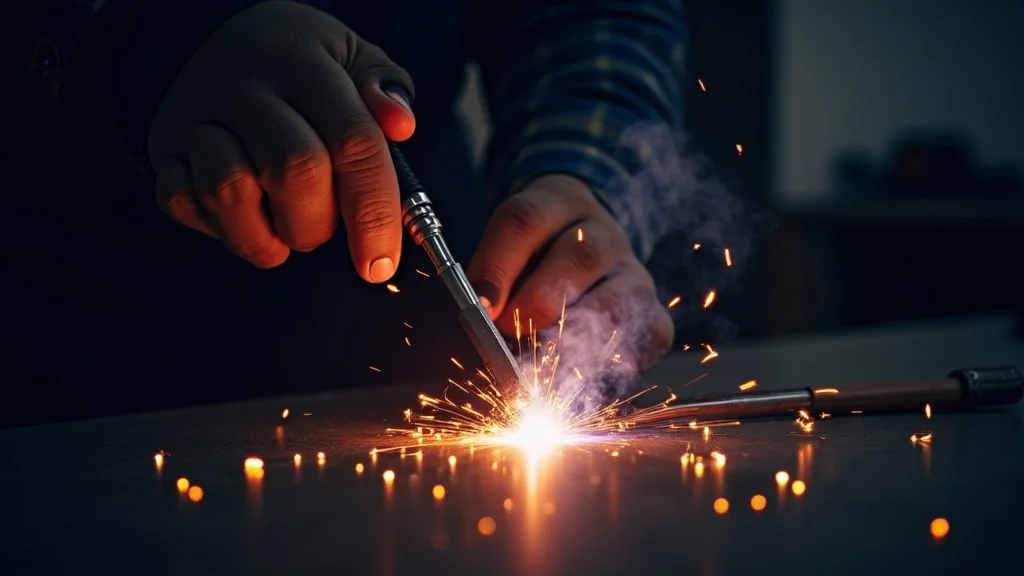
Stick welding, or Shielded Metal Arc Welding (SMAW), is one of the oldest and simplest welding methods. It uses a consumable electrode, which is a metal rod coated in a flux. The electrode melts, forming the weld, and the flux creates a gas shield to protect the molten metal from the air.
Why it’s good for beginners:
- Simple Equipment: The machines are generally less complex and less expensive than other types.
- Portable: Stick welders are often small and can be used in many places, even outside or in windy conditions, because the flux provides protection.
- Works on Rough Surfaces: It can weld on metal that isn’t perfectly clean, like rusted or painted surfaces.
What to know:
Stick welding can create a lot of smoke and sparks. You’ll need to learn how to control the arc and keep a consistent distance from the metal. It can also be a bit harder to get a super smooth finish compared to other methods, but it makes very strong welds.
MIG Welding (GMAW)
MIG welding, or Gas Metal Arc Welding (GMAW), is often called the easiest welding method for beginners to pick up. It uses a wire electrode that feeds automatically from a spool through the welding gun. This wire melts to fill the gap between the metal pieces. A shielding gas also comes out of the gun to protect the weld.
Why it’s good for beginners:
- Fast and Easy: The continuous wire feed makes it quick to lay down a weld bead. It’s generally forgiving and easier to control for new users.
- Clean Welds: MIG welding usually produces cleaner welds with less splatter than stick welding.
- Versatile: It works well on thin to medium-thick metals and can be used on steel, stainless steel, and aluminum.
What to know:
You need a power source, a wire feeder, a welding gun, and a gas cylinder. You also need to pay attention to keeping the gun at the correct angle and distance. Wind can be an issue because it can blow away the shielding gas, so it’s best used indoors or in a protected area.
TIG Welding (GTAW)
TIG welding, or Gas Tungsten Arc Welding (GTAW), is known for producing the cleanest and most precise welds. It uses a non-consumable tungsten electrode to create the arc. You often use a separate filler rod, which you add to the weld pool with your other hand. A shielding gas protects the weld.
Why it’s good (and challenging) for beginners:
- High Quality: It makes very strong, precise, and clean welds with excellent control.
- Versatile Materials: It can weld almost any metal, including steel, stainless steel, aluminum, titanium, and more.
- No Spatter: TIG welding produces no spatter, resulting in a very neat finish.
What to know:
TIG welding requires a lot of practice and coordination. You need to control the torch, the filler rod, and the foot pedal (which controls power) all at the same time. It’s slower than MIG welding and needs very clean metal to work best.
Many beginners find it harder to master at first, but it’s incredibly rewarding.
Setting Up Your Welding Station
No matter which technique you choose, safety and proper setup are super important. Always wear the right protective gear.
Essential Safety Gear
* Welding Helmet: This protects your eyes and face from bright light and sparks. Make sure it has the correct shade lens.
* Welding Gloves: Thick leather gloves protect your hands from heat and sparks.
* Flame-Resistant Clothing: Wear heavy cotton or leather clothing. Avoid synthetic materials that can melt. Long sleeves and pants are a must.
* Safety Glasses: Wear these under your helmet for extra eye protection.
* Work Boots: Sturdy leather boots protect your feet.
Preparing Your Workspace
* Ventilation: Always weld in a well-ventilated area. Fumes can be harmful.
* Clear Area: Make sure there’s nothing flammable nearby. Keep your workspace clean and tidy.
* Ground Clamp: Connect the ground clamp securely to the metal you are welding. This is crucial for completing the electrical circuit.
Practicing Basic Welds
Once you have your gear and your machine set up, it’s time to practice. Starting with basic exercises will build your muscle memory and confidence.
The Weld Bead
A weld bead is a single line of weld metal. Practicing beads helps you learn to control your speed and the distance between your welding tool and the metal.
* For MIG: Try to make a straight line of wire. Keep the gun at a consistent angle.
* For Stick: Focus on maintaining a steady arc length and moving the rod smoothly.
* For TIG: Practice feeding the filler rod while keeping a consistent arc with the tungsten.
Basic Joints
After mastering beads, try joining two pieces of metal. Common beginner joints include:
* Butt Joint: Two pieces of metal laid edge-to-edge.
* Lap Joint: Two pieces of metal overlapped.
* T-Joint: One piece of metal placed on top of another, forming a ‘T’ shape.
Choosing the Right Technique for You
The best welding technique for you depends on what you want to make and what kind of metal you’ll be working with.
* For quick repairs and thicker metal outdoors: Stick welding is a good choice.
* For general fabrication, car work, and ease of learning: MIG welding is often recommended.
* For high-quality, precise work on various metals, especially thin materials: TIG welding is excellent, but takes more time to learn.
Many beginners start with MIG because it offers a good balance of ease of use and quality results. As you gain experience, you might want to try the other methods.
Frequently Asked Questions
Question: Which welding technique is the absolute easiest for someone who has never welded before?
Answer: MIG welding (GMAW) is generally considered the easiest technique for complete beginners. Its automatic wire feed and straightforward control make it quicker to learn the basics.
Question: Do I need to clean my metal before welding?
Answer: Yes, cleaning your metal is very important for all welding techniques. Dirt, rust, paint, or oil can cause weak welds and create a lot of smoke and spatter.
Question: How much does welding equipment cost for beginners?
Answer: Beginner welding machines can range from a few hundred dollars for basic stick or MIG welders to over a thousand for more advanced models. Safety gear is an additional cost.
Question: Can I weld aluminum with basic beginner equipment?
Answer: Some entry-level MIG welders can weld thin aluminum if they have a spool gun attachment or a special setting for aluminum. TIG welding is usually the preferred method for high-quality aluminum welds.
Question: How much practice is needed to get good at welding?
Answer: It takes consistent practice to become proficient. You can learn the basics in a few sessions, but mastering different techniques and applications can take months or even years.
Final Thoughts
Learning welding is a hands-on skill. Focus on the basics of Stick, MIG, and TIG welding. Each has its own strengths for new welders. MIG is often the easiest to start with. Always prioritize safety with the right gear. Practice making simple weld beads and joints on scrap metal. You’ll build confidence and skill with each attempt. Soon, you’ll be creating strong, reliable metal projects.