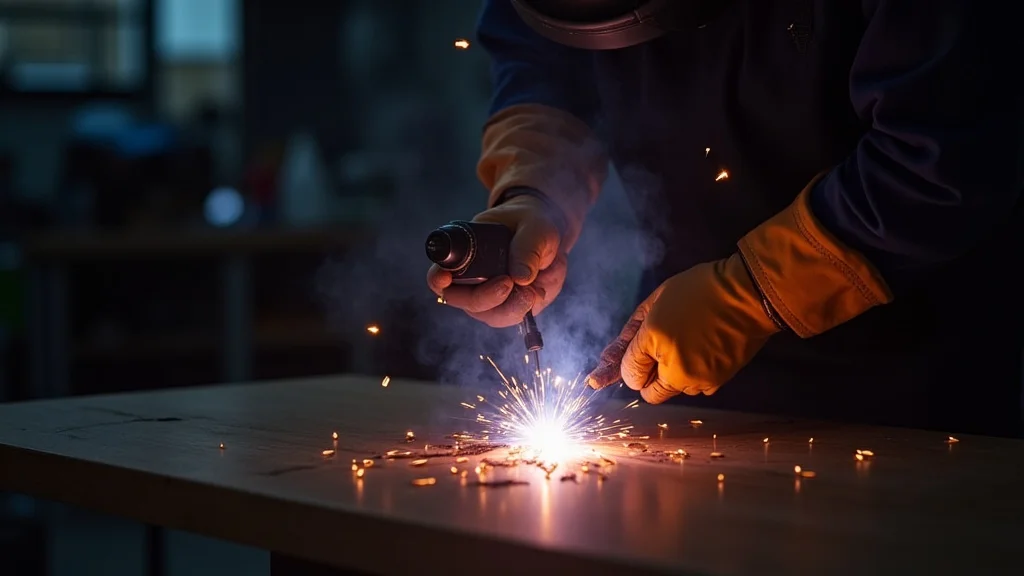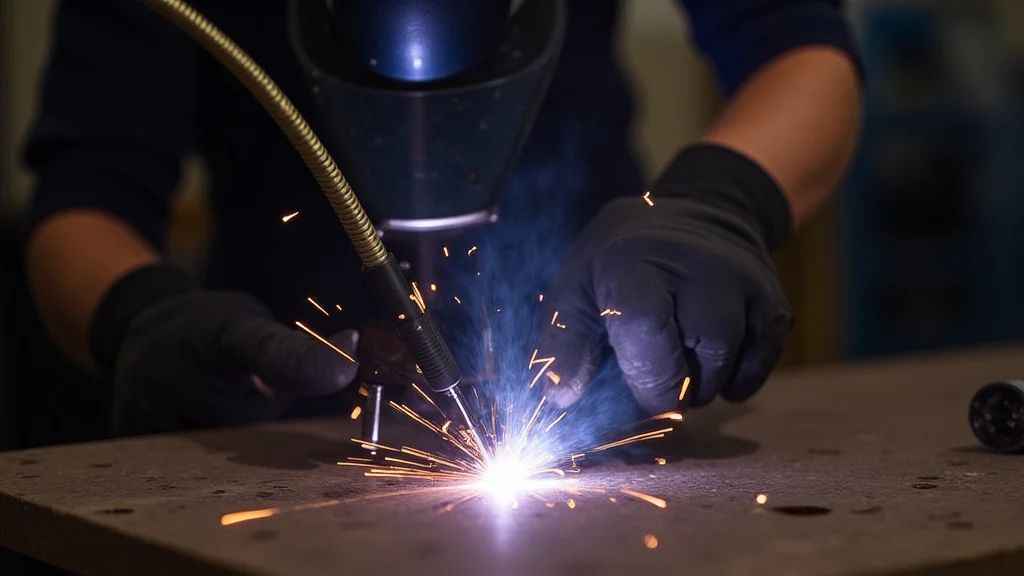
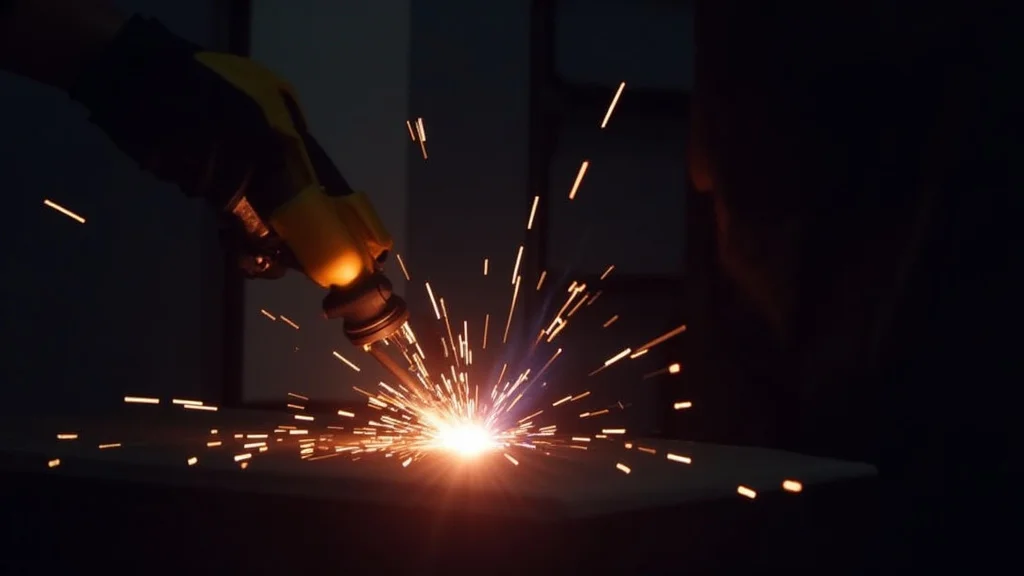
Seeing too many sparks when you weld can be worrying, especially if you’re just starting out. It makes the job harder and can seem confusing. But don’t worry!
We’ll walk through exactly what’s happening and how to fix it. This guide will make the Welding Machine Sparks Excess? Troubleshoot process simple and clear, so you can get back to welding with confidence.
Let’s find out why those sparks are flying and how to stop them.
Key Takeaways
- You will learn the main reasons why your welding machine might be throwing off too many sparks.
- We will explain how to check and adjust your welding settings for fewer sparks.
- You will discover the role of the welding wire and how it affects spark levels.
- We’ll cover how to ensure your welding equipment is in good working order to prevent excess sparks.
- You will get simple steps to fix common sparking issues and improve your welds.
Understanding Too Many Welding Sparks
Why Are My Welding Machine Sparks Excess? Troubleshoot
When you’re welding, sparks are a normal part of the process. They happen when molten metal sprays out. However, if you notice a lot more sparks than usual, it’s a sign something might be off.
Too many sparks can make your work look messy and even make the weld weaker. It can also be a safety concern, as stray sparks can fly further. Many beginners find this a bit puzzling because it’s hard to know exactly what is causing the extra sparks.
It’s not always obvious if it’s the machine, the material, or how you’re welding.
This guide is here to help you figure it out. We will break down the common causes of excessive sparks. We will then give you easy steps to fix them.
You’ll learn how to make your welding cleaner and safer.
Common Causes of Excess Welding Sparks
Several things can cause your welding machine to produce too many sparks. Think of them like clues that tell you what needs adjusting. We’ll go through the most frequent culprits, starting with the settings on your machine.
1. Incorrect Amperage and Voltage Settings
The amperage and voltage settings on your welding machine are like the temperature controls for your welding. If they are too high for the type of metal you’re welding, you’ll get a lot of heat. This extra heat can cause more metal to spray out as sparks.
Amperage Too High
Amperage controls the power of your weld. If it’s too high, the welding wire melts too fast. This can lead to a more violent arc, splashing more molten metal and creating extra sparks.
Imagine trying to melt chocolate with a blowtorch; it would melt way too quickly and splatter everywhere. The same idea applies here.
Voltage Too High
Voltage helps shape the arc. If your voltage is too high, the arc can become too wide and unstable. This wider arc spreads the heat around, causing more spatter and sparks.
It can also make the weld bead look flat and wide, which isn’t always the goal.
2. Wrong Wire Speed (for MIG Welding)
If you’re using a MIG (Metal Inert Gas) welder, the wire speed is very important. This is how fast the welding wire is fed into the arc. If the wire speed is too high, it can cause the wire to burn back too quickly or create a very hot and unstable arc, leading to more sparks.
Think of it like a faucet. If you turn the water on too high, it will splash everywhere. With MIG welding, if the wire feeds too fast, the molten metal has less time to form a stable puddle and more of it can be thrown off as sparks.
3. Incorrect Stick-Out (for MIG Welding)
Stick-out refers to how much of the welding wire is sticking out past the tip of your MIG gun. If this distance is too long, the wire can overheat before it even reaches the weld pool. This extra heat makes the wire melt unevenly and can produce a lot of spatter and sparks.
A good rule of thumb for stick-out is usually between 1/4 inch and 1/2 inch. Keeping this consistent helps maintain a stable arc.
4. Wrong Electrode Angle
The angle at which you hold your welding electrode (or MIG gun) can also affect spark production. Pushing the electrode too much, or pulling it too far back, can disrupt the arc and spray. For MIG welding, a slight push is often recommended.
For stick welding (SMAW), the angle depends on the type of electrode and position, but an extreme angle can lead to more spatter.
5. Travel Speed Issues
How fast you move your welding torch along the joint matters a lot. If you move too fast, the weld may not have enough time to form properly, and the arc can become unstable, leading to more sparks. If you move too slow, you can overheat the metal, which also causes excessive spatter and can burn through thin material.
Finding the right travel speed creates a smooth, consistent bead with fewer sparks.
6. Contaminated Metal or Poor Ground Connection
Dirt, rust, oil, or paint on the metal you’re welding can cause problems. These contaminants can burn and pop, creating extra sparks and making your weld weak. Always clean your metal thoroughly before welding.
A poor ground connection is another major issue. The ground clamp needs to have a solid, clean connection to the metal you are welding. If the connection is loose or dirty, the electrical current can arc erratically, leading to increased spatter and sparks.
Make sure the clamp is tight and on clean metal.
7. Wrong Welding Wire or Electrode Type
Not all welding wires and electrodes are the same. Different types are designed for different metals, thicknesses, and welding processes. Using the wrong type can result in an unstable arc and excess sparks.
For example, using a wire meant for thick steel on thin sheet metal might cause issues.
8. Equipment Problems
Sometimes, the problem isn’t how you’re welding, but the equipment itself. Worn-out contact tips in a MIG gun can cause inconsistent wire feeding and arc problems. A faulty torch or cable can also lead to electrical issues that create more sparks.
Regularly inspect your welding equipment for any signs of wear or damage.
Troubleshooting Steps for Welding Machine Sparks Excess? Troubleshoot
Now that we know the common reasons for too many sparks, let’s look at what you can do to fix them. Follow these steps systematically to pinpoint and solve the problem.
Step 1: Check and Adjust Your Settings
This is the most common place to start. Refer to your welding machine’s manual for recommended settings based on the thickness of the metal you are welding and the type of wire or electrode you are using.
- Amperage/Voltage: If you suspect settings are too high, try reducing them slightly. Weld a test piece and see if the sparks decrease. Make small adjustments rather than big ones.
- Wire Speed (MIG): If using MIG, try lowering the wire speed. You want a smooth, consistent feed of the wire.
Step 2: Verify Wire Stick-Out (MIG)
Ensure you have the correct stick-out. Measure it with a ruler if needed. Aim for that 1/4 inch to 1/2 inch range.
If it’s too long, trim the wire or adjust your technique.
Step 3: Examine Your Electrode Angle and Travel Speed
Try to maintain a consistent angle. For MIG, a slight push is often best. Experiment with moving the torch a little faster or slower on a test piece.
You’re looking for a steady, rhythmic movement that produces a clean bead.
Step 4: Clean Your Material and Check Ground
Always start with clean metal. Use a wire brush or grinder to remove any rust, paint, or oil. Make sure your ground clamp is attached firmly to a clean section of the metal.
Jiggle it a bit to ensure good contact.
Step 5: Inspect Your Welding Wire or Electrode
Ensure you’re using the correct type of wire or electrode for your job. If you’re using MIG wire, check for any kinks or damage in the wire spool that might affect its feed.
Step 6: Inspect Your Equipment
Look at the contact tip on your MIG gun. If it looks worn, pitted, or enlarged, it might need to be replaced. Check your torch cable and connections for any signs of damage.
A damaged liner in the MIG gun can also cause wire feeding problems.
Table: Common Sparking Issues and Solutions
| Problem | Cause | Solution |
|---|---|---|
| Excessive Sparks | Amperage too high | Reduce amperage. |
| Excessive Sparks | Voltage too high | Reduce voltage. |
| Excessive Sparks (MIG) | Wire speed too high | Reduce wire speed. |
| Excessive Sparks (MIG) | Wire stick-out too long | Reduce stick-out to 1/4-1/2 inch. |
| Unstable Arc, Sparks | Dirty metal | Clean metal with wire brush or grinder. |
| Unstable Arc, Sparks | Poor ground connection | Ensure tight, clean connection of ground clamp. |
| Sparks and Poor Weld | Incorrect travel speed | Adjust travel speed for a steady bead. |
| Sparks and Inconsistent Weld | Worn contact tip (MIG) | Replace contact tip. |
Frequently Asked Questions
Question: Why are my welds spitting a lot of sparks?
Answer: This often happens when your welding settings, like amperage or voltage, are too high for the material you’re working with. It can also be due to issues with wire speed, electrode angle, or if your metal isn’t clean.
Question: How does the welding wire affect sparks?
Answer: If the wire speed is too high in MIG welding, it can cause excessive melting and spraying. Also, a wire that’s too long sticking out from the tip (stick-out) can lead to more sparks because it heats up too much.
Question: Can my ground clamp cause too many sparks?
Answer: Yes, a poor ground connection is a common cause. If the clamp isn’t making good, solid contact with clean metal, the electrical current can arc improperly, leading to more spatter and sparks.
Question: What should I do if I’m getting sparks all over the place with my MIG welder?
Answer: First, check your wire speed and stick-out. Make sure they are set correctly for the material thickness. Also, ensure your MIG gun’s contact tip isn’t worn out, as this can cause inconsistent feeding and spraying.
Question: Is it normal to have some sparks when welding?
Answer: A small amount of sparks is normal. They are a natural byproduct of the welding process. However, a large, excessive amount usually indicates an issue that needs to be addressed to improve weld quality and safety.
Final Thoughts
Fixing too many welding sparks comes down to checking a few key things. It’s usually about adjusting your machine’s settings. Make sure your wire speed and stick-out are right for MIG welding.
Always start with clean metal and a solid ground. Inspect your equipment like the contact tip too. By following these simple steps, you can reduce excess sparks.
This leads to cleaner welds and a safer workspace. Keep practicing, and you’ll get the hang of it!