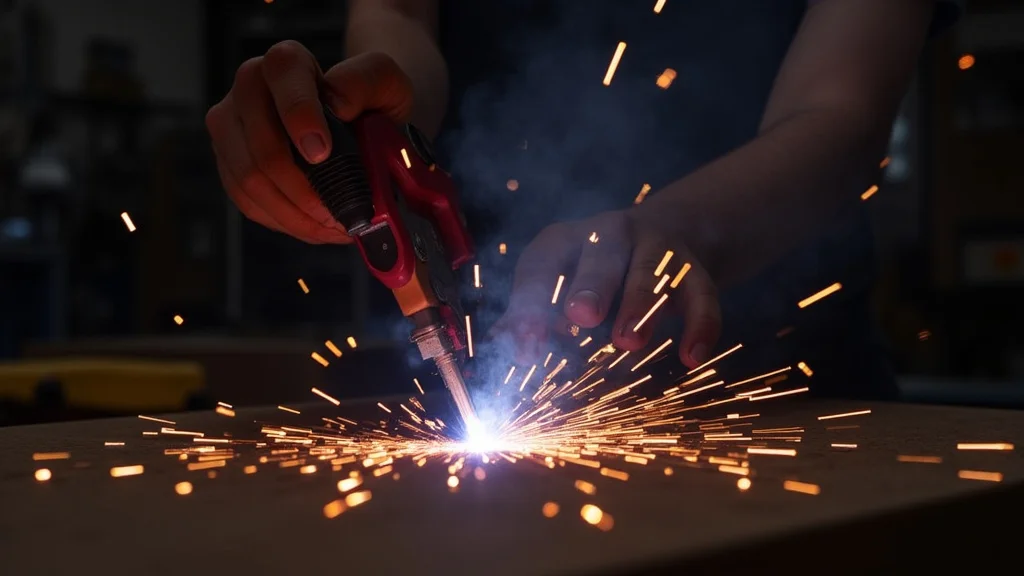
Many folks starting out with MIG welding run into trouble with the trigger. It might stick, not send wire, or just act plain weird. This can be frustrating when you’re trying to make good welds.
But don’t worry, fixing a MIG Welder Trigger Problem? Step Fix is usually pretty simple. We’ll walk through exactly what to do, step by step.
First, let’s look at the main things you need to know.
Key Takeaways
- You will learn how to identify common MIG welder trigger issues.
- This guide will show you simple ways to clean and inspect your trigger.
- You will discover how to check and replace worn trigger parts.
- We’ll cover basic troubleshooting for wiring and connections.
- You’ll gain confidence in fixing your own MIG welder trigger.
- This post offers practical steps for a quick and easy fix.
Understanding MIG Welder Trigger Issues
The trigger on your MIG welder is like the gas pedal for your welding gun. When you press it, it tells the welder to do a few things: start the gas flow, send wire out, and start the electrical current. If any part of this process isn’t working right, your trigger might feel off, or the welder just won’t weld.
For beginners, these problems can seem like a big deal. You might think you need a new welder or an expensive repair. But most of the time, it’s just a small part that needs a little attention.
Knowing what to look for makes fixing it much easier.
Why the Trigger Matters
Your MIG gun’s trigger is the main control. It connects your hand to the welding machine. When you squeeze, it’s a signal.
This signal starts the whole welding sequence. Without a working trigger, you can’t weld.
Common issues often happen because of wear and tear, dirt, or simple connection problems. These are normal for tools that get used. The good news is that these issues are usually fixable without needing to be an expert welder.
Common MIG Welder Trigger Problems
Let’s look at what might be going wrong with your MIG welder’s trigger.
1. Trigger Won’t Engage
This is when you squeeze the trigger, but nothing happens. No wire comes out, no gas flows, and no arc starts. It’s like the gun is completely dead.
Possible causes:
- Bad connection at the trigger switch.
- The trigger switch itself is broken.
- A break in the wire going from the trigger to the welder.
- The welder is not turned on or is not set up correctly.
2. Wire Feeds, But No Arc
You pull the trigger, and the wire starts feeding out of the gun, but you don’t get any welding power. This means the wire feed part is working, but the electrical current isn’t starting.
Possible causes:
- The main power switch on the welder is off.
- The connection to the work clamp is bad.
- The trigger switch isn’t activating the power circuit.
- A problem inside the welder related to the power contactor.
3. Gas Flow Only, No Wire or Arc
When you squeeze the trigger, you hear and see gas coming out of the nozzle, but no wire feeds, and there’s no arc. This tells you the gas solenoid is working, but the wire feed motor and the power circuit are not activating.
Possible causes:
- The wire feed motor is not getting power.
- The trigger switch isn’t sending the signal to the wire feed motor.
- The connections to the wire feed motor are loose or broken.
4. Intermittent Trigger Action
This is when the trigger works sometimes, but not always. It might feel sticky, or it might cut in and out while you’re welding. This is often the most annoying type of problem.
Possible causes:
- Dirt or debris inside the trigger assembly.
- A loose wire connection inside the gun or at the welder.
- A worn-out trigger switch.
- Problems with the cable wrap or strain relief.
5. Trigger Feels “Spongy” or Weak
The trigger might still work, but it feels less responsive or has a weak spring action. It doesn’t have that crisp feel it used to.
Possible causes:
- The trigger spring might be weak or broken.
- Dirt and grime inside the trigger mechanism.
- The trigger linkage is not moving freely.
Troubleshooting Your MIG Welder Trigger: A Step-by-Step Fix
Let’s go through the steps to fix your MIG Welder Trigger Problem? Step Fix. We’ll start with the easiest things and move to more involved checks.
Step 1: Safety First!
Before you touch anything inside your welder or gun, always make sure it’s unplugged. Welding equipment can store electricity, even when turned off. Unplugging it is the most important first step to avoid shocks.
Step 2: Check Your Welder’s Basics
Sometimes, the problem isn’t the trigger itself. It’s a setting on your welder or a simple connection issue.
- Is the welder plugged in? It sounds obvious, but double-check the power cord is firmly in the outlet.
- Is the welder turned on? Make sure the main power switch on the machine is in the “On” position.
- Is the work clamp attached properly? The clamp must be on a clean piece of metal. A dirty or loose work clamp is a common cause for no arc.
- Are your settings correct? Check your voltage and wire speed settings. While unlikely to stop the trigger entirely, incorrect settings can cause odd behavior.
Step 3: Inspect the MIG Gun Cable and Handle
The MIG gun is what you hold and operate. The trigger mechanism is inside the handle, and the cable connects it to the welder.
- Look for visible damage: Check the entire length of the MIG gun cable. Look for any cuts, burns, or worn spots. Damaged cables can break wires inside.
- Examine the trigger area: Make sure there’s no dirt, grease, or debris packed around the trigger. Sometimes, a bit of dust can stop it from moving freely.
- Check the strain relief: Where the cable enters the gun handle, there’s a rubber or plastic piece called a strain relief. Ensure it’s not cracked or loose, as this can put stress on the internal wires.
Step 4: Cleaning the Trigger Switch
Dirt and grime are the biggest enemies of a clean electrical connection. Even a small amount can cause problems.
- Accessing the trigger: You’ll likely need to remove the outer housing of the MIG gun handle to get to the trigger switch. Most handles have a few screws holding them together. Keep track of which screw goes where.
- Visual inspection: Once the cover is off, look at the trigger switch. See if there’s any obvious dirt, carbon build-up, or corrosion on the contacts.
- Cleaning the contacts:
- For light dirt: Use a can of electrical contact cleaner. Spray it directly onto the switch contacts. Work the trigger a few times to help spread the cleaner. Let it dry completely.
- For heavier dirt or corrosion: You might need to gently clean the contacts with a fine-grit sandpaper (like 400-grit or finer) or a pencil eraser. Be very careful not to damage the contacts. Always follow up with electrical contact cleaner.
- Reassemble: Put the gun handle back together carefully.
Step 5: Checking Trigger Switch Wires
The trigger switch has wires connected to it that carry the signal to the welder. These wires can become loose or break.
- Inspect connections: With the gun handle open, check that all wires are securely attached to the trigger switch terminals. If a wire is loose, you can often crimp it back on or solder it if you have the tools and skill.
- Look for breaks: Gently tug on each wire. If a wire feels weak or comes off easily, it might be broken inside its insulation. This usually requires repairing or replacing the gun cable.
- Test continuity (if you have a multimeter): If you have a multimeter, you can test the trigger switch itself. Set your multimeter to continuity mode (it usually beeps when the probes touch). Touch one probe to each terminal of the trigger switch. Squeeze the trigger. You should hear a beep when the trigger is pressed and no beep when it’s released. If it doesn’t beep, or beeps all the time, the switch is likely bad.
Step 6: Examining Internal Connections at the Welder
The MIG gun cable plugs into the front of your welder. There are connections inside the machine that the gun cable attaches to.
- Unplug the welder: Again, safety first. Make sure the welder is unplugged.
- Locate the gun connection: Find where the MIG gun cable plugs into your welder.
- Check for loose wires: Some welders allow you to access these connections by removing a cover panel. If you can safely access them, check that the wires from the gun cable are securely connected to the terminals inside the welder. Sometimes, they’re held on by screws, and one might have vibrated loose.
- Inspect the plug: If your gun has a separate plug that goes into the welder, check the pins for any damage or corrosion.
Step 7: Testing the Wire Feed Motor and Gas Solenoid
If your trigger activates the wire feed but not the arc, or vice versa, the issue might be with those specific circuits.
- Wire feed motor: If the wire feeds but there’s no arc, the trigger might not be telling the power circuit to turn on. If you press the trigger and nothing happens at all (no wire, no arc, no gas), the problem is likely before these systems.
- Gas solenoid: If gas flows but nothing else, the trigger might be okay for the gas system but not for the wire feed or power.
Testing these directly often requires more advanced knowledge and a multimeter. However, if you’ve cleaned the trigger and checked all wires, and you still have a specific problem (like only gas, or only wire feed), it points to an issue with the power contactor or wire feed motor circuit inside the welder itself. For these, consulting your welder’s manual or a professional might be necessary.
Step 8: Replacing Parts (If Necessary)
If you’ve determined that a part is faulty, it’s time to think about replacement.
- Trigger Switch: If your multimeter test showed the trigger switch is bad, you’ll need to replace it. They are usually inexpensive and available from welding supply stores or online. Make sure to get the correct replacement for your specific MIG gun model.
- MIG Gun Cable: If the cable itself is damaged, or if internal wires are broken, replacing the entire MIG gun cable assembly might be the best option. This can be a bit more involved but is a common repair.
- Other Components: Problems with the wire feed motor or gas solenoid are less common trigger-related issues and usually indicate a larger problem within the welder.
Troubleshooting Table
Here’s a quick look-up table for common issues and checks:
| Problem | Possible Cause | What to Check First |
|---|---|---|
| Trigger does nothing | Loose wire, bad switch, no power | Unplug welder, check gun cable connections, inspect trigger |
| Wire feeds, no arc | Work clamp issue, power circuit problem | Check work clamp, inspect trigger’s power signal wires |
| Gas flows, no wire/arc | Wire feed motor issue, trigger signal to motor | Inspect trigger’s wire feed signal wires |
| Intermittent trigger | Dirt, loose wire, worn switch | Clean trigger thoroughly, check all connections |
Frequently Asked Questions
Question: How often should I clean my MIG welder trigger?
Answer: It’s a good idea to clean your MIG welder trigger at least every few months, or more often if you use your welder frequently or in dusty environments. Regular cleaning prevents dirt buildup that can cause problems.
Question: Can I fix a broken wire inside my MIG gun cable?
Answer: Yes, you can repair a broken wire, but it requires good soldering skills and heat shrink tubing. However, if the cable is severely damaged or has multiple broken wires, replacing the entire cable assembly is often a more reliable solution.
Question: What is a work clamp, and why is it important for the trigger?
Answer: The work clamp is the clip that attaches to the metal you are welding. It completes the electrical circuit. If it’s not making good contact, the arc won’t start, even if the trigger is working perfectly.
The trigger signals the power to flow through the circuit completed by the work clamp.
Question: My trigger feels sticky. What’s the easiest fix?
Answer: The easiest fix for a sticky trigger is to use electrical contact cleaner. Remove the gun handle cover, spray the cleaner on the trigger mechanism and switch, and then work the trigger several times. Let it dry completely.
Question: When should I call a professional for my MIG welder trigger?
Answer: You should call a professional if you’ve gone through these steps and the problem persists, if you’re not comfortable working with electrical components, or if you suspect a problem inside the main welder unit like the power contactor or wire feed drive system.
Final Thoughts
Fixing a MIG Welder Trigger Problem? Step Fix is usually a straightforward process. By checking the basics, cleaning out dirt, and inspecting wire connections, you can often get your welder back in action.
Most issues are due to simple wear or debris. Don’t hesitate to get hands-on with your equipment. These steps help you solve common problems and build confidence.
You’ve got the knowledge to tackle these common trigger hiccups.