It can be frustrating when your stick welder stops working right in the middle of a project. This is a really common issue for anyone new to stick welding, and it can seem confusing at first. But don’t worry!
We’re going to walk through how to fix it, step by step. We’ll look at the most likely reasons this happens and how you can get back to welding quickly.
Key Takeaways
- Learn the common reasons your stick welder might quit mid-weld.
- Discover simple checks you can do to fix power issues.
- Understand how electrode choice affects your welding.
- Find out how to troubleshoot arc stability problems.
- Get tips on maintaining your welder for fewer interruptions.
Why Your Stick Welder Stops Mid-Job and How to Fix It
Understanding the Basics of Stick Welding
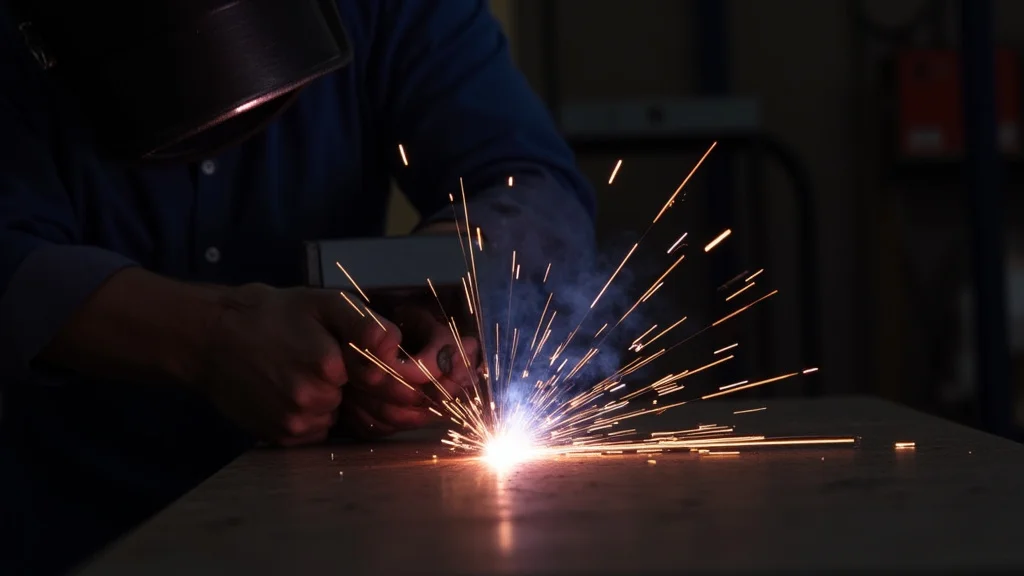
Stick welding, also known as Shielded Metal Arc Welding (SMAW), is a popular method for joining metal. It uses an electric arc to melt the base metal and the electrode, which acts as filler material. The coating on the electrode melts too, creating a shielding gas to protect the weld puddle from air contamination.
When your stick welder suddenly stops, it usually means something is interrupting the flow of electricity needed to create and maintain the arc. This interruption can stem from several sources, often related to power supply, the welding leads, the electrode itself, or the machine’s settings.
Common Causes for a Stick Welder Stopping Mid-Job
Many beginners face the challenge of their welder cutting out unexpectedly. This is often due to simple, fixable issues rather than a broken machine. Understanding these common culprits can save you a lot of time and frustration.
Power Supply Problems
The most frequent reason a welder stops is an issue with the power it’s receiving. This could be a problem with the wall outlet, the extension cord, or even the circuit breaker.
Check the Outlet: Ensure the outlet you’re plugged into is live and working. Try plugging in another tool to confirm it has power. Sometimes, the outlet itself might be faulty.
Inspect the Power Cord: Look for any damage to the power cord. Frayed wires or a damaged plug can cause intermittent power loss. If you find damage, do not use the cord and replace it immediately.
Extension Cord Issues: If you’re using an extension cord, it needs to be heavy-duty and rated for the amperage your welder draws. An undersized cord can overheat and restrict power flow, causing the welder to cut out. Shorter, thicker cords are always better for welding.
Circuit Breaker Tripping
Welders draw a lot of power. If your circuit breaker trips, the welder will stop working. This is a safety feature designed to prevent overheating or electrical overload.
Check the Breaker: Look at your electrical panel. If the breaker is tripped (usually in the middle position or off), reset it. If it trips again immediately, there might be a larger electrical problem or your welder is drawing too much power for that circuit.
You might need a dedicated circuit for your welder.
Overheating: Welders can also overheat, especially during long welding sessions or in hot environments. Many machines have a thermal overload switch that will shut them down until they cool off. Let the welder rest for 15-30 minutes, and it might start working again.
Issues with Welding Leads and Connections
The cables that carry electricity from the welder to your electrode holder and workpiece are critical. Poor connections or damaged cables can interrupt the current.
Ground Clamp Connection: The ground clamp must be securely attached to a clean piece of metal. Any rust, paint, or dirt on the workpiece or the clamp can prevent a good electrical connection. Scrape the surface where you attach the ground clamp to ensure bare metal contact.
A loose ground clamp is a very common cause of a weak or absent arc.
Electrode Holder Connection: Make sure the electrode is firmly clamped in the electrode holder. A loose connection here means the electricity can’t flow properly to the electrode.
Cable Condition: Inspect your welding leads (the electrode cable and the ground cable) for any cuts, burns, or damage. Damaged cables can cause power loss. Ensure the connections at both the welder and the holder/clamp are tight and clean.
Electrode Problems
The type and condition of the welding electrode you’re using can also cause the arc to stop.
Wrong Electrode Type: Different welding jobs require different types of electrodes. For example, using an E6011 electrode on a very clean, thin piece of steel might cause sputtering and arc instability, leading to it stopping. Consult your welder’s manual or look up electrode charts for guidance.
Damaged or Old Electrodes: Electrodes can become damaged if dropped or exposed to moisture. This can affect their performance. Old, degraded electrodes might not strike an arc reliably or maintain it.
Electrode Coating: If the coating on the electrode is chipped or peeling, it can lead to poor shielding and an unstable arc. This can cause the arc to extinguish unexpectedly.
Welder Settings and Controls
Incorrect settings on your welder can lead to an unstable arc that’s hard to maintain.
Amperage Setting: The amperage (current) controls how hot your arc is. If it’s too low for the electrode you’re using, you won’t get enough heat to melt the metal and create a continuous weld. If it’s too high, you might burn through the metal too quickly or cause excessive spatter.
Polarity: Stick welders use either AC (alternating current) or DC (direct current) polarity. The electrode packaging will specify which polarity to use. Using the wrong polarity can result in an unstable arc that’s difficult to control and prone to stopping.
DC+ (electrode positive) is common for many electrodes, while DC- (electrode negative) and AC have specific uses.
Hot Start/Arc Force: Some modern welders have features like “Hot Start” and “Arc Force.” Hot Start provides a temporary boost in amperage when you strike the arc, making it easier to get started. Arc Force adjusts the amperage output to prevent the arc from going out if the electrode gets too close to the workpiece. If these settings are off or non-existent on an older machine, striking and maintaining an arc can be trickier.
Troubleshooting Steps: A Practical Guide
When your stick welder suddenly stops, follow these steps to find the problem.
Step 1: Check Power and Connections
Visual Inspection: Start by looking at your power cord, extension cord (if used), and plugs. Do you see any damage? Are the connections tight?
Test Outlet: If possible, test the outlet with another small appliance.
Ground Clamp: Ensure the ground clamp is firmly attached to a clean metal surface. Wiggle it to ensure good contact.
Electrode Holder: Check that the electrode is securely seated in the holder.
Step 2: Inspect Your Cables
Lead Condition: Examine both welding leads for any signs of wear, cuts, or burns. Ensure they are securely connected to the welder terminals.
Step 3: Review Electrode and Settings
Electrode Type: Is the electrode you are using appropriate for the job and your welder? Check the packaging for recommended settings and polarity.
Amperage: If you recently changed electrodes, did you also adjust your amperage setting? Refer to electrode charts for guidance.
Polarity: Double-check that your welder is set to the correct polarity for the electrode you are using.
Step 4: Consider Machine Overheating
Listen and Feel: If the welder has been running for a while, especially in a warm environment, it might have overheated. You might notice the machine feels unusually hot, or a thermal indicator light might be on.
Cool Down: Turn off the welder and let it cool down for at least 20-30 minutes. Ensure it’s in a well-ventilated area.
Step 5: Test the Arc
Strike the Arc: After checking everything, try striking an arc again. If it works, slowly try to start welding.
Observe: Pay attention to how the arc behaves. Is it steady? Is it sputtering or cutting out?
This can give you clues about what’s still wrong.
When to Seek Professional Help
If you’ve gone through these troubleshooting steps and your welder still won’t work, or if you suspect internal damage, it might be time to contact a qualified repair technician. Do not attempt to open the welder yourself unless you have the proper training and safety equipment, as they contain high-voltage components.
Frequently Asked Questions
Question: Why does my stick welder keep shutting off after a few minutes?
Answer: This is often a sign of the welder overheating. Many machines have a thermal overload protector that shuts them down to prevent damage. Make sure the welder is in a well-ventilated area and give it a good break to cool down.
If it keeps happening even after cooling, there might be a cooling fan issue or it could be working too hard for its rating.
Question: I can’t get an arc to strike at all. What’s wrong?
Answer: No arc usually points to a power supply or connection problem. First, check if the welder is plugged in and the outlet has power. Then, inspect your ground clamp and make sure it’s on clean metal and clamped tightly.
Also, verify the electrode is correctly seated in the holder.
Question: My arc is very jumpy and keeps going out. What can I do?
Answer: An unstable arc suggests issues with your electrode, settings, or connections. Try a new electrode of the correct type. Make sure your amperage setting is appropriate for that electrode and that you’re using the correct polarity.
Also, recheck your ground clamp connection for a solid contact.
Question: Can a damaged welding cable stop my stick welder from working?
Answer: Yes, absolutely. Welding cables carry a lot of current. If they are cut, burned, or have loose connections at either the welder or the work clamp/electrode holder, the current can be interrupted or significantly reduced, preventing a stable arc.
Question: I’m using a new electrode, but the arc is still bad. What else could it be?
Answer: If you’ve tried a new, appropriate electrode and still have arc issues, look at your welder’s settings. Ensure the amperage is correct for the electrode and workpiece thickness. Double-check the polarity is set as recommended for that specific electrode type.
Sometimes, even a good electrode can perform poorly if the machine settings are wrong.
Final Thoughts
When your stick welder stops mid-job, it’s usually a straightforward issue. Most problems come down to power connections, cable integrity, or correct settings for your electrode. By systematically checking these common points—starting with your power source, ground clamp, and electrode connections—you can often get back to welding quickly.
Remember to always keep your equipment clean and in good repair. A little regular maintenance goes a long way in preventing unexpected shutdowns.