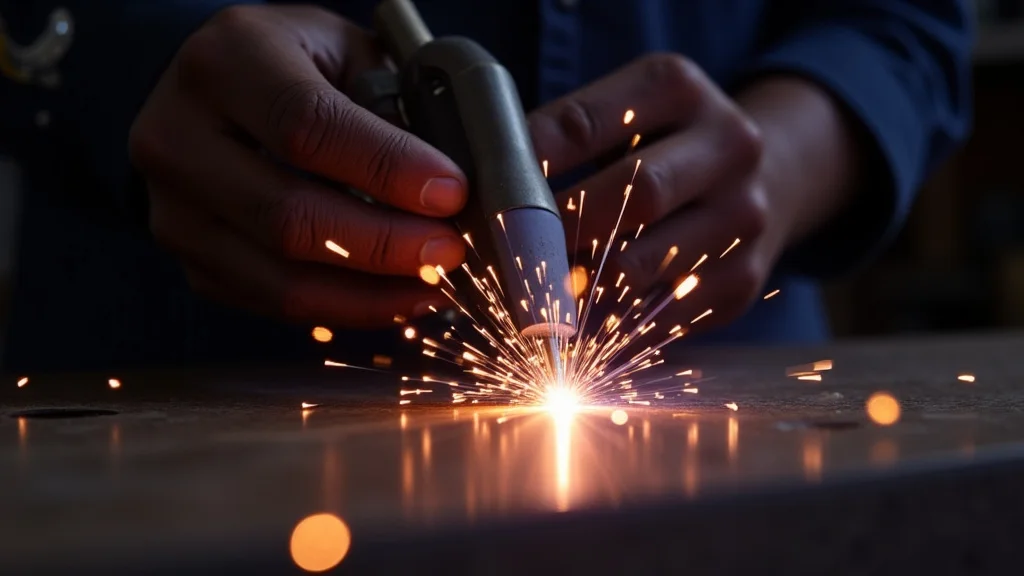
Having your TIG welder arc suddenly jump or become unstable can be frustrating, especially when you’re just starting out. It’s a common hiccup that many beginners face, and it might seem tricky to fix at first. But don’t worry!
We’ve got simple, step-by-step solutions to help you get your arc back on track. We’ll cover the most likely causes and show you exactly what to do to achieve a steady, controlled weld.
Key Takeaways
- You will learn what causes a TIG welder arc to fall out or become unstable.
- Discover how proper setup of your TIG welder prevents arc instability.
- Understand the role of tungsten and shielding gas in maintaining a steady arc.
- Learn how to adjust your welding technique to keep the arc from falling out.
- Find out how to troubleshoot common TIG welding arc issues.
Understanding TIG Welder Arc Falling Out? Step Solutions
What Does It Mean When a TIG Arc Falls Out?
When we talk about a TIG welder arc “falling out,” it means the arc that melts your metal suddenly becomes weak, flickers, or goes out completely. This makes it impossible to create a good weld. It’s like trying to write with a pen that keeps running out of ink.
For someone new to TIG welding, this can be a major roadblock. You’re trying to make a nice, clean bead, and then poof! The arc is gone.
This makes the process feel unpredictable and hard to master.
Common Reasons for an Unstable TIG Arc
Several things can make your TIG arc behave badly. Thinking about them helps you fix the problem. It’s usually not just one big thing, but a few smaller things that add up.
Knowing these common causes is the first step to solving the TIG Welder Arc Falling Out? Step Solutions puzzle.
1. Incorrect Gas Flow
Shielding gas is super important in TIG welding. It protects your molten puddle from the air. If the gas flow is too low, the air can get in and mess up the arc.
You might see the arc sputtering or looking fuzzy. If the flow is too high, it can actually blow the arc around, making it unstable. Think of it like a strong wind blowing on a candle flame; it can make the flame flicker or even go out.
Here’s what to check:
- Make sure your gas bottle is open.
- Check the regulator on your gas bottle to see the pressure.
- Look at the flowmeter on your welder to ensure the gas is flowing correctly.
- Ensure your gas line isn’t kinked or blocked.
2. Contaminated Tungsten Electrode
The tungsten electrode is what creates the arc. If its tip gets dirty or covered in molten metal, it can’t produce a stable arc. This happens if you accidentally touch the tungsten to your workpiece or filler metal.
A dirty tungsten tip will often make the arc wander or become very erratic. It might also look like it’s ‘balling up’ at the tip instead of staying sharp.
Keeping your tungsten clean is key:
- Grind your tungsten to a sharp point on a dedicated grinding wheel.
- Never let the tungsten touch the weld puddle or filler rod.
- If it gets contaminated, stop welding and re-grind the tip.
3. Poor Ground Connection
Your TIG welder needs a good electrical connection to work properly. This is called the ground clamp. If the ground clamp isn’t making good contact with the metal you’re welding, the electrical circuit isn’t complete.
This can lead to a weak or unstable arc. You might also get shocks or hear popping sounds.
A solid ground connection means:
- Scrape away any rust, paint, or dirt from the metal where the clamp attaches.
- Make sure the clamp is tight and has full contact with the metal.
- Check the ground cable for any damage.
4. Wrong Polarity Setting
TIG welders can run on different polarities. For most TIG welding on steel and stainless steel, you’ll use DCEN (Direct Current Electrode Negative). This directs most of the heat into the workpiece, giving you good penetration.
If you accidentally set it to DCEP (Direct Current Electrode Positive) or AC (Alternating Current) when you shouldn’t, the arc will behave strangely. For AC welding on aluminum, it’s different, but DCEN is standard for many metals.
Double-check your settings:
- Refer to your welder’s manual.
- Ensure you’re set to DCEN for steel and most stainless steel.
- Be aware of when AC is needed (like for aluminum).
5. Issues with the Tungsten Type and Grinding
There are different types of tungsten electrodes, each with different properties. Using the wrong type or grinding it incorrectly can affect arc stability. For example, pure tungsten is older and less common now; ceriated or lanthanated tungstens are generally better for DC welding.
How you grind it also matters. A poorly ground tip can lead to an unstable arc. It should be ground to a long, sharp point for DCEN.
Consider these points:
- Use a 2% lanthanated (blue band) or 2% ceriated (gray band) tungsten for steel.
- Grind the tungsten to a long, tapered point.
- Avoid using a wire brush or grinding wheel that has been used for other metals, as this can contaminate the tungsten.
6. Arc Length
The distance between the tungsten electrode and the workpiece is called the arc length. This is super important for a stable arc. If the arc is too long, it can become difficult to control, wander, and might even extinguish.
If it’s too short, you risk touching the tungsten to the puddle, which contaminates it and causes spatter.
Maintain the right arc length:
- Try to keep the arc length roughly the same as the diameter of your tungsten electrode.
- It takes practice to get this right, so focus on consistency.
- Watch the puddle and listen to the arc; you’ll learn to feel when it’s right.
7. Travel Speed and Angle
How fast you move the torch and the angle you hold it at also play a role. If you move too fast, you won’t melt enough metal. If you move too slow, you can overheat the part.
Holding the torch at a steep angle can pull the arc. A slight push or drag angle is usually best, depending on the material and joint. Keep the torch pointed steadily at the weld area.
Pay attention to your movement:
- Move at a steady pace, letting the puddle form and flow nicely.
- Hold the torch at a consistent angle, usually around 5-15 degrees.
- Keep the torch tip directly over the joint you are welding.
8. Welder Settings (Amperage and Other Controls)
The amperage setting on your welder is critical for controlling the heat. If it’s too low, you won’t melt the metal properly, and the arc might seem weak. If it’s too high, you can blow holes through thin material or create excessive spatter.
Other settings like pre-flow and post-flow of gas also affect the arc’s start and stop. Too little gas pre-flow means the arc might not start cleanly. Not enough post-flow means the hot tungsten can suck in air.
Dial in your welder:
- Start with recommended amperage settings for your material thickness.
- Adjust amperage as needed based on how the puddle is melting.
- Set gas pre-flow and post-flow according to your machine’s manual, usually a few seconds each.
9. Electrical Interference or Poor Power Supply
Sometimes, the problem isn’t with your setup but with the power source. If you’re welding near other electrical equipment that’s causing interference, it can affect the arc. A weak or inconsistent power supply can also cause the arc to dip or cut out.
This is less common but worth considering if you’ve checked everything else.
What to look for:
- Try welding in a different location to rule out interference.
- Ensure your extension cords are heavy-duty and not too long.
- Check the power outlet you are using.
Step-by-Step Solutions for a Stable TIG Arc
Now that you know the common causes, let’s walk through how to fix them. Following these steps will help you get that smooth, consistent arc you’re looking for. It’s all about building good habits and checking your setup before you start welding.
Before You Strike the Arc: Pre-Weld Checks
This is the most important stage. Taking a few minutes here saves a lot of frustration later. Think of it like a pilot doing a pre-flight check.
Step 1: Check Your Shielding Gas
Make sure your gas bottle valve is fully open. Look at the regulator and flowmeter to confirm you have adequate pressure and flow rate set. For most steel, a flow rate of 15-25 cubic feet per hour (CFH) is common.
Ensure the gas hose is connected securely and isn’t kinked.
Step 2: Inspect Your Tungsten Electrode
Is your tungsten clean and sharp? Grind it to a clean, tapered point using a dedicated grinder. Avoid using the same grinder you use for other metals.
A fresh, sharp point is essential for a focused and stable arc. If it’s already contaminated, stop and re-grind.
Step 3: Verify Your Ground Connection
Ensure your ground clamp is attached to clean metal. Remove any paint, rust, or debris from the workpiece where the clamp connects. A tight, clean connection is vital for a complete electrical circuit.
Step 4: Confirm Welder Settings
Double-check your amperage setting for the material thickness. Make sure your polarity is set correctly (DCEN for steel/stainless). Confirm your gas pre-flow and post-flow times are adequate.
Striking and Maintaining the Arc
Once your pre-weld checks are done, it’s time to weld.
Step 5: Start the Arc
When you press the foot pedal or torch switch, the gas should start flowing first (pre-flow). Then, bring the tungsten close to the workpiece and “scratch” start it or use high-frequency start. You should see a clean, consistent arc form.
Step 6: Control Arc Length
Keep the arc length consistent. Aim for an arc that’s about the same length as your tungsten’s diameter. This requires practice.
Try to maintain a steady distance between the tungsten and the puddle.
Step 7: Maintain Torch Angle and Travel Speed
Hold the torch at a slight angle (around 5-15 degrees) and move it at a steady pace. Watch the weld puddle; it should be molten and flowing smoothly. Don’t rush, but don’t linger too long in one spot.
Step 8: Observe the Arc and Puddle
Listen to the sound of the arc. A stable arc has a consistent humming or crackling sound. If it starts sputtering or popping loudly, something is wrong.
Watch the molten puddle; it should be well-formed and controllable. If it’s spreading too thin or boiling, your settings or technique might need adjusting.
Troubleshooting Common Issues
Even with good checks, problems can arise. Here’s how to react.
If the Arc Starts Flickering or Wandering:
This often points to an unstable gas flow or a contaminated tungsten. Check your gas cylinder pressure and regulator. Ensure there are no drafts blowing across your weld area.
If you suspect contamination, stop, re-grind your tungsten, and try again.
If the Arc Suddenly Goes Out:
This could be a loose ground connection or a complete interruption of the power. Check your ground clamp connection immediately. Ensure your foot pedal or torch switch is functioning correctly.
If You See Excessive Spatter:
Spatter usually means you’re getting too close to the puddle with the tungsten or there’s contamination. Ensure your tungsten tip is sharp and you’re maintaining a consistent arc length. Also, check that your gas flow isn’t too low, which can allow air in.
Frequently Asked Questions
Question: What is the most common reason for a TIG arc to fall out?
Answer: The most common reasons are insufficient shielding gas, a contaminated tungsten electrode, or a poor ground connection.
Question: How can I prevent my tungsten from getting contaminated?
Answer: Avoid touching the tungsten to your workpiece or filler metal. Always re-grind your tungsten if it accidentally touches the puddle.
Question: Should I use a sharp or a blunt tungsten for TIG welding?
Answer: For DC TIG welding on steel and stainless steel, you should always use a sharp, tapered tungsten electrode.
Question: How do I know if my gas flow is too low?
Answer: If your arc is sputtering, looks fuzzy, or you see porosity in your weld, your gas flow might be too low, or there might be drafts affecting the shielding.
Question: Can I use any metal for my ground clamp connection?
Answer: No, you must connect the ground clamp to the actual metal you are welding. Ensure the connection point is clean and free of paint, rust, or debris for a good electrical bond.
Final Thoughts
Dealing with an unstable TIG arc is a common learning curve for beginners. By understanding the basic causes like gas flow, tungsten condition, and ground connections, you can tackle most issues. Always perform thorough pre-weld checks, maintain a consistent arc length, and keep your tungsten sharp and clean.
Practice these steps, and you’ll build the confidence to create strong, clean welds every time. The key is patience and attention to detail in your setup and technique.