If your MIG welder’s arc is acting jumpy or blowing out, it can be frustrating, especially when you’re just starting. This happens a lot and can seem tricky to fix. But don’t worry!
We’ve got simple, step-by-step ways to sort it out quickly. Keep reading to find out how to get your welding arc steady and strong again.
Key Takeaways
- You will learn what causes MIG welder arc blow.
- You will discover easy fixes for arc blow problems.
- You will understand how metal type affects arc stability.
- You will find tips to improve your welding technique.
- You will learn how to choose the right welding settings.
- You will get advice on basic MIG welder maintenance.
Why Does a MIG Welder Arc Blow Out?
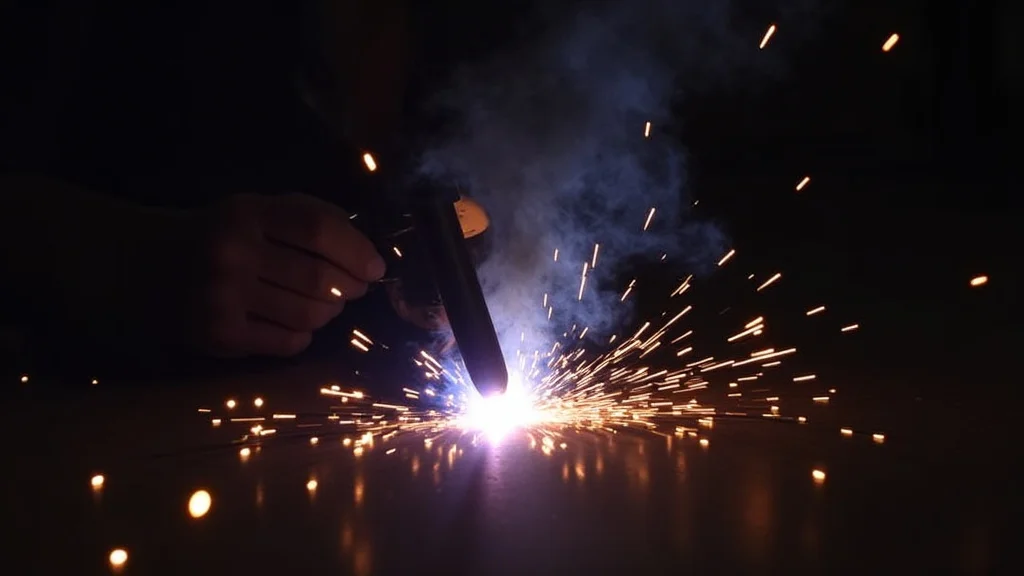
When you’re welding with a MIG (Metal Inert Gas) welder, the electric arc is what melts the metal. This arc is like a hot, stable bridge between your welding wire and the metal you’re joining. Normally, this arc stays put, making a nice, clean weld.
But sometimes, this arc can get pushed around or even blow out completely. This is called “arc blow.” It’s like a strong wind blowing out a candle flame. For beginners, seeing the arc jump around can be confusing and lead to messy welds.
It makes it hard to control where the molten metal goes. This can be a real head-scratcher when you’re trying to learn.
Common Causes of MIG Welder Arc Blow
Several things can make your MIG welder’s arc blow. Understanding these reasons is the first step to fixing the problem.
Magnetic Fields
The biggest reason for arc blow is magnetic fields. When electricity flows through your welding cable and the metal you’re welding, it creates magnetic fields. These fields can push the arc away from where you want it.
It’s like having invisible hands pushing the arc around. The strength of these magnetic fields depends on how much electricity you’re using and the shape of the metal.
DC vs. AC Welding
Most MIG welding uses Direct Current (DC). With DC, the magnetic fields can be more predictable. However, if you’re welding with Alternating Current (AC), the magnetic fields are constantly changing.
This can sometimes lead to arc blow as well, though it’s less common with standard MIG setups. The direction the electricity flows matters a lot.
Workpiece Grounding
Where you connect your ground clamp to the metal is really important. If the ground clamp is too far from where you’re welding, or if it’s on a part of the metal that creates a strong magnetic field, it can push the arc. Think of it as a magnet pulling or pushing the arc.
A poorly placed ground can cause a lot of trouble.
Welding Direction
The direction you weld in also plays a role. When you’re welding from left to right, the magnetic field might try to push the arc forward. If you’re welding from right to left, it might try to pull the arc back.
This can make the weld bead look uneven.
Metal Type and Thickness
The kind of metal you’re welding and how thick it is can also affect the arc. Some metals are more prone to magnetic effects than others. For example, steel is magnetic, so it’s more likely to experience arc blow.
Thin metals might also be more sensitive to the arc’s movement.
Ferrous Metals
Ferrous metals, like iron and steel, are magnetic. This magnetism can interfere with the arc. The stronger the magnetic properties of the metal, the more likely you are to have arc blow.
This is especially true for thicker pieces of steel where the magnetic field can build up.
Non-Ferrous Metals
Metals like aluminum and copper are not magnetic. When you weld these materials, you generally don’t have to worry about magnetic arc blow. This is one reason why welding aluminum with MIG can sometimes be easier in terms of arc stability.
Welding Settings
The settings on your MIG welder, like voltage and wire speed, can influence how the arc behaves. If these settings aren’t right for the material and the joint, it can make arc blow worse.
Voltage and Amperage
Voltage controls the arc length, and amperage (which is related to wire speed) controls the heat. If the voltage is too high, the arc might be too long and unstable. If the wire speed is too high, you might be pushing too much metal into the weld pool, which can disrupt the arc.
Finding the sweet spot for your material is key.
Wire Feed Speed (WFS)
The wire feed speed is critical. If it’s too fast, the arc can become erratic because you’re feeding too much wire too quickly. This can cause spatter and an unstable arc.
If it’s too slow, you might not get enough heat into the weld.
Dirty Metal
Sometimes, even simple things like dirt, oil, or rust on the metal can affect the arc. These contaminants can cause the arc to be unstable and sputter, which can be mistaken for arc blow or make existing arc blow worse.
Quick Solutions for MIG Welder Arc Blowing Out
Now that you know why it happens, let’s look at how to fix it. These are simple adjustments you can make right away.
Adjust Your Ground Clamp Location
This is often the easiest and most effective fix. Try moving your ground clamp closer to where you’re welding. Sometimes, just an inch or two can make a big difference.
If you’re welding on a large piece of metal, try to clamp the ground directly to the part you are welding, not just to a nearby table.
Experiment with Placement
If moving it closer doesn’t help, try moving it to a different spot. Sometimes, a specific location on the metal creates a stronger magnetic field. You want to position the clamp where the magnetic forces are minimal.
Use Multiple Ground Clamps
For very large or complex pieces, using two or more ground clamps can help distribute the current and reduce the magnetic field strength at any one point. Make sure they are both making good contact.
Change Welding Direction
If you notice the arc blowing in a consistent direction, try welding in the opposite direction for a short distance. This can help counteract the magnetic pull. For example, if the arc blows forward when welding left to right, try welding a small section from right to left.
Peck Welding
For long welds, try “peck welding.” This means welding a short distance, then moving back slightly, and then continuing. This can help disrupt the buildup of magnetic forces along the weld seam.
Adjust Welder Settings
Tweaking your voltage and wire speed can often smooth out a jumpy arc.
Lower Wire Speed
Try slightly reducing your wire feed speed. This can slow down the metal transfer and give the arc more stability. You might need to adjust voltage slightly to compensate for heat.
Adjust Voltage
If the arc is too long and airy, try lowering the voltage. If it’s too flat and wide, you might need to slightly increase it. The goal is a tight, focused arc.
Consider Pulse Settings (if available)
Some advanced MIG welders have a pulse setting. This rapidly alternates between high and low current. It can help control the weld puddle and reduce arc blow, especially on thin materials.
Wrap Your Welding Cable
This is a clever trick that often works. If the arc is blowing consistently in one direction, try wrapping your welding cable around the workpiece once or twice in the opposite direction of the arc blow. This creates a counteracting magnetic field that can help stabilize the arc.
Make sure the wraps are neat and don’t interfere with your welding.
Use Different Wire or Gas
Sometimes, the type of wire or shielding gas you use can make a difference. For steel, using a gas mixture with a higher percentage of Argon (like 75% CO2 / 25% Argon) can sometimes provide a more stable arc than pure CO2.
Gas Flow Rate
Ensure your shielding gas flow rate is set correctly. Too little gas won’t protect the weld pool, and too much can cause turbulence and arc instability.
Clean Your Metal
Always start with clean metal. Remove any rust, paint, oil, or dirt from the welding area. A clean surface ensures a consistent electrical connection and a stable arc.
Slow Down Your Travel Speed
If you’re moving too fast, you can drag the molten metal and disrupt the arc. Slow down your travel speed to give the arc and the weld puddle time to form properly.
Use a Different Electrode (for Stick Welding, but relevant concept)
While this is about MIG, it’s worth noting that in stick welding (SMAW), switching electrode types or brands can sometimes resolve arc blow issues. For MIG, this translates more to wire type and brand. If you’re consistently having trouble, trying a different brand of wire for your specific application might help.
Weld in a Circle (for tight spots)
If you’re welding a small, tight area and experiencing arc blow, try making small circular motions. This can help keep the arc centered and prevent it from being pushed too far in one direction.
FAQ
Question: What is the most common reason for MIG arc blow?
Answer: The most common reason is the buildup of magnetic fields created by the welding current. These fields can push the arc away from its intended path.
Question: Can I fix arc blow by just moving my ground clamp?
Answer: Yes, moving your ground clamp closer to the weld or to a different spot on the workpiece is often the easiest and most effective solution.
Question: Does the type of metal affect arc blow?
Answer: Yes, magnetic metals like steel are more prone to arc blow than non-magnetic metals like aluminum.
Question: Is it okay to wrap the welding cable around the metal?
Answer: Yes, wrapping the welding cable around the workpiece can create a counteracting magnetic field that helps stabilize the arc. Just ensure it’s done neatly.
Question: What if I’m welding a long seam?
Answer: For long seams, try changing your welding direction periodically or use a “peck welding” technique where you weld in short bursts.
Final Thoughts
Dealing with a MIG welder’s arc blowing out can be a common challenge for beginners, but it’s usually fixable. We’ve covered how magnetic forces, metal types, and welder settings can cause this jumpy arc. You learned simple tricks like repositioning your ground clamp, adjusting your welder’s settings, and even wrapping your cable.
Remember to always start with clean metal and a steady hand. By trying these quick solutions, you can get your arc stable and make cleaner welds.