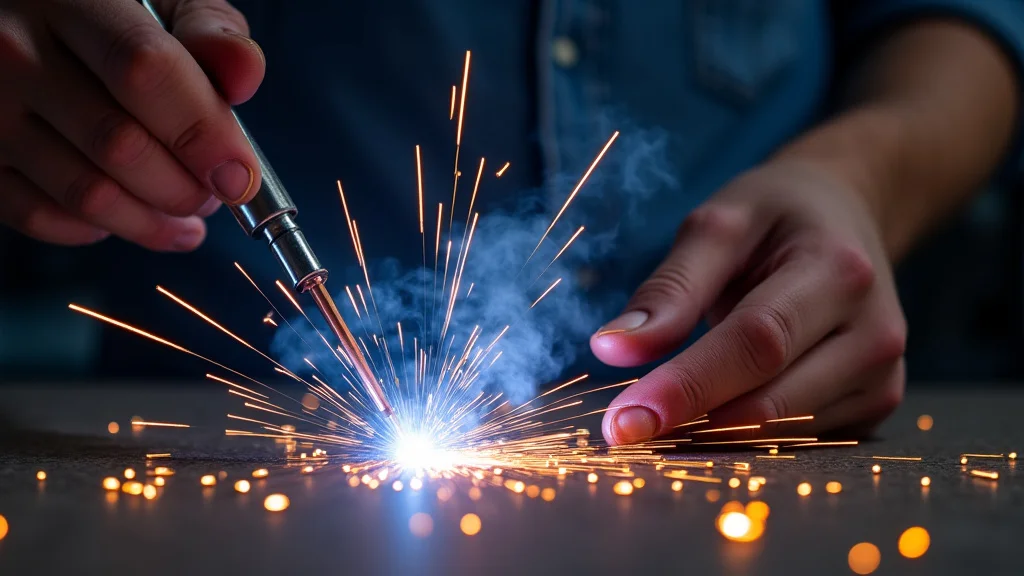
It can be frustrating when your TIG welder torch suddenly stops feeding gas. This common issue often stumps beginners, making them wonder what went wrong. Don’t worry; this is usually a simple fix!
We’ll walk you through it step-by-step to get you back to welding. Let’s see what might be causing this problem.
Key Takeaways
- You will learn the most common reasons why TIG welder gas might not be flowing.
- Simple checks for your gas cylinder and regulator will be explained.
- How to inspect your TIG torch for blockages or leaks will be covered.
- The role of the solenoid valve in gas flow will be clarified.
- Easy troubleshooting steps to fix the TIG welder torch gas not flowing? fix will be provided.
Why TIG Welder Torch Gas Isn’t Flowing
TIG welding relies on a steady stream of inert shielding gas to protect the molten weld pool from contamination. When that gas stops, your weld quality suffers, and you can’t weld effectively. The issue of TIG Welder Torch Gas Not Flowing?
Fix is a frequent puzzle for those new to TIG welding because it involves several components working together. Understanding each part and how it contributes to gas flow is key to solving the problem quickly.
The Importance of Shielding Gas
Shielding gas, typically Argon for TIG welding, creates a protective bubble around your weld. This prevents oxygen and other atmospheric elements from reacting with the hot metal. Without it, your welds will be weak, brittle, and look like Swiss cheese.
When gas isn’t flowing, it’s usually because something is blocking the path from the cylinder to your weld. This could be a simple oversight or a minor equipment malfunction. The good news is that most of these problems are easy to find and fix.
Common Causes for No Gas Flow
Several things can stop your TIG torch from delivering shielding gas. Let’s look at the most frequent culprits, starting from the source.
1. The Gas Cylinder Itself
This might seem obvious, but it’s the first place to check.
- Is the cylinder valve open? Ensure the main valve on top of the gas cylinder is fully open. Sometimes, it might have been accidentally turned off.
- Is the cylinder empty? Gas cylinders have a pressure gauge. If the gauge reads zero or is very low, the cylinder is empty and needs to be refilled or replaced.
Always check the pressure gauge on your regulator. It will tell you how much gas is left in the tank.
2. The Gas Regulator
The regulator controls the flow and pressure of gas from the cylinder. Issues here can significantly impact gas delivery.
- Is the regulator valve set correctly? The regulator has a knob or lever to set the desired flow rate (measured in cubic feet per hour, CFH). Make sure this is set to an appropriate level, usually between 15-25 CFH for most TIG applications.
- Is the regulator damaged? Check for any visible cracks or leaks in the regulator body or hoses.
- Is the connection secure? Ensure the regulator is tightly screwed onto the gas cylinder. A loose connection can prevent gas from flowing.
If you hear hissing sounds from the regulator, it might be leaking.
3. The Gas Hose and Connections
The hose carries the gas from the regulator to the welding machine. Kinks, leaks, or loose connections can all cause problems.
- Check for kinks: Ensure the gas hose is not bent or pinched anywhere along its length. A kink can severely restrict gas flow.
- Inspect for leaks: Look for any visible damage, cuts, or holes in the hose. You can also test for leaks by applying soapy water to the hose and connections while the cylinder valve is open and regulator is set. Bubbles indicate a leak.
- Verify connections: Make sure the hose is securely connected to both the regulator and the welding machine’s gas inlet.
Loose fittings are surprisingly common and easily fixed by tightening them.
4. The Welding Machine’s Gas Solenoid
Most TIG welders have an internal solenoid valve. This is an electrically controlled valve that opens to allow gas to flow when you press the torch trigger and closes when you release it.
- Is the solenoid working? When you press the torch trigger, you should hear a faint click from inside the welding machine. This is the solenoid opening. If you don’t hear it, the solenoid might be faulty or not receiving power.
- Check machine settings: Ensure your TIG welder is set to the correct mode (e.g., AC or DC TIG, not Stick or MIG) and that the gas flow is enabled in the machine’s settings. Some advanced machines allow you to adjust pre-flow and post-flow times. If pre-flow is set to zero, you won’t get gas until you start an arc.
If you suspect the solenoid, it might require professional diagnosis or repair.
5. The TIG Torch Assembly
The torch itself has several parts that could become blocked or damaged.
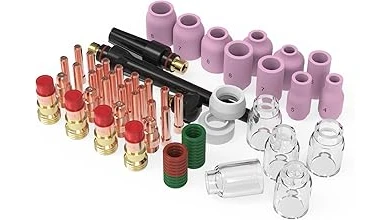
- Gas Lens or Collet Body: These parts sit inside the torch head and direct the gas. Debris can get lodged in their small openings.
- Ceramic Cup: The cup guides the gas flow. If it’s cracked or obstructed, gas distribution can be uneven or blocked.
- Collet: This holds the tungsten electrode. While less likely to cause a complete gas stoppage, a damaged collet can affect the flow path.
- Gas Hose Connection at Torch: The small hose connecting to the torch handle might be loose or kinked.
Disassembling the torch head (with the machine off and gas cylinder valve closed!) and cleaning these parts can often resolve the issue.
Cleaning Your TIG Torch
To clean your torch, carefully unscrew the ceramic cup and gas lens or collet body. Use a can of compressed air to blow out any dust or debris from these components. A small, soft brush can also be used gently.
Reassemble everything carefully.
Ensure the tungsten electrode is seated correctly and doesn’t protrude too far, which could interfere with gas flow.
6. Torch Trigger Switch
The trigger on your TIG torch initiates the welding process and signals the machine to open the solenoid valve. If the trigger switch is faulty, it won’t send the signal for gas flow.
- Test the trigger: Does the torch engage the weld current when you pull the trigger? If not, the trigger switch itself might be the problem.
- Inspect the wiring: Check the wires running from the torch to the welding machine for any signs of damage or loose connections at the torch handle or the machine’s input plug.
A malfunctioning trigger switch will prevent the solenoid from opening, leading to no gas.
7. Incorrect Machine Settings
Modern TIG welders have many settings, and an incorrect one can prevent gas flow.
- Pre-flow Time: This setting determines how long gas flows before the arc starts. If it’s set to 0, you won’t see gas until you strike an arc. Increase this to a few seconds (e.g., 0.2-0.5 seconds) to check flow.
- Gas Type Selection: Ensure the machine is set for the correct gas type if it offers this option, though this is less common for basic TIG setups.
- Output Mode: Make sure you are in TIG mode. Being in Stick or MIG mode will not activate the TIG gas circuit.
Consult your welding machine’s manual to understand these settings.
Troubleshooting Steps: A Simple Guide
Let’s put it all together into a logical order to fix your TIG Welder Torch Gas Not Flowing? Fix problem.
- Check the Gas Cylinder Valve: Is it fully open?
- Check the Cylinder Pressure: Is there gas left in the tank?
- Inspect the Regulator: Is it set to a reasonable flow rate? Are there any obvious leaks?
- Listen for Gas Flow: With the cylinder valve open and regulator set, briefly open the regulator’s bleed valve. You should hear gas escaping. If not, the problem is likely between the cylinder and the regulator, or the regulator itself.
- Check Connections: Ensure the regulator is tight on the cylinder, and the hose is secure at both ends.
- Examine the Hose: Is it kinked or damaged?
- Test the Torch Trigger: Press the torch trigger. Do you hear the solenoid click inside the welder?
- Check Machine Settings: Ensure Pre-Flow is set to a few tenths of a second. Make sure you are in TIG mode.
- Clean the Torch Assembly: If the above steps don’t reveal the issue, disassemble the torch head and clean the gas lens, collet body, and cup.
- Verify Torch Connection: Ensure the gas hose is firmly attached to the torch handle.
If you’ve gone through all these steps and still have no gas, there might be an internal issue with the welding machine’s solenoid or wiring that requires professional attention.
Frequently Asked Questions
Question: My TIG torch is spitting and sputtering gas, not a smooth flow. What could be wrong?
Answer: This usually means there’s a partial blockage or leak somewhere in the gas path, or the flow rate is too low. Check your hose for kinks, inspect the torch cup and gas lens for debris, and ensure your regulator is set to the correct flow rate.
Question: I can hear gas flowing from the regulator, but nothing comes out of the torch.
Answer: This points to a problem in the hose, the connection at the machine, or the torch itself. Inspect the entire length of the gas hose for damage or kinks. Make sure the hose is securely connected to the welding machine.
Also, check the small gas line connection at the torch handle.
Question: My welding machine has a gas solenoid, but I don’t think it’s working. How can I tell?
Answer: When you press the TIG torch trigger, listen closely to your welding machine. You should hear a distinct “click” sound from inside, which indicates the solenoid valve is opening. If you hear nothing, the solenoid may be faulty or not receiving power.
Question: I replaced my empty gas cylinder, but I still have no gas flow. What did I miss?
Answer: Double-check that the valve on the new cylinder is fully open. Also, ensure the regulator is properly seated and tightened onto the new cylinder. Sometimes, a new cylinder might not be fully pressurized if it was just filled.
Question: My TIG torch is leaking gas from around the cup when I try to weld.
Answer: This is likely an issue with the internal torch components. The gas lens or collet body might be loose, damaged, or not seated correctly. Carefully disassemble the torch head and reassemble, ensuring all parts are clean and snug.
Final Thoughts
Fixing a TIG welder torch gas not flowing? fix is usually straightforward. By systematically checking your gas cylinder, regulator, hoses, machine settings, and torch assembly, you can pinpoint the cause.
Most issues involve simple blockages or loose connections. Remember to turn off your gas cylinder and disconnect power when inspecting your equipment. A little patience and a step-by-step approach will get your gas flowing again, allowing you to resume quality TIG welding.