Many people learning to MIG weld wonder, How Do You Maintain Consistent MIG Wire Feed? It’s a common question because a smooth wire feed makes for good welds. When the wire feed is jerky or inconsistent, your welds can look messy. Don’t worry, it’s not as hard as it sounds!
We’ll break down exactly what to do, step by step, so you can get great results every time. First, let’s look at the main points you need to remember.
Key Takeaways
- Keeping your MIG gun liner clean and free of kinks is vital for a smooth wire feed.
- Choosing the right wire drive rolls for your specific welding wire prevents slipping and ensures consistent feeding.
- Proper tension on the drive rolls is key to feeding wire without crushing it.
- Contact tips need to match your wire size to avoid binding or excessive play.
- Always store your welding wire correctly to prevent rust and debris from entering the system.
- Regular maintenance of your MIG welder’s wire feed system is essential for reliable performance.
Understanding MIG Wire Feed
MIG welding, also called Gas Metal Arc Welding (GMAW), relies on a steady stream of wire to create a strong weld. This wire acts as both filler metal and part of the electrical circuit. When this wire doesn’t feed smoothly, it causes all sorts of welding problems.
Your arc can become unstable, leading to spatter and weak joints. So, getting the wire feed right is a big deal.
Why Wire Feed Matters
Think of the wire feed as the heart of your MIG welder. If your heart beats irregularly, you have problems. The same is true for your welding wire.
A consistent wire feed means a consistent arc. A consistent arc means you get good penetration into your metal and a clean, strong weld bead. When the wire feed is uneven, the heat input into the metal goes up and down, causing inconsistencies.
Common Problems with Wire Feed
Beginners often struggle with wire feed because there are a few moving parts that need to work together perfectly. Sometimes the wire gets stuck, other times it feeds too fast or too slow. It can even get crushed.
These issues usually come down to a few key areas that we’ll cover.
Essential Components for Smooth Wire Feed
Several parts of your MIG setup work together to push that wire from the spool to your welding puddle. Keeping these parts in good shape is the secret to consistent feeding. Let’s look at each one.
The Liner
Inside your MIG gun’s cable is a liner. This is like a smooth tube that the welding wire travels through. It guides the wire and keeps it from snagging.
A bent or damaged liner is a common cause of a jerky wire feed. If the liner is kinked, it creates a blockage that the wire struggles to push through.
Keeping the Liner Clean
Over time, small metal shavings and dust can build up inside the liner. This debris can slow down or stop the wire. You can clean a liner by using a specialized cleaning kit or by blowing compressed air through it.
It’s a good idea to replace the liner if it’s old, damaged, or very dirty.
Drive Rolls
These are the wheels inside your welder that grip and push the wire. They are usually made of metal or hard rubber. Drive rolls have grooves that match the size and type of your welding wire.
If you’re using flux-cored wire, you’ll need different drive rolls than for solid wire.
Choosing the Right Drive Rolls
Using the wrong drive rolls is a big mistake. If the groove is too big, the wire will slip. If it’s too small, the rolls might damage the wire.
Always match the drive roll groove size to the diameter of your welding wire. Your welder manual will tell you which size to use.
Drive Roll Tension
The tension on the drive rolls is also very important. Too little tension and the rolls will slip, not pushing the wire effectively. Too much tension and the rolls will crush or flatten the wire.
Crushed wire can get stuck in the liner or gun. You want just enough tension for the rolls to grip the wire firmly without deforming it. A good test is to carefully pull the wire out while the motor is running.
If the wire slips a little but the motor still turns, the tension is about right.
Contact Tip
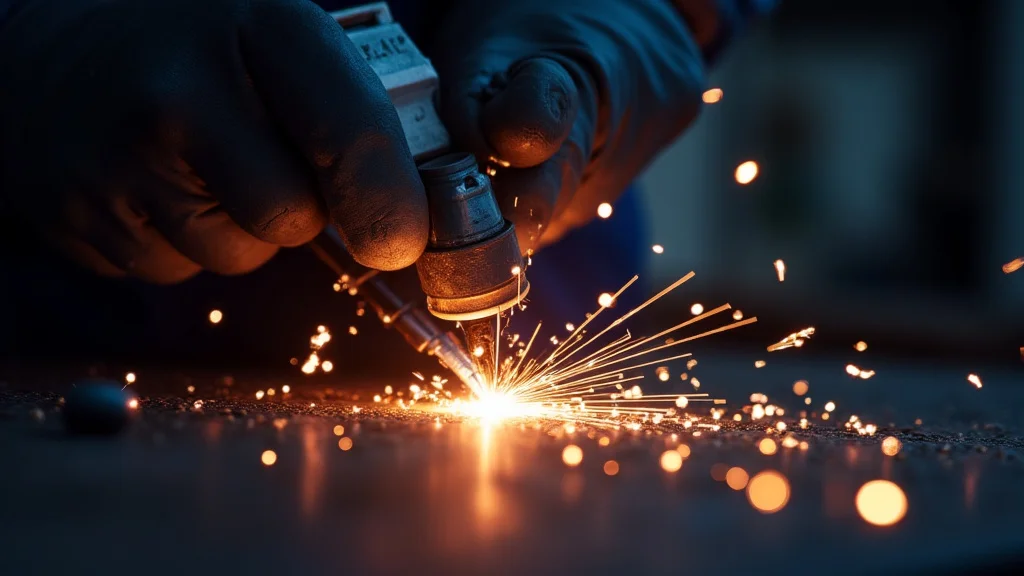
The contact tip is the small piece at the very end of your MIG gun. The welding wire passes through it. It also carries the electrical current to the wire.
The hole in the contact tip must be the exact size of your welding wire.
Matching Tip to Wire Size
If the hole in the contact tip is too large for your wire, the wire will wobble around inside. This causes a poor electrical connection and an unstable arc. If the hole is too small, the wire can get stuck or bind up.
Always use a contact tip that matches your wire diameter. For example, use a 0.030-inch contact tip for 0.030-inch wire.
Contact Tip Wear
Contact tips wear out over time. As they wear, the hole gets larger and misshapen. This leads to arc instability and feeding problems.
It’s a good practice to inspect your contact tip regularly and replace it when it starts to look worn or discolored. This is a cheap part that makes a big difference.
The Welder’s Feed System
Inside the welder itself, there’s a motor and a set of gears that turn the drive rolls. This mechanism needs to be clean and well-lubricated. Sometimes, dust and metal particles can get into the gears, making them grind or operate unevenly.
Regular cleaning of this area is helpful.
Factors Affecting Wire Feed
Beyond the main parts, other things can impact how smoothly your MIG wire feeds. Thinking about these can save you a lot of frustration.
Wire Spool Issues
How the wire is wound on the spool matters. If the wire is wound too tightly, it can create tension that makes feeding harder. If it’s wound loosely, it can snag on itself.
Always ensure the spool is mounted correctly and that the wire can unwind freely.
Wire Quality
The quality of your welding wire plays a role. Cheap or old wire can be brittle, have rough spots, or be coated in debris. This can cause it to break or bind as it feeds.
Always use good quality welding wire from a reputable supplier.
Environmental Factors
While less common, extreme temperatures or humidity can sometimes affect wire feed, especially with certain types of wire. Keeping your welding area clean and dry is always a good idea.
Maintenance Tips for Consistent Wire Feed
Taking care of your MIG welder is key to getting great welds. A little regular maintenance goes a long way in preventing wire feed issues.
Regular Cleaning Schedule
Set a schedule for cleaning your MIG gun, liner, drive rolls, and the internal wire feed mechanism. This prevents build-up of debris that can cause problems.
Inspect and Replace Worn Parts
Contact tips, liners, and drive rolls are wear items. Check them often and replace them before they cause significant feeding problems. It’s better to replace a cheap part than to ruin a weld or a larger component.
Proper Wire Storage
Store your welding wire spools in a dry place. If you’re using solid wire, keep it sealed to prevent moisture and rust. Rust on the wire can damage the liner and contact tip, and it will also lead to poor weld quality.
Test Your Settings
Before starting a big welding job, always do a test run on a scrap piece of metal. This allows you to check your wire speed, voltage, and gas flow. Listen to the sound of the wire feeding.
It should be smooth and consistent.
Troubleshooting Common Wire Feed Problems
Even with good maintenance, you might run into issues. Here’s how to fix some common problems.
Wire Not Feeding at All
Check if the drive rolls are engaged and if there’s enough tension. Make sure the liner isn’t blocked. Ensure the contact tip isn’t clogged with spatter.
Wire Feeding Intermittently (Jerky Feed)
This is often a sign of a partially blocked liner, a bent liner, or an issue with the drive rolls. Check for kinks in the cable or debris in the liner.
Wire Crushing or Flattening
This means your drive roll tension is too high. Reduce the tension until the wire feeds smoothly without being deformed.
Wire Slipping on Drive Rolls
This usually indicates that the drive roll tension is too low. Increase the tension until the wire is gripped firmly but not crushed.
FAQ Section
Question: What is the most common reason for inconsistent MIG wire feed?
Answer: The most common reason is a dirty or kinked liner in the MIG gun. Debris builds up over time, making it hard for the wire to slide through smoothly.
Question: How often should I replace my contact tip?
Answer: You should replace your contact tip when you notice a change in your arc quality, increased spatter, or if the hole appears enlarged or misshapen. This could be after every few hours of welding or more, depending on your usage.
Question: Can I use the same drive rolls for different wire sizes?
Answer: No, you should not. Drive rolls have grooves specifically sized for different wire diameters. Using the wrong size will cause slipping or wire damage.
Question: What happens if my MIG wire is rusty?
Answer: Rusty wire can cause poor weld quality because the rust will contaminate the weld. It can also damage your liner and contact tip, leading to feeding issues.
Question: How do I test my MIG wire feed tension?
Answer: You can test the tension by setting your drive rolls and then trying to pull the wire out of the gun while the motor is running. If the motor stalls but the wire doesn’t slip, the tension is too high. If the wire slips easily while the motor runs fine, the tension is too low.
You want just enough grip to feed the wire without deforming it.
Final Thoughts
Keeping your MIG wire feeding smoothly is straightforward when you know what to look for. It mainly involves keeping your gun’s liner clean and free of kinks, using the right drive rolls for your wire, and setting the tension just right. Regularly checking and replacing worn parts like the contact tip also makes a big difference.
By following these simple steps, you’ll ensure a consistent wire feed every time you weld, leading to much better results.