Getting your TIG welds to look good can be tricky at first. Many beginners struggle with what causes TIG Welder Poor Weld Quality? Solutions to problems like messy beads or holes.
Don’t worry! This guide will walk you through simple steps to fix common issues and get your welds looking sharp. We’ll cover the basics that make a big difference right away.
Key Takeaways
- Common TIG weld defects are often caused by simple mistakes.
- Proper preparation of your materials is key to good welds.
- Controlling your torch angle and movement makes a big impact.
- Choosing the right filler metal and amperage setting is important.
- Shielding gas issues are a frequent cause of poor weld quality.
- Practice and attention to detail lead to better TIG welds over time.
Understanding Common TIG Weld Problems
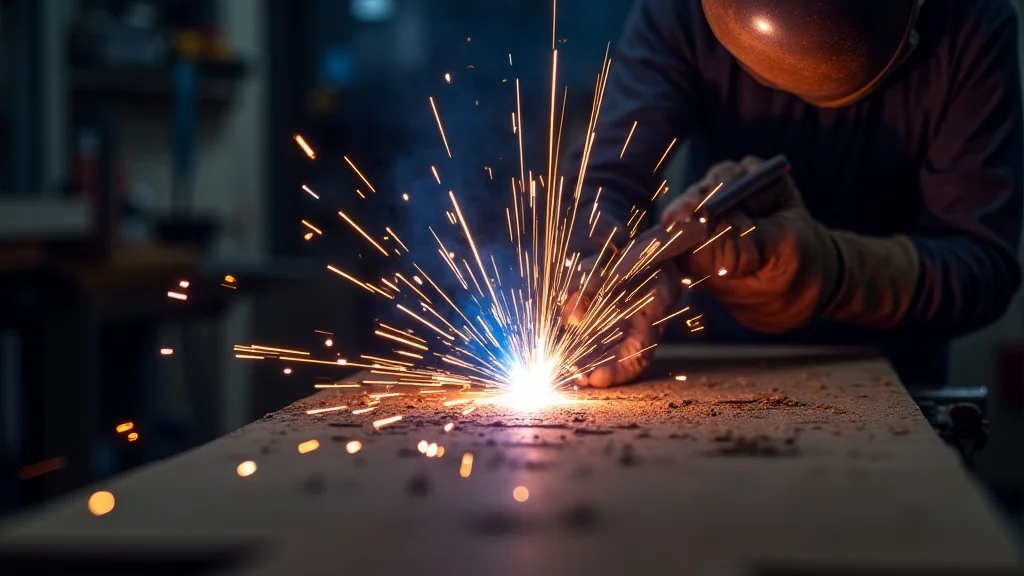
TIG welding, or Gas Tungsten Arc Welding, is known for creating strong, clean welds. But when things go wrong, it can be frustrating. For newcomers, the idea of fixing TIG Welder Poor Weld Quality? Solutions can seem like a puzzle. It’s often a mix of a few small things that add up to a bad weld. Let’s look at the main reasons why your welds might not be turning out as you expect.
What Makes a Weld “Poor Quality”?
Poor weld quality isn’t just about how a weld looks. It’s also about its strength and how well it holds up. Common signs of poor quality include:
- Rough or uneven beads: The weld line looks bumpy or wavy instead of smooth.
- Porosity: Small holes or bubbles appear in the weld.
- Lack of fusion: The weld metal doesn’t join properly with the base metal.
- Undercut: The weld creates a groove or notch along the edge of the bead.
- Spatter: Small bits of molten metal spray away from the weld area.
These issues can weaken the joint and make it look unprofessional.
Troubleshooting Your TIG Welds
Fixing poor TIG welds often comes down to checking a few key areas. We will go through each one so you can easily spot what might be going wrong.
1. Material Preparation Matters
This is where many problems start. If your metal isn’t clean, your weld won’t be either. Dirt, oil, rust, or paint on the metal surface can get into the weld.
This leads to porosity and weak spots.
Cleaning Your Base Metal
Always clean the area you’re about to weld. Use a stainless steel wire brush. Also, use a degreaser or acetone to remove any oils or grease.
For aluminum, a dedicated aluminum wire brush is best. Make sure you never use a brush that has touched steel on aluminum, as it can cause contamination.
Preparing Edges
For thicker materials, you might need to bevel the edges. This means creating an angled edge so the weld can penetrate fully. A simple V-groove or U-groove is common.
This gives the weld metal a better chance to join the two pieces completely.
2. Amperage Settings
The amperage controls the heat of your arc. Too much heat, and you’ll burn through or create undercut. Too little heat, and you won’t get good fusion.
Finding the Right Amperage
A good rule of thumb is to start with about 1 amp per thousandth of an inch of material thickness. For example, on 1/8 inch (0.125 inches) steel, you’d aim for around 12-13 amps. Always check your TIG machine’s manual for recommended settings based on material type and thickness.
Adjusting on the Fly
Sometimes, you’ll need to adjust your amperage as you weld. If the metal starts to glow red and sag, turn the amperage down slightly. If you’re having trouble melting the base metal, increase the amperage.
Some machines have a foot pedal or a thumb control for this.
3. Torch Angle and Travel Speed
How you hold and move your torch is very important. This affects the shape of the bead and how well the weld metal flows.
Torch Angle
For most steel and stainless steel welding, you want to hold the torch at a slight angle, about 10-15 degrees, in the direction you are moving. This is called “leading the puddle.” For aluminum, a more upright torch angle is often preferred. Avoid tilting the torch too much, as this can affect gas coverage.
Travel Speed
Moving too fast means you won’t melt enough material, leading to poor fusion. Moving too slow can cause too much heat, leading to burn-through or wide, flat beads. You want to move at a speed that allows the weld puddle to form a consistent, slightly convex bead.
Watch the puddle; it should look like a small, shiny pool of liquid metal that you are guiding.
4. Filler Metal Usage
The filler rod adds metal to the joint. How you use it makes a big difference.
Adding Filler
Dip the filler rod into the leading edge of the weld puddle. Don’t stir it in or hold it too far away. You want to feed it smoothly into the molten pool.
If you’re having trouble, try feeding it into the puddle slightly ahead of your torch.
Filler Rod Type
Make sure you are using the correct filler rod for your base metal. Using the wrong type can lead to brittle welds or cracking. For example, use 308L stainless steel filler for 304 stainless steel.
For mild steel, ER70S-2 or ER70S-6 are common.
5. Shielding Gas Issues
The shielding gas protects the molten weld puddle from the air. If the gas coverage is poor, you’ll get porosity.
Gas Flow Rate
The correct flow rate is usually between 15-25 cubic feet per hour (CFH). This depends on your nozzle size and the welding conditions. Too low, and the gas won’t cover the puddle.
Too high, and the gas can become turbulent, drawing in air. A good way to test is to turn on the gas with the torch not in use and see if it creates a stable, gentle flow.
Nozzle to Work Distance
Keep the gas nozzle a consistent distance from the weld. For most steels, about 1/2 inch is good. This ensures the gas flows evenly around the arc.
Draughts and Air Movement
Welding in a windy area is a common cause of poor gas coverage. Try to weld in a place protected from drafts.
6. Tungsten Electrode Selection and Condition
The tungsten electrode carries the arc. Its condition and type affect the arc stability and weld quality.
Electrode Type
For DC welding (steel, stainless steel), pure tungsten or ceriated (orange band) or lanthanated (blue or gold band) are good. For AC welding (aluminum), pure tungsten or zirconiated are common. Thoriated tungsten (red band) is being phased out due to radioactivity.
Electrode Tip Shape
For DC welding, a finely pointed tip is best. This creates a focused arc. Grind your tungsten to a sharp point on a silicon carbide grinding wheel.
For AC welding, the tip will often ball up naturally, which is okay.
Contamination
Never let the tungsten touch the weld puddle or filler rod. If it does, stop welding and re-grind the tungsten. Contaminated tungsten leads to an unstable arc and poor weld quality.
FAQ
Question: Why do my TIG welds look bubbly?
Answer: Bubbly welds, also called porosity, usually happen because of poor shielding gas coverage. This can be caused by not enough gas flow, a draft blowing the gas away, or a dirty base metal that releases gases when heated.
Question: What is the best way to start a TIG weld?
Answer: You can scratch start (like with a regular stick welder) or use high-frequency start if your machine has it. High-frequency is cleaner as it doesn’t touch the tungsten to the metal.
Question: How do I avoid burning through thin metal with TIG?
Answer: Use lower amperage, a faster travel speed, and pulse TIG welding if your machine has that feature. Sometimes, using a heat sink like a piece of copper or aluminum behind the weld can help spread the heat.
Question: My TIG welds are not very strong. What could be wrong?
Answer: Weak welds often come from lack of fusion or not enough weld metal. Ensure you are heating both the base metal and the filler rod properly. Check your amperage settings and travel speed.
Also, make sure the base metals are completely clean.
Question: Can I TIG weld rusty metal?
Answer: It’s not recommended. Rust, paint, and dirt will contaminate the weld, causing porosity and weakness. Always clean the metal thoroughly before TIG welding.
Final Thoughts
Mastering TIG welding takes practice and attention to detail. By focusing on clean metal preparation, correct amperage, steady torch movement, proper filler rod technique, and good shielding gas, you can fix most TIG Welder Poor Weld Quality? Solutions.
Keep your tungsten sharp and clean. Pay attention to the weld puddle. Small adjustments make a big difference.
Don’t get discouraged; each weld is a learning opportunity. You’ve got this!