Many folks starting with MIG welding wonder about grounding. It’s a really important step for good welds. If you’re asking How Do You Properly Ground a MIG Welder?, you’re not alone.
It might seem tricky at first, but it’s actually quite simple. We’ll walk through it step-by-step so you can get great results every time. After we cover this, you’ll be ready to tackle your welding projects with confidence.
Key Takeaways
- Proper grounding is vital for a safe and effective MIG welding setup.
- The ground clamp connects the welder to the metal you are welding.
- A clean metal surface ensures a strong electrical connection.
- You can attach the ground clamp to the workpiece or a metal workbench.
- Incorrect grounding can lead to poor weld quality and safety hazards.
Understanding MIG Welder Grounding
Why Grounding Matters
Grounding your MIG welder is like giving it a clear path to do its job. Think of it like an electrical circuit. The electricity needs to flow from the welder, through the welding wire, into the metal you’re joining, and then back to the welder.
The ground clamp is the part that makes that return trip possible. Without a good ground, the electricity can’t flow properly. This means you won’t get a good weld.
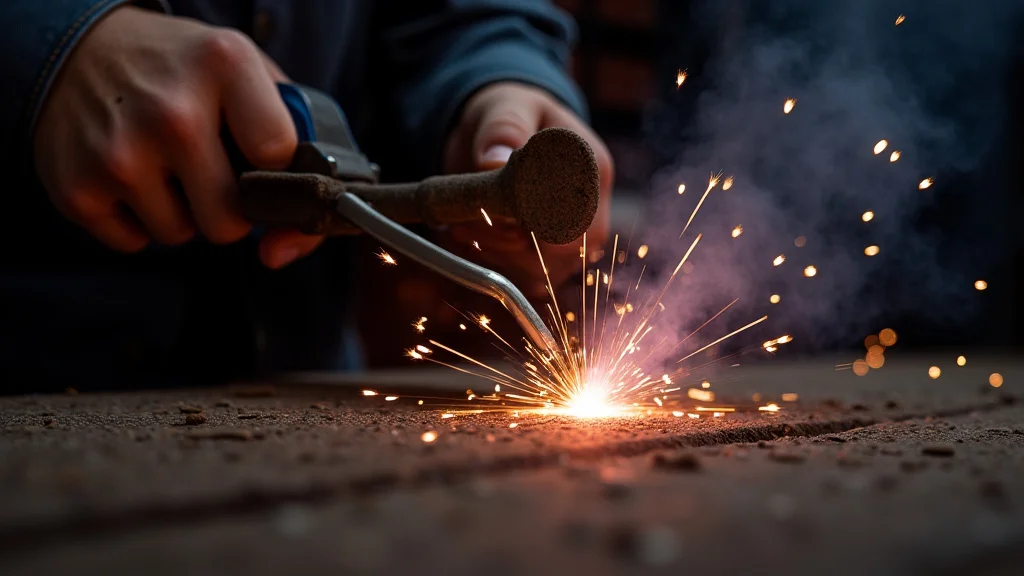
You might see sparks fly everywhere, but the metal won’t actually join together. It’s also a safety issue. A bad ground can cause sparks or even shocks.
The Role of the Ground Clamp
The ground clamp, often called a “ground clamp” or “earth clamp,” is a metal clamp that you attach to the piece you’re welding. It has a cable that runs back to your MIG welder. Its main job is to create a solid connection between your welder and the metal you are working on.
This connection needs to be strong so that the electrical current can pass through it easily. If the clamp is loose or dirty, the connection won’t be good. This will stop the welding current from flowing properly.
What is the Workpiece?
The “workpiece” is simply the metal object or pieces of metal that you are trying to weld together. So, when we talk about grounding the workpiece, we mean attaching the ground clamp to the metal you are welding. This is the most common way to ground your MIG welder.
It ensures that the electricity has a direct path back to the machine from the area where the weld is happening.
How to Properly Ground a MIG Welder: Step-by-Step
Step 1: Clean the Metal Surface
Before you attach the ground clamp, you need to make sure the spot where you’re putting it is clean. Metal often has paint, rust, grease, or dirt on it. These things act like insulators, blocking the electricity.
You need to remove them. Use a wire brush, grinder, or sandpaper to scrape away any coating. You want to see bare, shiny metal.
This gives the clamp a direct path to the metal. A clean spot also helps prevent other problems, like the clamp slipping off.
Step 2: Choose the Right Location for the Clamp
You can usually attach the ground clamp directly to the workpiece. If you are welding two pieces of metal together, attach the clamp to one of those pieces. It’s best to put the clamp as close to the area you are welding as possible.
This creates a shorter, more direct path for the electricity. This is good for weld quality. If the pieces are small, you might clamp both together and then clamp the ground to that bundle.
However, if you are welding to a larger metal structure, like a car frame or a metal workbench, you can clamp it there too.
Step 3: Attach the Ground Clamp Securely
Once you have a clean spot, firmly clamp the ground clamp onto the metal. Make sure it has a good, tight grip. You don’t want it to wiggle or fall off.
If it feels loose, try moving it to a different spot or tightening it more. A loose clamp means a bad connection. A bad connection means your welder might not work right.
You might hear it sputter or see inconsistent sparks. It’s like trying to talk on a phone with a bad signal; the message doesn’t get through clearly.
Step 4: Connect the Cable to the Welder
The other end of the ground cable plugs into your MIG welder. Most welders have a specific port for the ground clamp. It’s usually a large brass connector.
Make sure this connection is also secure. If it feels loose, tighten it up. A good, solid connection at both ends – on the workpiece and at the welder – is key.
Always double-check these connections before you start welding.
When to Use a Metal Workbench or Welding Table
If you are working on a welding table or a sturdy metal workbench, this can be an excellent place to attach your ground clamp. Make sure the table is properly grounded itself. This provides a stable and reliable connection point, especially if your workpiece is small or difficult to clamp directly.
The main idea is to connect to a large piece of conductive metal that is electrically tied to the workpiece, and the welding table often serves this purpose well.
What if I Can’t Clamp to the Workpiece?
Sometimes, the metal you are welding is very thin, or you might be welding something that’s part of a larger structure where direct clamping isn’t ideal. In these cases, you can clamp to a sturdy, unpainted metal part of the structure you are welding to. For example, if you’re welding a bracket onto a steel beam, you would clamp to the beam itself.
The key is that the ground connection must be electrically connected to the metal you are joining. If you are welding multiple small pieces, clamping them all together and then grounding that group can work. Always aim for the shortest, cleanest path back to the welder.
Common Grounding Mistakes and How to Avoid Them
Mistake 1: Welding on Uncleaned Metal
This is one of the most frequent errors. People often think any metal will do. But paint, rust, and dirt are electrical barriers.
Always take a moment to clean the spot where the ground clamp will go. A quick scrape with a wire brush makes a huge difference. This simple step ensures a strong, consistent connection for your weld.
Mistake 2: Loose Clamp Connection
A wobbly ground clamp means a poor electrical path. The current might jump around, causing issues. This can lead to weak welds or even damage to your equipment.
Make sure the clamp is firmly attached. It should feel solid and unmoving. Apply enough pressure so it bites into the metal surface.
Mistake 3: Ground Clamp Too Far Away
The closer the ground clamp is to your weld, the better. A long cable run can cause voltage drop. This means less power reaches your weld.
It can also create more heat in the cable, which isn’t ideal. Try to position the clamp as near to your welding area as practical. This helps maintain consistent welding performance.
Mistake 4: Clamping to Non-Conductive Surfaces
Never attach your ground clamp to something that isn’t metal, like wood or plastic. These materials don’t conduct electricity. The welding arc won’t form correctly, and you won’t be able to weld.
Always ensure your ground clamp is making contact with bare metal.
Mistake 5: Forgetting the Ground Altogether
It sounds basic, but sometimes beginners get so focused on the welding itself that they forget the ground. If you don’t ground your welder, you simply won’t weld. You’ll likely just get sparks and frustration.
Always do a quick check: welder on, ground clamp attached, connections secure.
Troubleshooting Grounding Issues
Weak or Erratic Arc
If your welding arc is sputtering, weak, or unstable, the first thing to check is your ground connection. Is the clamp clean and tight? Is it on bare metal?
Is the cable securely connected to the welder? Often, fixing the ground solves arc problems.
No Arc at All
If you pull the trigger and absolutely nothing happens, or you get only a few weak sparks, the ground is the most likely culprit. Verify that the ground clamp is properly attached and connected. Ensure the welder is powered on and set up correctly.
Overheating Cable
If the ground cable or clamp gets excessively hot, it indicates a poor connection or a cable that’s too small for the amperage you’re using. Check the clamp for cleanliness and tightness. If the problem persists, you might need a heavier-duty ground clamp or cable.
Frequently Asked Questions
Question: Does the ground clamp need to be on the exact piece of metal I’m welding?
Answer: It’s best to clamp as close as possible to the area you are welding. If you are welding two pieces together, clamping to either piece works well. If you are welding onto a larger metal structure, clamp to that structure.
Question: Can I use a C-clamp to attach the ground clamp?
Answer: You can use a C-clamp to hold the ground clamp in place if needed, but the ground clamp itself must make direct contact with bare metal. The C-clamp is just to help secure it.
Question: Will painting my welding table affect the ground connection?
Answer: Yes, paint is an insulator. If you use your welding table as a ground point, you’ll need to clean a spot of bare metal on the table where the ground clamp will attach.
Question: How do I know if my ground connection is good enough?
Answer: A good ground connection will result in a stable, consistent welding arc. If your arc is erratic or weak, your ground is probably not good enough.
Question: Can I use the metal frame of the welding machine as a ground?
Answer: No, you should never use the welding machine’s casing or frame as a ground. Always use the dedicated ground clamp and cable connected to the designated port on the welder.
Final Thoughts
Getting the grounding right for your MIG welder is a fundamental skill. It ensures safety and the quality of your welds. By following these simple steps—cleaning the metal, securing the clamp firmly, and keeping the connections clean—you’ll avoid most common problems.
A solid ground is the bedrock of a good MIG weld. Keep practicing, and you’ll find it becomes second nature. Happy welding!