Many folks starting out with welding run into a common hiccup: their stick welder seems stuck at idle. It just won’t get going properly, and this can be pretty confusing when you’re new. Don’t worry, this is a fixable problem!
We’ll walk through the simple steps to get your welder firing up like it should. Stick around to see what we’ll cover next to solve this issue.
Key Takeaways
- You’ll learn why your stick welder might not start easily.
- We’ll explain the most common reasons for a welder to be “stuck at idle.”
- You’ll discover simple checks you can do yourself.
- We’ll cover how to adjust settings for better starting.
- This guide will help you get your welder working again fast.
Why Your Stick Welder Might Be Stuck at Idle
When you’re excited to start a welding project, the last thing you want is your stick welder refusing to cooperate. A welder that’s “stuck at idle” means it’s not producing the power needed to strike an arc or maintain it properly. It might hum or seem to be on, but it just doesn’t have that spark.
This is a frustrating issue, especially for beginners who are still getting the hang of their equipment. Let’s explore the common reasons this happens so you can get back to welding.
Understanding Welder Power Output
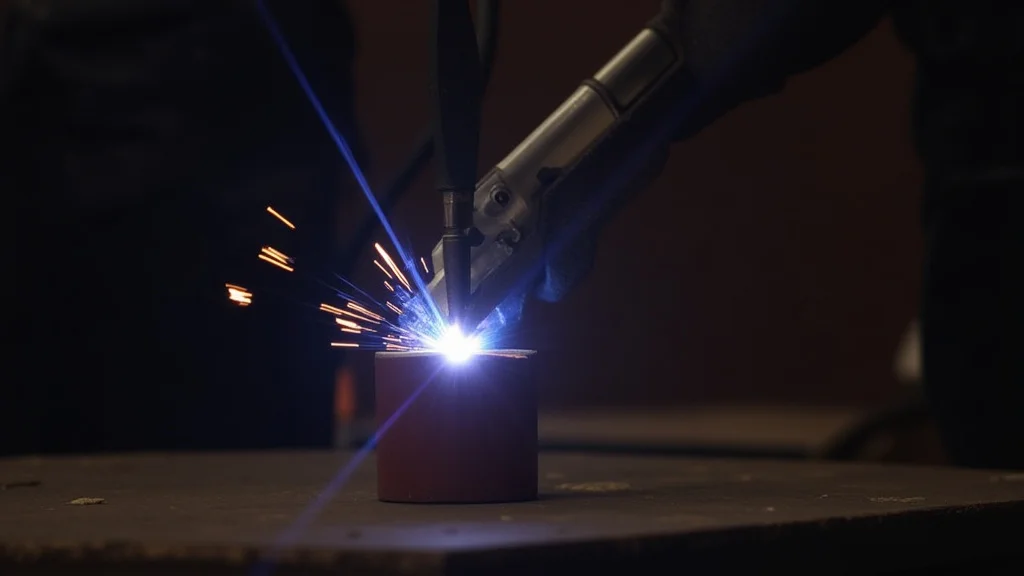
Stick welders, also known as SMAW (Shielded Metal Arc Welding) machines, work by transforming incoming power into a high-current, low-voltage electrical arc. This arc melts the metal you’re joining and the welding rod (electrode) to create a strong bond. The welder needs to deliver a consistent and sufficient amount of power, often measured in amperage, to initiate and sustain this arc.
If the power output is too low, the arc won’t form, or it will be weak and unstable, making it seem like the welder is “stuck.”
What “Stuck at Idle” Really Means
The term “stuck at idle” is a helpful way to describe the situation. Think of a car engine that’s running but not moving. Your welder might be powered on, making some noise, but it’s not producing the necessary “push” to start welding.
This means the voltage or amperage isn’t high enough when you try to strike an arc. It’s like trying to push a heavy door open with just a little bit of force – it won’t budge. Getting your stick welder working requires the right power at the right time.
Common Causes for a Stick Welder Stuck at Idle
Several factors can contribute to a stick welder not starting properly. Most of these are easy to check and fix without needing a professional. We’ll break down the most frequent culprits so you can quickly identify what’s going on.
Incorrect Amperage and Voltage Settings
This is probably the most common reason beginners have trouble. Every welding job and every type of electrode requires a specific amperage and voltage setting. If these are set too low, you simply won’t have enough power to strike an arc.
For instance, a large diameter electrode needs more amps than a small one. Similarly, different materials might require different voltage levels.
Welding machines have dials or digital displays for these settings. It’s crucial to consult the recommendations for your specific welding rod. You’ll usually find this information printed on the electrode packaging or in the electrode manufacturer’s data sheet.
Using the wrong settings is like trying to light a campfire with a damp match – it’s just not going to work.
Electrode Type and Condition
The welding rod itself plays a big role. Different types of electrodes (like 6010, 6011, 6013, 7018) have different characteristics. Some are easier to strike an arc with than others.
For example, 6010 and 6011 electrodes are known for their “hot” arc and are generally easy to start. Others, like 7018, might require a bit more power and a cleaner surface to strike effectively.
Also, the condition of the electrode matters. If electrodes have been exposed to moisture, their performance can suffer. Moisture can interfere with the flux coating, which is essential for creating a stable arc and shielding the weld pool.
Damp electrodes can lead to poor arc starting, porosity, and weak welds. Always store your electrodes in a dry place, preferably in a sealed container or a rod oven for moisture-sensitive types like 7018.
Poor Connection and Grounding
A solid electrical connection is fundamental for any welding process. If your ground clamp isn’t making good contact with the workpiece or the welding machine, or if the electrode holder connection is loose, you’ll experience power loss. This loss of power directly impacts the welder’s ability to start an arc.
The ground clamp needs to be attached to a clean, bare metal surface. Rust, paint, or dirt create resistance, preventing a good electrical path. You might need to lightly grind the surface where the clamp attaches to ensure a solid connection.
Similarly, check that the electrode holder is securely connected to the welding cable and that the welding machine’s power cord is firmly plugged in.
Dirty or Damaged Workpiece
Just like the ground clamp, the surface of the metal you intend to weld needs to be clean. Rust, oil, grease, paint, or mill scale on the workpiece can all act as insulators, preventing a good electrical connection. When you try to strike an arc on a dirty surface, the current might not flow effectively, leaving your welder seemingly stuck.
Always clean the welding area thoroughly before you start. A wire brush is your best friend here. For heavily coated surfaces, a grinder might be necessary.
A clean surface ensures the arc can strike and the weld can form properly.
Power Source Issues
While less common, problems with the welder’s power source can also cause this issue. This could be related to the incoming power supply itself (e.g., a weak outlet or a problem with your extension cord if you’re using one). For older machines, internal components might be wearing out, affecting their ability to deliver consistent power.
If you’re using an extension cord, make sure it’s rated for the amperage your welder requires and that it’s a heavy-duty, short cord. Long or undersized extension cords can cause a significant voltage drop, leading to poor arc starting. It’s always best to plug your welder directly into a suitable wall outlet if possible.
Internal Welder Problems
Sometimes, the issue might lie within the welder itself. Internal wiring, circuit boards, or power components could be failing. However, these are usually the last things to consider after ruling out all the simpler external factors.
If you suspect an internal issue, it’s often best to consult the manufacturer’s manual or seek professional repair.
How to Fix Your Stick Welder Stuck at Idle: A Step-by-Step Guide
Now that we know the potential causes, let’s get your welder running again. Follow these steps systematically to troubleshoot and resolve the “stuck at idle” problem.
Step 1: Check Your Settings
Begin by double-checking your amperage and voltage settings. Consult the recommended settings for the specific electrode you are using. Manufacturers usually provide charts.
For example, for a 1/8-inch 6013 electrode, you might need around 75-125 amps. For a 1/8-inch 7018, it might be slightly higher, around 80-135 amps.
If your welder has both amperage and voltage controls, ensure they are set appropriately. Sometimes, a welder might have an “arc force” or “hot start” feature that can help with arc initiation. If yours does, try increasing these settings temporarily to see if it helps with striking the arc.
Remember to adjust them back to recommended levels once the arc is established, or as per your preference for the weld.
Step 2: Inspect Your Electrode
Take a look at the electrode you’re trying to use. Is it fresh from a sealed container, or has it been lying around? Check for any signs of damage to the flux coating.
If the flux is chipped or missing in large areas, the electrode might be difficult to use. If you suspect moisture, try using a new, dry electrode from a sealed package.
For moisture-sensitive electrodes like 7018, consider using a rod oven to dry them out if you have one. If not, try a different brand or batch of electrodes to rule out a bad batch.
Step 3: Secure Your Ground Clamp
This is crucial. Ensure your ground clamp is attached to a clean, bare metal surface on your workpiece or welding table. Use a wire brush or grinder to remove any paint, rust, or other contaminants from the spot where the clamp will make contact.
Wiggle the clamp slightly to ensure it’s making solid metal-to-metal contact. A loose ground clamp is a major power thief.
Also, check the connection of the ground cable to the welding machine itself. It should be securely fastened.
Step 4: Examine the Electrode Holder
Make sure the electrode is firmly clamped in the electrode holder. Check the holder itself for any damage or corrosion. Ensure the cable connecting the electrode holder to the welding machine is secure and not frayed or damaged.
A tight grip on the electrode ensures a good electrical path from the machine to the tip of the rod.
Step 5: Clean Your Workpiece
Before you even think about striking an arc, make sure the area where you plan to weld is clean. Use a wire brush to remove any debris, oil, or loose material from the joint. If you’re welding on a painted surface, you’ll need to remove the paint in the immediate welding area.
A clean surface is essential for a good arc strike and a quality weld.
Step 6: Check Your Power Source
If you’re using an extension cord, disconnect it and plug your welder directly into the wall outlet if possible. If you must use an extension cord, ensure it’s a heavy-duty, properly rated cord for the amperage requirements of your welder and that it’s as short as practical. Undersized or long extension cords can cause significant voltage drop.
If you’re plugged into a circuit, make sure it’s not overloaded with other equipment. If you’re using a generator, ensure it’s powerful enough to handle the welder’s demands.
Step 7: Test Your Welder (The “Tap” or “Scratch” Method)
Once you’ve gone through the above checks, try to strike an arc again. There are two common methods:
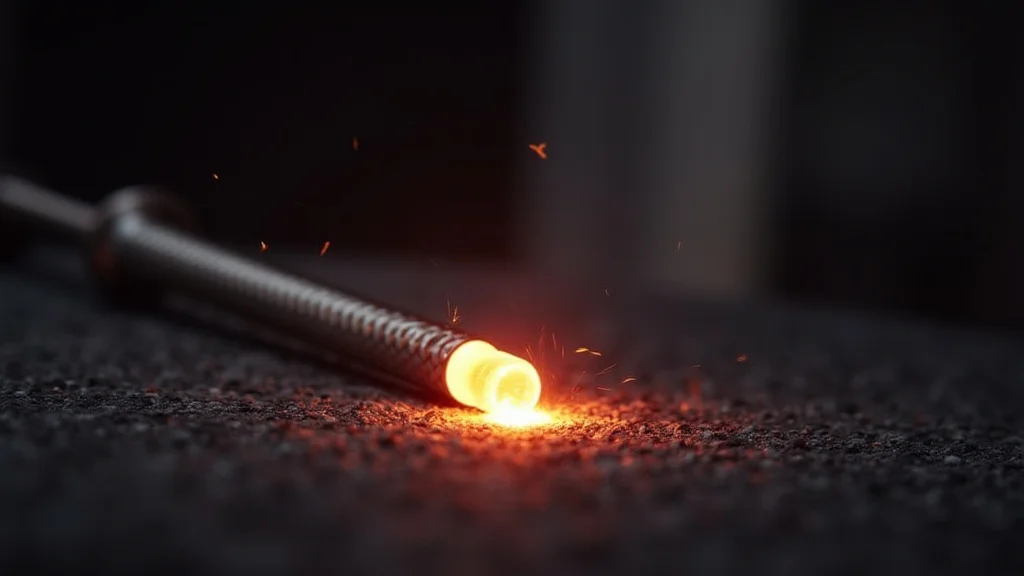
- Scratch Start: Gently scratch the electrode tip across the workpiece, like striking a match.
- Tap Start: Lightly tap the electrode onto the workpiece and then pull back slightly.
If you’ve corrected the issue, you should now be able to strike an arc. Don’t be afraid to try a few times, especially if you’re using a new machine or electrode type. A good arc will start with a visible spark and a steady hum.
Troubleshooting Specific Electrode Types
Different electrodes behave differently, and knowing their quirks can save you a lot of frustration. Here’s a quick look at some common types:
E6010 / E6011 Electrodes
These are cellulose-coated electrodes that produce a “digging” arc. They are known for their excellent arc starting characteristics, even on dirty or rusty surfaces. If you’re having trouble with these, it’s almost always a connection or power issue, as they are designed to be hot and easy to start.
E6013 Electrodes
These have a titania-based coating and produce a softer arc than 6010/6011. They are good all-around electrodes and generally easy to strike. If you’re having trouble with 6013, ensure your amperage isn’t too low and your connections are solid.
They are more sensitive to moisture than 6010/6011.
E7018 Electrodes
These are low-hydrogen electrodes with an iron powder coating. They require a bit more care. E7018 electrodes are sensitive to moisture and need to be kept very dry.
They also typically require slightly higher amperage to strike and maintain a stable arc compared to the cellulose-based rods. If you’re having trouble with 7018, ensure they are fresh and dry, and that your amperage settings are adequate. Sometimes, a slight increase in “hot start” or “arc force” can help initiate the arc.
When to Consider Professional Help
If you’ve gone through all these steps and your stick welder is still stubbornly stuck at idle, it might be time to consider that there’s an internal problem with the machine. This could involve faulty internal components, damaged wiring, or other issues that require specialized knowledge and tools to diagnose and repair.
Consult your welder’s owner’s manual for troubleshooting tips specific to your model. If the manual doesn’t help, or if you’re uncomfortable opening up the machine, it’s best to contact the manufacturer’s customer support or take it to a qualified welding equipment repair shop. They have the expertise to safely diagnose and fix internal issues.
Frequently Asked Questions
Question: Why won’t my stick welder start an arc?
Answer: This usually happens because of incorrect settings, poor connections, dirty workpieces, or issues with the electrodes themselves. Making sure everything is set up correctly and clean is key.
Question: What are the most important settings to check for arc start problems?
Answer: The most important settings are amperage and voltage. You need enough amperage to create the arc. Also, check any “hot start” or “arc force” features if your welder has them.
Question: Can old or damp electrodes cause my welder to not start?
Answer: Yes, absolutely. Moisture in the flux coating of electrodes can significantly interfere with arc starting. Old electrodes might also have degraded coatings.
Question: What’s the best way to ensure a good ground connection?
Answer: The ground clamp must be attached to clean, bare metal. Remove any paint, rust, or dirt from the surface where the clamp will connect. Make sure the clamp is tight.
Question: Should I always clean my workpiece before welding?
Answer: Yes, you should always clean the welding area. Rust, paint, oil, and dirt create resistance and prevent a good electrical path, making it hard for the arc to start.
Final Thoughts
Getting your stick welder to start properly is usually quite straightforward once you know what to look for. The most common reasons for it being stuck at idle involve simple issues like settings, connections, or dirty surfaces. By systematically checking your amperage settings, ensuring clean connections for your ground clamp and electrode holder, and using good quality, dry electrodes, you’ll greatly increase your chances of striking a strong arc.
Don’t let a few hiccups stop you from creating great welds!