
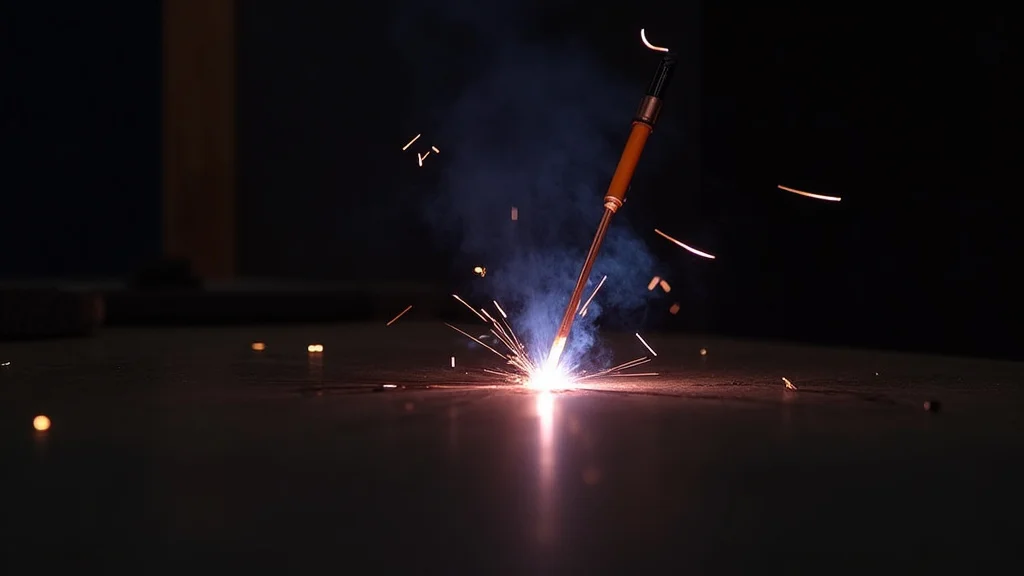
If you’re new to stick welding, you might notice your electrode sticking to the metal. It’s a common thing that happens, and it can be frustrating! Don’t worry, though.
We’ll show you simple ways to stop that from happening. Learning How to Prevent Electrode Sticking in Stick Welding will make your welding much smoother and easier. We’ll go over a few easy steps that really work.
Key Takeaways
- You’ll learn why your electrode sticks when you’re stick welding.
- Discover the right amperage settings for different electrode types.
- Understand the importance of electrode angle and movement.
- Find out how arc length affects electrode sticking.
- Learn tips for striking the arc properly to avoid sticking.
- Get advice on choosing the correct electrode for your project.
Understanding Electrode Sticking
Why Does It Happen?
Electrode sticking is a common issue for beginner welders. It’s when the welding rod, or electrode, welds itself to the metal workpiece instead of creating a nice weld bead. This usually happens when the heat isn’t quite right or the technique isn’t perfect.
It’s like trying to draw with a pencil that’s stuck to the paper; you can’t move it smoothly.
Several things can cause this problem. The most common reasons are:
- Too low amperage setting.
- Holding the electrode too close to the metal for too long when starting.
- Incorrect electrode angle.
- Arc length that is too short.
When the electrode sticks, it stops the welding process. You have to break it free, which can make a mess and waste time. Getting good at preventing this is a big step toward becoming a skilled stick welder.
It’s all about making small adjustments to your technique.
How to Prevent Electrode Sticking in Stick Welding
Setting the Right Amperage
Amperage is like the power that melts the metal. If it’s too low, the electrode won’t melt enough to form a good weld, and it will stick. If it’s too high, it can burn through the metal or create a messy weld.
The right amperage depends on the type of electrode you’re using and the thickness of the metal.
Different electrodes have different recommended amperage ranges. These are usually printed on the electrode packaging. For example, a 6013 electrode might run at a lower amperage than a 7018 electrode.
Always check the manufacturer’s recommendations.
As a general guide:
- For thin metal (1/16 inch or less), you’ll need lower amperage.
- For thicker metal (1/4 inch or more), you’ll need higher amperage.
It’s often best to start at the lower end of the recommended range for an electrode and then slowly increase it until you find what works best. You’re looking for a smooth arc and a nice, consistent melt pool.
Striking the Arc Properly
How you start your weld, or strike the arc, is very important. There are two main ways to strike an arc: scratching and tapping.
The Scratching Method
This is similar to striking a match. You quickly “scratch” the tip of the electrode across the metal surface. Then, just as quickly, lift the electrode away to establish the arc.
If you hold it there too long after scratching, it will stick.
The Tapping Method
With this method, you lightly tap the electrode tip onto the metal surface, like a light tap of a hammer. Then, lift it quickly to create the arc. This method can sometimes feel easier for beginners.
The key to both methods is to be quick. You want to create a spark and then immediately pull the electrode back just a little bit to get a stable arc. Don’t press the electrode down hard when you first touch the metal.
A gentle touch is all you need.
Maintaining the Correct Arc Length
Arc length is the distance between the tip of the electrode and the surface of the weld pool. This is one of the most critical factors in preventing sticking and producing good welds.
If your arc length is too short, the electrode will get too close to the molten metal, and it will stick. If the arc length is too long, the arc becomes unstable, can spatter a lot, and the weld might not be strong enough. It also makes it harder to control the molten metal.
For most stick welding, you want to maintain an arc length that is about the same as the diameter of the electrode core wire. For example, if you’re using a 1/8 inch electrode, aim for an arc length of about 1/8 inch.
As you weld, try to keep this distance consistent. You’ll learn to feel and see when your arc length is just right. A good arc length produces a nice, steady sound and a smooth arc.
If you hear a “crackling” sound and see lots of spatter, your arc is likely too long.
Controlling Electrode Angle and Movement
The angle at which you hold the electrode and how you move it also play a big role in preventing sticking. For most stick welding, you want to hold the electrode at a slight drag angle, usually between 10 to 20 degrees. This means the electrode is angled slightly in the direction you are moving.
When you’re welding, you should also move the electrode in a consistent way. For straight beads, a simple back-and-forth motion or a slight weave can be effective. The movement should be smooth and controlled.
Avoid pausing too long in one spot, as this can cause the electrode to stick. The speed of your travel is also important. If you move too slowly, you’ll put too much heat into the metal, and the electrode might stick.
If you move too fast, you won’t melt enough metal, and the weld will be weak.
Practicing different movements on scrap metal will help you find the rhythm that works best. Pay attention to how the molten puddle behaves. A good puddle will follow the electrode smoothly.
Choosing the Right Electrode
The type of electrode you use matters a lot. Different electrodes are designed for different types of metals, welding positions, and welding currents.
Common electrode types include:
- E6013: A general-purpose electrode good for all positions. It’s often recommended for beginners because it’s forgiving and easy to use.
- E7018: A low-hydrogen electrode that produces strong, high-quality welds. It’s excellent for structural steel but can be a bit more challenging for beginners due to its flux coating.
- E6010/E6011: These are deep-penetrating electrodes often used for pipe welding. They tend to be a bit trickier and might cause more sticking for new welders.
For beginners learning How to Prevent Electrode Sticking in Stick Welding, starting with an E6013 is usually a good idea. They are easier to strike and maintain an arc with, and they are less prone to sticking.
Understanding the Welding Current (AC vs. DC)
Stick welding machines can use either AC (alternating current) or DC (direct current). The type of current can affect how the electrode behaves.
DCEN (Direct Current Electrode Negative): The electrode is negative, and the workpiece is positive. This generally provides good penetration and a stable arc. It can be good for preventing sticking.
DCEP (Direct Current Electrode Positive): The electrode is positive, and the workpiece is negative. This produces more heat at the electrode, leading to deeper penetration. It can sometimes make electrodes stick more easily if not controlled.
AC (Alternating Current): The current switches direction. AC can be good for minimizing arc blow, but it can sometimes be less stable than DC. Many machines allow you to switch between AC and DC settings.
For beginners learning How to Prevent Electrode Sticking in Stick Welding, DCEN is often a good starting point. It offers a balanced approach for arc stability and penetration, making it easier to control and avoid sticking.
Tips for Different Materials
The material you are welding can also affect how easily an electrode sticks. Thicker metals require higher amperage, while thinner metals need more delicate control.
Thick Steel: You can use higher amperage. This helps melt the electrode and base metal effectively. Be sure to use an electrode with sufficient strength, like an E7018.
The electrode is less likely to stick because of the higher heat input.
Thin Steel: This is where sticking is a bigger concern. You need to use lower amperage and be very careful with your arc length and travel speed. A slight pause can cause it to stick instantly.
Using a faster travel speed and a very short arc can help.
Cast Iron: Welding cast iron is tricky and requires specific techniques and electrodes. It’s generally not recommended for absolute beginners, as it has a high tendency for electrodes to stick and can crack if not done correctly.
Always consider the thickness and type of metal you are welding and adjust your settings and technique accordingly. Practicing on scrap pieces of the same material is the best way to get a feel for it.
Frequently Asked Questions
Question: What is the most common reason electrodes stick?
Answer: The most common reason electrodes stick is using an amperage setting that is too low for the electrode and material being welded.
Question: Should I use AC or DC for stick welding to avoid sticking?
Answer: For beginners learning How to Prevent Electrode Sticking in Stick Welding, DCEN (Direct Current Electrode Negative) often provides a more stable arc and can be easier to control, helping to prevent sticking.
Question: How far should the electrode be from the metal when welding?
Answer: You should aim for an arc length that is about the same as the diameter of the electrode core wire. For a 1/8 inch electrode, this means about 1/8 inch distance.
Question: What kind of electrode is best for beginners?
Answer: The E6013 electrode is often recommended for beginners because it’s forgiving, easy to strike, and less prone to sticking than some other types.
Question: If my electrode sticks, should I force it off?
Answer: No, you should not force it off. Gently twist the electrode while pulling back slightly. If it’s really stuck, you might need to turn off your welder briefly before trying to free it.
Final Thoughts
Learning How to Prevent Electrode Sticking in Stick Welding is a key step for any new welder. By making sure your amperage is right, you strike your arc quickly, keep your arc length steady, and hold the electrode at the correct angle, you’ll see a big difference. Practicing these simple tips will help you create better welds with less frustration.
Keep practicing, and you’ll get the hang of it quickly.
Leave a Reply