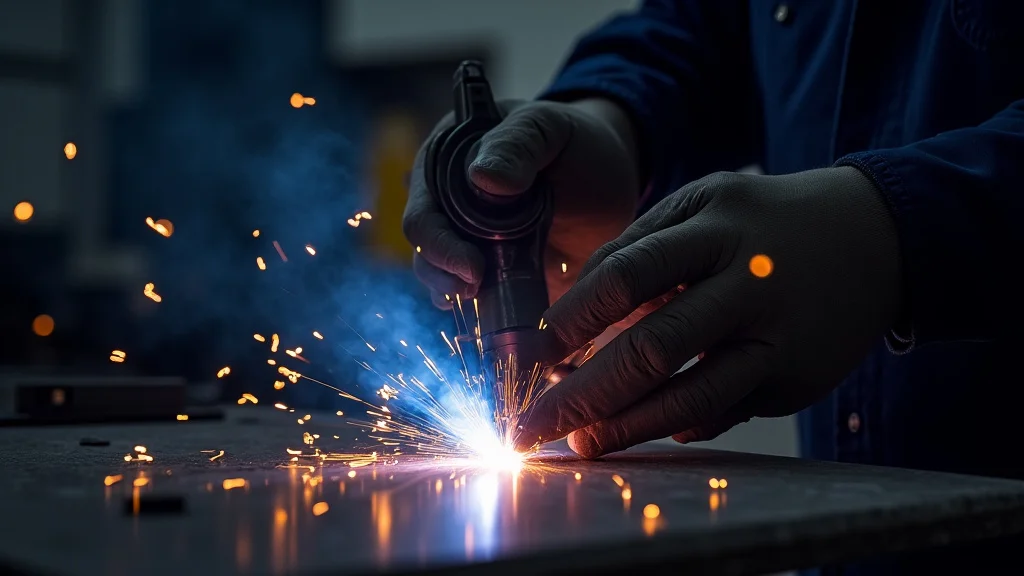
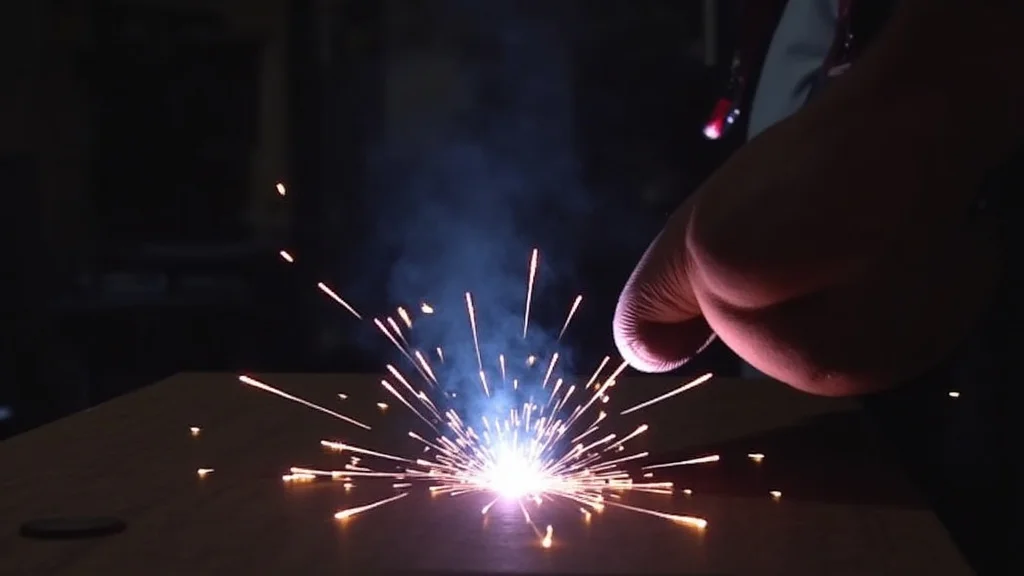
Is your MIG welder’s arc acting up, jumping around like a startled frog? You’re not alone! For those new to welding, the situation of a MIG Welder Arc Blowing Out?
Fix Steps can be a bit confusing and even frustrating. But don’t worry, we’ve got you covered. This guide breaks down what’s happening and gives you simple, step-by-step solutions.
Get ready to get your arc behaving itself so you can make smooth, clean welds.
Key Takeaways
- You’ll learn what causes a MIG arc to blow out.
- We’ll show you how to check and fix common issues with your MIG welder setup.
- You’ll discover simple adjustments to get a stable arc.
- We’ll cover how to improve your welding technique to prevent arc blow.
- You’ll gain confidence in troubleshooting your MIG welding problems.
Understanding MIG Welder Arc Blowing Out
When you’re MIG welding, you’re creating a stable electrical arc between your welding wire and the metal you’re joining. This arc is what melts the metal and the wire to form the weld. Arc blowing happens when this arc isn’t stable.
Instead of staying put, it bends, dances, or even seems to jump away from where you want it to be. This makes it hard to control your weld pool and can lead to a messy, weak joint.
It’s like trying to paint a fine line with a shaky hand. The arc’s movement pushes the molten metal around, making it difficult to get a nice, even bead. For beginners, seeing this happen can be really discouraging.
You might think you’re doing something wrong with your technique, but often it’s a simple setup issue that’s causing the problem.
Why Does MIG Arc Blow Happen?
Several things can make your MIG arc start blowing. Most of the time, it’s related to magnetism. When electricity flows through the welding cable and the metal you’re welding, it creates magnetic fields.
These magnetic fields can push and pull the arc. Think of it like trying to hold two magnets together that are trying to repel each other – it takes extra effort to keep them in place.
The direction and strength of these magnetic fields are key. They can be caused by the welding current itself, the way the welding leads are routed, or even the metal you are welding on. Understanding these forces helps you figure out how to stop the arc from blowing.
Magnetic Forces at Play
Magnetic forces are the biggest culprits behind arc blow. When current flows, it generates a magnetic field. In MIG welding, this current flows through the welding gun, the wire, and back through the workpiece.
This creates a loop, and at certain points, these magnetic fields can become strong enough to influence the arc’s path.
One common issue is when the welding cable is too close to the workpiece or runs parallel to the weld seam. This can create a strong magnetic field that pushes the arc forward or backward. It’s like having an invisible hand nudging your arc where you don’t want it.
Common Causes for Beginners
For beginners, the most common reasons for arc blow are usually simple mistakes in setting up the welder or running the cables. Here are a few big ones:
- Incorrect Polarity: Making sure your welder is set to the right polarity for MIG welding (usually DCEN or direct current electrode negative) is vital. The wrong polarity can create unwanted magnetic forces.
- Ground Clamp Placement: Where you attach your ground clamp matters a lot. If it’s too far from the weld or placed in a way that creates a strong magnetic field, it can influence the arc.
- Cable Routing: Just like we mentioned, how you run your welding cables can create magnetic interference.
- Weld Current and Wire Speed: Sometimes, settings that are too high or too low can make arc blow worse.
MIG Welder Arc Blowing Out? Fix Steps
Now let’s get to the practical part. Fixing a blown arc is usually about making a few adjustments. We’ll go through these steps one by one.
Step 1: Check Your Ground Clamp
This is often the easiest and most effective fix. A good, solid ground connection is essential for any welding process.
- Placement: Always attach your ground clamp directly to the workpiece or to a clean metal surface very close to where you are welding. Avoid clamping onto painted, rusted, or dirty surfaces.
- Secure Connection: Make sure the clamp is tight. A loose clamp means poor electrical contact, which can cause problems.
- Distance: Try to keep the ground clamp as close to the weld area as possible. The farther it is, the longer the path for the current, and the more potential for magnetic interference.
- Multiple Clamps: For longer welds or on very large pieces, consider using multiple ground clamps to ensure a good path for the current.
Think of the ground clamp as the return path for the electricity. If this path is weak or winding, the electricity has to find its own way, and that can lead to arc instability.
Step 2: Examine Your Cable Routing
The way you run your welding cables can create magnetic fields. These fields can push the arc. Let’s see how to avoid this.
- Avoid Parallel Runs: Try not to run your welding cable parallel to your weld seam for long distances. This is a classic setup for arc blow.
- Angle the Cables: If possible, route your welding cables at an angle to the weld. This helps to disrupt the magnetic field.
- Keep Cables Away from Workpiece: Don’t let your welding cable lie directly on or wrap around the metal you are welding.
- Untangle and Straighten: A tangled mess of cables can make magnetic fields worse. Try to keep them as straight and organized as possible.
It might seem like a small detail, but cable placement can have a surprisingly big impact on your arc.
Step 3: Adjust Welding Settings
Sometimes, the arc blows because your welder settings aren’t quite right for the material and joint you’re working on.
- Wire Speed: If your wire speed is too high, it can cause an unstable arc. Try lowering it slightly.
- Voltage: Voltage affects the arc length. If the voltage is too low, the arc can be short and choppy. If it’s too high, it can be too spread out. Make small adjustments to find a nice, stable arc.
- Amperage (Indirectly): In MIG welding, amperage is mostly controlled by wire speed. So, adjusting wire speed is your primary way to control the heat input.
It’s a good idea to consult your welder’s manual or a welding chart for recommended settings based on the material thickness and type.
Step 4: Check for Magnetic Interference from the Metal Itself
Sometimes, the metal you are welding on can have its own magnetic properties that cause arc blow.
- Ferrous Metals: Steel is magnetic. When you’re welding thick steel or certain types of steel, you might encounter more arc blow.
- Direction of Travel: Arc blow tends to be stronger when welding in a certain direction. If you’re welding from left to right and the arc is consistently blowing forward, try switching to welding from right to left.
- Demagnetizing: For really stubborn cases, especially with large steel structures, you might need to consider demagnetizing the area. This is a more advanced technique, but for most small jobs, the previous steps will be enough.
Step 5: Review Your Welding Technique
Even with the best setup, your welding technique can influence how the arc behaves.
- Gun Angle: Always point your welding gun in the direction of travel. Pushing or pulling the gun at an extreme angle can affect the arc. A slight push angle is generally preferred in MIG.
- Travel Speed: Moving too fast or too slow can both cause problems. A consistent, steady travel speed is important for a good weld and a stable arc.
- Stickout: The distance between the tip of your welding gun and the end of the wire (stickout) matters. Too much stickout can lead to a less stable arc and poor wire feeding.
Practicing these techniques on scrap metal will help you get a feel for what a good, stable arc looks and sounds like.
Step 6: Inspect Your Equipment
Faulty equipment can also lead to arc blow.
- Welding Wire: Make sure your welding wire is feeding smoothly. If it’s snagging or tangled, it can cause inconsistent arc length and stability.
- Contact Tip: A worn or dirty contact tip can restrict wire flow and affect the electrical contact. Clean or replace it if it looks damaged.
- Gas Flow: Ensure your shielding gas is flowing correctly and at the right rate. Insufficient gas flow can lead to poor shielding and an unstable arc.
Regular maintenance of your welder and accessories can prevent many of these issues before they even start.
Frequently Asked Questions
Question: What is arc blow in MIG welding?
Answer: Arc blow is when the welding arc becomes unstable and moves erratically instead of staying focused on the weld joint. This makes it difficult to control the molten metal.
Question: Can a bad ground cause arc blow?
Answer: Yes, a poor or improperly placed ground connection is one of the most common causes of arc blow. It creates an unstable electrical path.
Question: How does cable routing affect the arc?
Answer: Running welding cables parallel to the weld seam can create magnetic fields that push the arc away from where you want it.
Question: Should I try changing my wire speed or voltage if the arc is blowing?
Answer: Yes, adjusting your wire speed and voltage can help stabilize the arc. Start with small changes to find the right balance.
Question: Is arc blow a problem with all types of welding?
Answer: Arc blow is most common in arc welding processes like MIG and Stick welding, where strong electrical currents create significant magnetic fields.
Final Thoughts
Dealing with a MIG welder arc blowing out might seem tricky at first, but by following these simple, step-by-step fixes, you can get your arc under control. Checking your ground clamp, adjusting your cable routing, and fine-tuning your welder settings are key. Even your technique and equipment maintenance play a big part.
You’ve learned the common reasons and practical ways to solve this issue. Now you can weld with more confidence, making smoother, stronger beads.