Learning MIG welding is a great skill, but sometimes it can be a little tricky. Many new welders wonder How to Reduce Spatter in MIG Welding Efficiently. Little bits of metal, called spatter, can fly around and make your work look messy.
Don’t worry! It’s a common challenge, and we’ll show you simple ways to fix it. Stick around for easy tips that will make your welding cleaner and better.
Key Takeaways
- Proper welding gun angle can stop spatter.
- Choosing the right wire speed and voltage is important.
- Using the correct shielding gas helps reduce spatter.
- Keeping your welding tip clean makes a big difference.
- The distance between the tip and the metal matters.
- Good welding technique makes cleaner welds.
What is MIG Welding Spatter?
MIG welding, also called Gas Metal Arc Welding (GMAW), is a popular way to join metal. It uses a wire electrode that melts and forms a weld. A shielding gas protects the weld pool from the air.
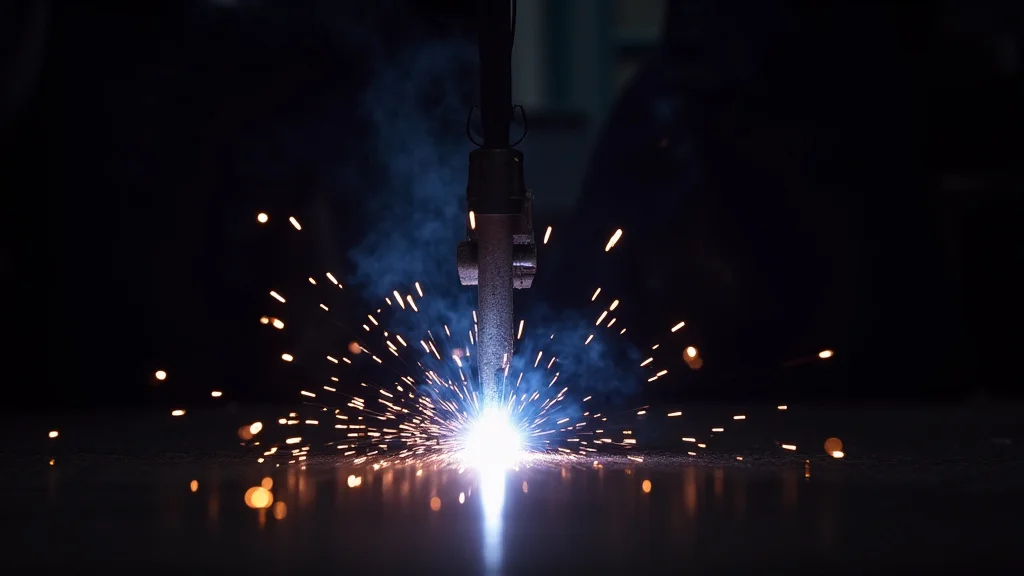
Sometimes, small droplets of molten metal jump away from the weld. These are called spatter. Spatter can stick to the workpiece or the welding gun.
It looks messy and can sometimes get in the way of a good weld.
Why Does Spatter Happen?
Several things can cause spatter. It’s like a little explosion of metal. Think of it as the metal getting too hot too fast, or the gas not doing its job right.
Sometimes, the electricity isn’t flowing smoothly. All these small issues add up to those annoying little metal bits flying everywhere.
Common Causes of Spatter
- Incorrect Wire Speed: If the wire feeds too fast, it can overload the weld pool, causing spatter. Too slow, and you might not get enough heat.
- Wrong Voltage Setting: The voltage controls the arc length. Too high or too low can cause problems.
- Poor Gas Coverage: If the shielding gas isn’t protecting the weld properly, the molten metal can react with the air.
- Dirty or Damaged Tip: A clogged or worn-out tip can disrupt the arc and gas flow.
- Incorrect Gun Angle: Pointing the gun the wrong way can push the molten metal out.
- Contaminated Metal: Rust, paint, or oil on the metal can cause the arc to be unstable.
- Wrong Electrode Extension: How far the wire sticks out from the tip affects the weld.
How to Reduce Spatter in MIG Welding Efficiently
Now, let’s get to the good stuff. Knowing why spatter happens is the first step. The next is knowing how to fix it.
We’ll go through each easy step to help you get cleaner welds. These tips are simple to follow.
1. Get Your Settings Right
This is super important. Your MIG welder has dials for wire speed and voltage. These need to match the type of metal you’re welding and how thick it is.
Think of it like tuning a radio to get a clear signal. If the settings are off, the sound (or weld) will be fuzzy, which is spatter in our case.
Wire Speed and Voltage Chart (Example for Mild Steel)
| Metal Thickness | Wire Speed (IPM) | Voltage |
|---|---|---|
| 16 Gauge (1.6mm) | 100-150 | 15-17 |
| 1/8 inch (3.2mm) | 180-250 | 18-20 |
| 1/4 inch (6.4mm) | 250-350 | 20-23 |
Note: Always check your welder’s manual for specific recommendations. These are general guidelines.
Many welders use what’s called spray transfer mode. This mode creates a very smooth, spray-like stream of metal that transfers to the weld. It produces very little spatter.
To get this mode, you usually need higher voltage and wire speed settings. Your welder’s manual will tell you how to set it up for different materials.
2. Pay Attention to Your Gun Angle
How you hold and move your welding gun matters a lot. For MIG welding, you generally want to push the gun, not pull it. This is called the “push angle.” Aim to have the gun tilted slightly forward, about 5 to 15 degrees.
This helps the shielding gas flow correctly over the weld pool. If you pull the gun, it can push the gas away and let air in, causing spatter.
Think of the gun as a showerhead. You want the water (gas) to cover the area you’re cleaning (the weld). If you tilt it the wrong way, the water sprays everywhere else.
3. Use the Right Shielding Gas
The gas that comes out of your MIG gun is like a protective bubble. It keeps the hot, melted metal from touching the air. Air has oxygen and nitrogen, which can make the weld weak and create spatter.
For most steel jobs, a mix of argon and carbon dioxide (like 75% Argon / 25% CO2) is common and works well to reduce spatter. Pure CO2 can cause more spatter. Using the correct gas and making sure the flow rate is right is key.
The gas flow rate is usually set on your gas cylinder regulator. A good starting point for most jobs is around 20-25 cubic feet per hour (CFH). If the flow is too low, you won’t get enough protection.
If it’s too high, it can be turbulent and actually pull air into the weld.
4. Keep Your Welding Tip Clean and in Good Shape
The welding tip is the small copper nozzle at the end of your gun. This is where the wire comes out and the gas flows around it. If spatter builds up on the tip, it can block the gas and cause the wire to feed unevenly.
This leads to a bad arc and more spatter.
Clean the tip regularly with a wire brush. You can also use anti-spatter spray. This spray coats the tip and makes it harder for spatter to stick.
If the tip is worn out or damaged, replace it. A new tip is cheap and makes a big difference.
5. Control Your Electrode Extension (Stick-Out)
Electrode extension, or stick-out, is how far the welding wire sticks out from the tip of the welding gun. For MIG welding steel, a common stick-out is about 3/8 inch (around 10mm). If you have too much stick-out, the wire can overheat before it reaches the weld pool, causing spatter.
If it’s too short, you might have trouble seeing what you’re doing, and the tip could get damaged.
Keep your stick-out consistent. This helps create a stable arc and reduces spatter.
6. Master Your Welding Technique
How you move the gun and how fast you move it also plays a role. Try to keep your movements smooth and steady. A consistent travel speed helps maintain a stable arc.
If you move too fast, the weld might not be deep enough. If you move too slow, you can overheat the metal and create more spatter.
Weld in short, controlled bursts or a steady motion. Practice on scrap pieces of metal to get a feel for the right speed and motion for different jobs.
7. Prepare Your Metal Properly
Metal that has rust, paint, oil, or dirt on it can cause problems. These impurities can react with the hot metal and create an unstable arc, leading to spatter. Always clean the metal thoroughly before welding.
Use a wire brush or grinder to remove any coatings or contaminants.
Clean metal makes for a cleaner weld and less spatter.
8. Check Your Ground Clamp Connection
A good ground connection is essential for any welding job. Make sure your ground clamp is attached securely to a clean, bare metal surface. A loose or dirty ground clamp can cause an unstable arc, leading to increased spatter and poor weld quality.
Troubleshooting Spatter Issues
Sometimes, even with the right settings and technique, you might still have spatter. Here are a few more things to check:
- Wire Feed Problems: Make sure the wire isn’t kinked in the liner or the drive rolls are not slipping.
- Power Source Issues: Ensure your welder is plugged into the correct power outlet and is receiving stable power.
- Gas Flow Interruption: Check for drafts in the welding area that might blow the shielding gas away.
Frequently Asked Questions
Question: Will using an anti-spatter spray completely stop spatter?
Answer: Anti-spatter spray helps a lot by making it harder for spatter to stick to the welding tip and nozzle. It doesn’t stop spatter from forming, but it makes cleanup much easier and helps keep the tip clean, which in turn reduces issues that cause spatter.
Question: How do I know if my voltage is too high or too low?
Answer: If your voltage is too low, the arc might look dark and sputtery, and you might get excessive penetration with some spatter. If it’s too high, the arc will be loud and harsh, and you’ll likely see a lot of spatter flying everywhere. You might also get a wide, flat weld bead.
Question: Can I use any wire with my MIG welder?
Answer: No, you should use the correct type of welding wire for your material. For mild steel, you’ll use steel wire. For stainless steel, you’ll use stainless steel wire.
The wire also needs to be compatible with your welder’s settings and shielding gas.
Question: Is it okay to have a little bit of spatter?
Answer: A tiny bit of spatter is normal in some welding situations. However, excessive spatter usually means something isn’t quite right. Learning to reduce it makes your welds look much better and stronger.
Question: How often should I clean my welding tip?
Answer: You should clean your welding tip whenever you notice spatter building up on it, or at least at the start of each welding session. Regular cleaning helps maintain a consistent arc and better weld quality.
Final Thoughts
So, you’ve learned how simple it can be to improve your MIG welding. By getting your settings just right, holding your gun at the proper angle, and keeping your equipment clean, you’ll see a big difference. You now know how to reduce spatter and make your projects look great.
Practice these tips, and you’ll be welding cleaner than ever before.