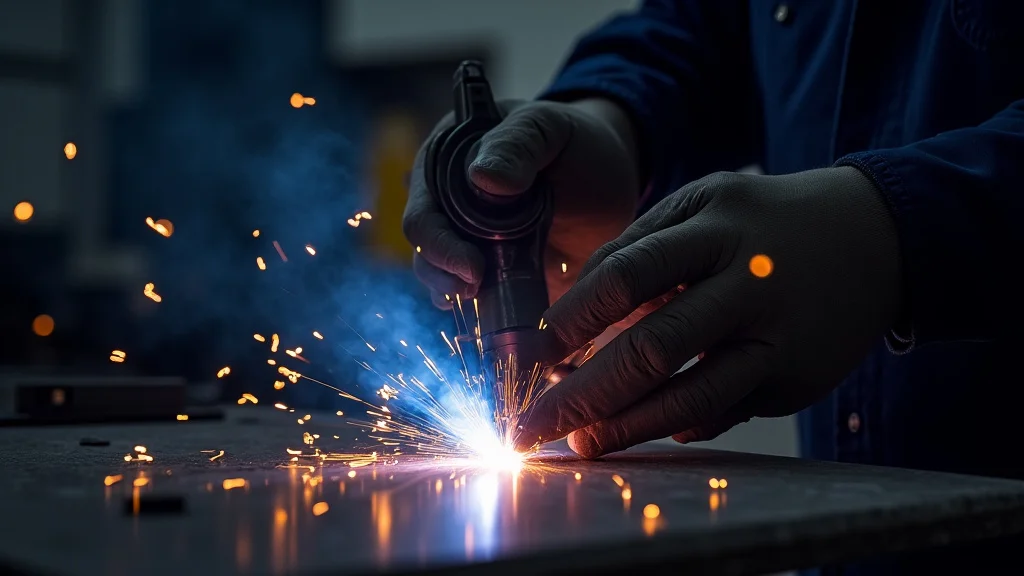
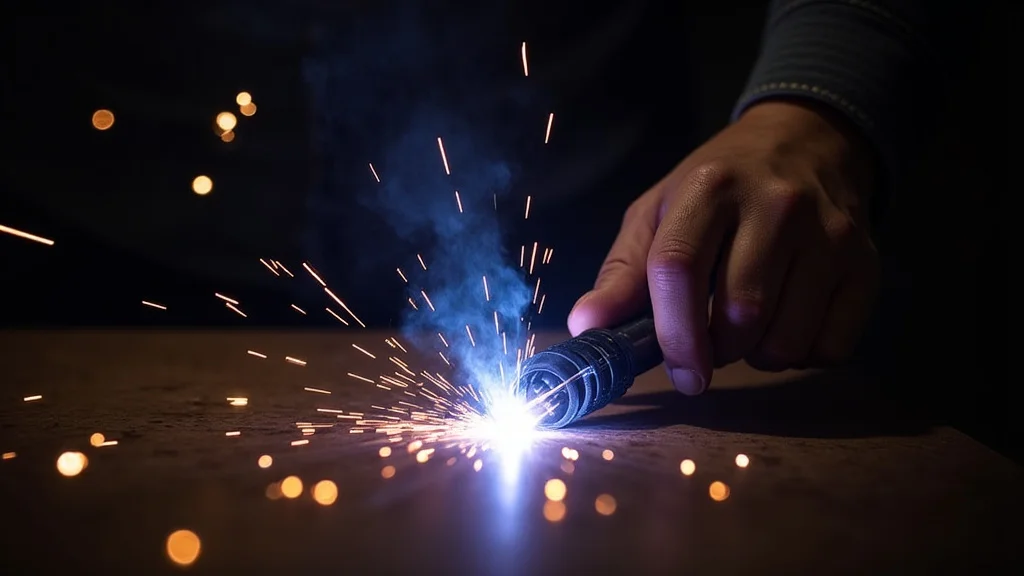
It’s frustrating when your MIG welder’s arc suddenly stops! Many people starting out with MIG welding run into this issue. You’re trying to make a nice, clean weld, and then poof, the arc just cuts out.
This can feel confusing and make you wonder what you’re doing wrong. But don’t worry, it’s a common problem with simple fixes. We’ll walk through why this happens and how to get your welder working smoothly again.
Ready to learn how to keep that arc going strong?
Key Takeaways
- Understand the common reasons why a MIG welder’s arc might cut out unexpectedly.
- Learn how to check and fix issues with your MIG welder’s wire feed system.
- Discover how proper grounding and power supply can prevent arc interruptions.
- Identify how incorrect settings can lead to your arc cutting out.
- Explore simple troubleshooting steps to resolve arc cutting issues.
- Gain confidence in maintaining your MIG welder for consistent performance.
Why Is My MIG Welder Arc Cutting Out?
Troubleshooting a Stubborn Arc
When you’re working on a project and your MIG welder’s arc suddenly stops, it’s incredibly annoying. You might be mid-weld, or just starting, and then the familiar hum of the arc disappears. This problem, often summarized by the question, “Why Is My MIG Welder Arc Cutting Out?,” is one of the most common headaches for new welders.
It can make you feel like you’re not progressing, but the good news is that the reasons are usually straightforward. We’ll break down the most likely causes and show you how to fix them, step by step.
The Wire Feed System: The Heart of the Arc
A MIG welder works by feeding wire through a welding gun to the workpiece. This wire carries the electrical current that creates the arc. If this wire feed is interrupted, the arc will stop.
Several things can go wrong with the wire feed system.
Wire Tension Issues
The roller that grips and pushes the wire needs to have the right tension. If the tension is too loose, the roller might slip on the wire, not feeding it consistently. This jerky feeding can cause the arc to cut out.
If the tension is too tight, it can crush the wire, especially softer wires like aluminum. This can cause the wire to jam in the liner or the drive rolls.
What to do: Check the tension knob on your wire feeder. Start with a medium setting. Try feeding the wire without welding.
You should hear a slight squeak or feel a firm grip. If the wire is slipping, tighten it a bit. If it’s crushing the wire, loosen it.
Dirty or Worn Drive Rolls
The drive rolls are the parts that actually grab the welding wire and push it forward. Over time, these rolls can collect metal shavings and dirt. This buildup prevents them from gripping the wire properly.
If the rolls are worn down or the wrong size for your wire, they also won’t feed the wire well.
What to do: Inspect the drive rolls. Use a wire brush to clean off any debris. If the rolls look worn or damaged, they might need to be replaced.
Make sure you’re using the correct size drive rolls for the diameter of your welding wire.
Kinked or Damaged Wire
Welding wire can get kinked if it’s pulled too hard, is old, or if the spool isn’t mounted correctly. A kink in the wire can cause it to snag inside the machine, the gun, or the liner. This blockage will stop the wire feed and cut out the arc.
What to do: Unspool a few feet of wire and look for any kinks. If you find one, cut it out. If the wire is heavily kinked, it might be best to
The Gun Liner and Conduit
The welding gun has a liner, which is a tube that the wire travels through. If this liner is dirty, bent, or damaged, it can create friction and cause the wire to bind. This binding stops the wire feed.
The conduit is the outer cable that protects the liner and houses the wire.
What to do: Check the gun liner for obstructions. You can often use compressed air to blow out any debris. If the liner is damaged or bent, it needs to be replaced.
This is often a job you can do yourself, but your welder’s manual will have specific instructions.
Contact Tip Issues
The contact tip is a small, consumable part at the very end of your welding gun. It transfers the electrical current to the wire and guides it. If the tip is clogged with spatter, worn out, or the wrong size for your wire, it can cause poor electrical contact and wire feed problems.
This can lead to an unstable arc or the arc cutting out.
What to do: Inspect the contact tip. Clean out any spatter with a tip cleaner or a small wire brush. If the hole in the tip is enlarged or misshapen, it’s time to replace it.
Always use the correct size contact tip for the diameter of your welding wire.
Power and Electrical Connections
A stable electrical connection is vital for a continuous arc. Issues with power can easily cause the arc to cut out.
Poor Ground Connection
Your MIG welder needs a good ground clamp to complete the electrical circuit. If the ground clamp isn’t making solid contact with the workpiece or the welding machine, the current can be inconsistent. This inconsistency can cause the arc to flicker and die.
What to do: Make sure the ground clamp is attached to a clean, bare metal surface on your workpiece. Remove any paint, rust, or dirt from the area where the clamp is attached. Ensure the clamp itself is clean and securely fastened.
Loose or Damaged Cables
The welding cables connect your welder to the ground clamp and the gun. If these cables are loose at the machine, damaged, or frayed, it can interrupt the flow of electricity. This leads to an unstable arc that cuts out.
What to do: Check all cable connections at the welder. Make sure they are tight. Visually inspect the cables for any signs of damage, such as cuts, burns, or worn insulation.
If a cable looks damaged, it needs to be repaired or replaced.
Power Supply Problems
The power source for your welder also plays a role. If you’re using an extension cord, it needs to be heavy-duty enough for the amperage your welder is drawing. An undersized extension cord can cause voltage drop, leading to a weak or inconsistent arc.
What to do: Use the shortest, heaviest gauge extension cord possible. If you’re plugging into a generator, make sure it has enough continuous wattage to power your welder. Check your welder’s manual for recommended extension cord specifications.
Shielding Gas Issues
Shielding gas is critical for MIG welding. It protects the molten weld pool from atmospheric contamination, which is essential for a clean, strong weld. If the gas flow is incorrect, the arc can become unstable.
Incorrect Gas Flow Rate
If the gas flow rate is too low, the shielding gas won’t adequately protect the weld area. This can cause the arc to be unstable and cut out. If the flow rate is too high, it can create turbulence around the arc, also causing instability and potentially blowing the gas away from the weld.
What to do: Use a gas flow meter (usually attached to the regulator) to check your flow rate. For most steel welding with CO2 or a mix, a flow rate of 15-25 cubic feet per hour (CFH) is common. Consult your welding wire or gas supplier for recommended flow rates.
Check for leaks in your gas hose and connections.
Empty or Low Gas Cylinder
This might seem obvious, but an empty or nearly empty gas cylinder will obviously stop the gas flow. You might not notice this immediately if you’re focused on the wire feed, but it will cause the arc to cut out.
What to do: Check the pressure gauge on your gas cylinder regulator. If it’s low or empty, it’s time to swap it for a full one.
Gas Valve Not Open
Sometimes, the main valve on the gas cylinder might not be fully opened, or the valve on the regulator might be closed. This prevents gas from reaching the welding gun.
What to do: Ensure the main valve on the gas cylinder is fully open (usually counter-clockwise). Also, check that the valve on the regulator, if it has one, is open.
Machine Settings and Other Factors
The settings on your MIG welder are crucial for a stable arc. Incorrect settings can cause a multitude of welding problems, including arc cutting out.
Wrong Voltage and Wire Speed
Voltage and wire speed are directly related. For a given wire speed, there’s an optimal voltage range that produces a smooth, consistent arc. If your voltage is too low for the wire speed, you might get an “intending” arc, where the wire dips into the puddle but doesn’t fully melt.
Too high a voltage can cause excessive spatter and arc instability.
What to do: Consult your welder’s manual or chart for recommended settings based on the material thickness and wire type you are using. Start with the recommended settings and make small adjustments to voltage and wire speed to find the sweet spot for a stable arc.
Incorrect Polarity
MIG welding typically uses direct current electrode positive (DCEP) for most steel applications. If the polarity is set incorrectly (e.g., to direct current electrode negative, DCEN), it can lead to poor arc characteristics, weak welds, and an unstable arc that may cut out.
What to do: Double-check your welder’s polarity settings. For most solid steel wire welding, ensure it’s set to positive (+). Refer to your welder’s manual for confirmation.
Overheating and Duty Cycle
Welders have a duty cycle, which is the percentage of time they can operate at a given amperage within a 10-minute period before needing to cool down. If you’re welding continuously for too long, your welder can overheat. Many welders have thermal overload protection that will shut them down to prevent damage.
When this happens, the arc will cut out.
What to do: Be aware of your welder’s duty cycle. If you notice the welder getting excessively hot, take a break and let it cool down. Don’t push your machine beyond its limits.
Contaminated Base Metal
While not directly causing the arc to cut out, welding on dirty, oily, or painted metal can lead to an extremely unstable and inconsistent arc. This instability might feel like the arc is cutting out. The arc might sputter, jump, and become difficult to control, making it seem like it’s intermittently failing.
What to do: Always prepare your metal by cleaning it thoroughly. Remove all paint, rust, oil, and other contaminants with a grinder or wire brush before welding.
Frequently Asked Questions
Question: Why does my MIG arc cut out right when I start welding?
Answer: This often points to an issue with the initial wire feed or a problem with your ground connection. Ensure your wire tension is set correctly and your ground clamp has a clean, solid contact with the metal. Also, check that your shielding gas is flowing before you strike the arc.
Question: I hear the wire feeding, but the arc still cuts out. What could be wrong?
Answer: If the wire is feeding but the arc is unstable or cutting out, the problem might be with the electrical connection. Check your contact tip for clogs or wear, ensure your ground clamp is good, and inspect your welding cables for damage. Incorrect polarity or an inadequate gas flow can also cause this.
Question: My MIG welder cuts out after welding for a short time. Is it broken?
Answer: This is likely due to the welder overheating. Most welders have a duty cycle. If you’re welding for longer than the recommended time at a given amperage, the welder’s thermal overload protection will kick in, shutting it down until it cools.
Give it a break.
Question: Can using the wrong gas mixture cause my arc to cut out?
Answer: Yes, an incorrect gas mixture, or even the wrong type of gas for your application, can lead to an unstable arc. This instability can manifest as sputtering, porosity, and the arc cutting out. Always use the gas recommended for your base metal and welding wire.
Question: How often should I clean or replace my MIG welder’s contact tip?
Answer: You should clean your contact tip regularly, especially if you notice spatter buildup or arc instability. It’s a good habit to clean it before each welding session. Replace the tip when the hole becomes enlarged or misshapen, as this directly affects arc quality and can cause the arc to cut out.
Final Thoughts
When your MIG welder’s arc cuts out, remember it’s usually a simple fix. You’ve learned about common culprits like wire feed issues, problems with your power and ground, and incorrect shielding gas. Checking these areas, from wire tension to gas flow, will likely solve your arc cutting out.
Keep your contact tip clean and ensure your machine settings are right for the job. With a little practice and attention, you can keep your arc stable and your welds strong. Get back to welding with confidence!