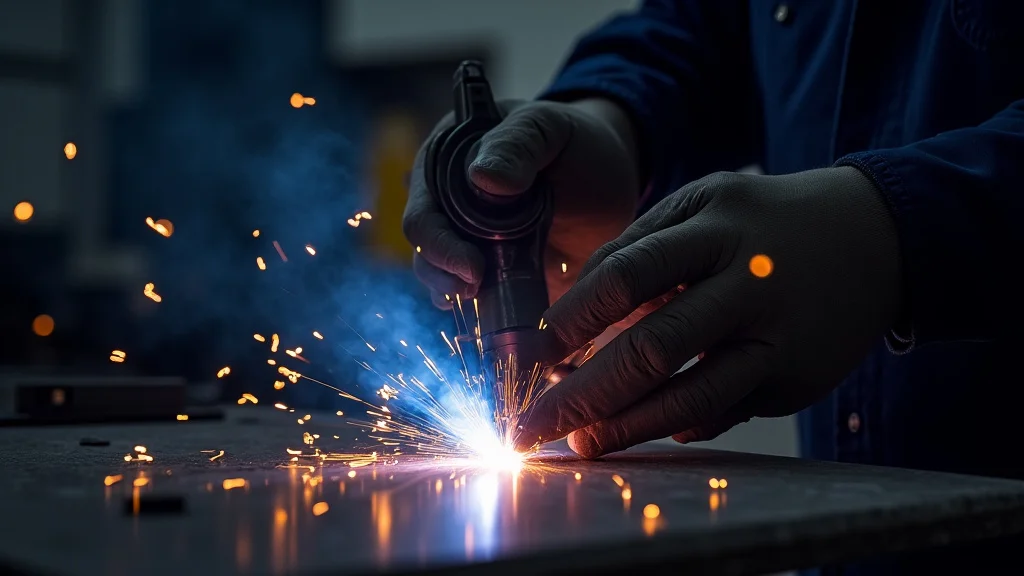
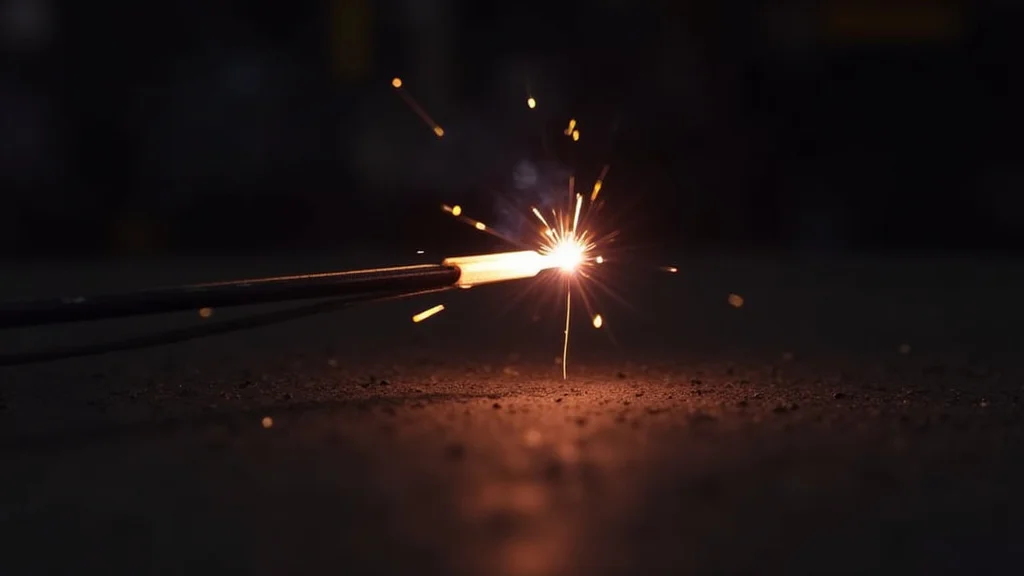
It can be frustrating when your stick welder doesn’t give you that nice, strong arc you need. For folks just starting out, figuring out why can feel tricky. But don’t worry!
Most of the time, the Stick Welder Not Producing Strong Arc? Fix is simpler than you think. We’ll walk through it step-by-step.
Get ready to learn what might be wrong and how to fix it so you can get back to welding.
Key Takeaways
- You’ll learn common reasons why a stick welder might not produce a strong arc.
- We will cover how to check and fix power supply issues.
- You’ll find out how electrode type and condition affect arc strength.
- We will explain the importance of proper ground clamp connection.
- Simple tips for adjusting amperage and polarity will be shared.
- You will learn how to identify and solve issues with welding cables.
Why Your Stick Welder Might Have a Weak Arc
A weak arc from your stick welder can make welding tough. It might sputter, not stick well, or produce poor welds. This is a common problem, especially for beginners.
There are a few main culprits behind this issue. Let’s break them down so you can find the solution.
Power Supply Problems
Is Your Welder Getting Enough Power?
Your welder needs good, steady power to create a strong arc. If the power supply is weak, the arc will be weak too. This is one of the first things to check.
Voltage Drop
A common issue is voltage drop. This can happen if your extension cord is too long or too thin. A thin cord can’t carry enough electricity.
It’s like trying to fill a large bucket with a tiny hose.
Check the gauge of your extension cord. For most 110V welders, a 12-gauge cord is a good minimum. For 220V, you might need a 10-gauge or even an 8-gauge cord for longer runs.
Always use the shortest extension cord possible.
Loose Connections
Check all power connections at the wall outlet and at the welder itself. Loose wires can cause power loss. Make sure everything is tight and secure.
A loose connection can also be a safety hazard.
Generator Issues
If you are using a generator, make sure it has enough power output. Your welder needs a certain amount of watts to run properly. Check your welder’s manual for the recommended generator size.
Some generators also have “clean power” output which is better for sensitive electronics. While welders aren’t always super sensitive, a steady power source is key. Make sure the generator is running at the correct RPMs too.
A generator running too slow won’t provide full power.
Electrode and Material Issues
Electrode Condition
The electrode, or welding rod, is what actually creates the arc and melts to form the weld. If your electrodes are old, damp, or damaged, they won’t work well.
Damp Electrodes
Many welding rods absorb moisture from the air. This moisture can interfere with the arc. You might notice a sputtering, unstable arc, or even a popping sound.
It can also lead to porosity in your welds.
Most manufacturers recommend storing electrodes in a dry place. For some types, like 6010 or 6011, a little moisture isn’t as critical. But for others, like 7018, it’s very important to keep them dry.
If you suspect your electrodes are damp, you can often “re-condition” them in a rod oven. This bakes out the moisture. Follow the manufacturer’s instructions for baking your specific type of rod.
Damaged Electrodes
Check your electrodes for damage. If the coating is chipped or flaking off significantly, the arc might be unstable. You might also have trouble starting the arc.
Base Metal Condition
The metal you are welding on also plays a role. If the surface is dirty, oily, rusty, or painted, it can cause problems. These contaminants can interfere with the arc and lead to a weak or inconsistent weld.
Always clean the metal thoroughly before welding. Use a wire brush, grinder, or degreaser to remove any dirt, rust, oil, or paint. A clean surface helps ensure a good electrical connection for the arc.
Ground Clamp Connection
The Importance of a Good Ground
The ground clamp is essential for completing the electrical circuit. A strong arc needs a solid connection from the welding machine to the workpiece.
Loose or Dirty Ground Clamp
If your ground clamp is loose, dirty, or not making good contact with the metal, the circuit is weak. This will result in a weak arc. Imagine trying to get water to flow through a kinked hose.
Make sure the clamp is clean and tight against the metal. Remove any paint, rust, or dirt from the contact point. Clamp it to a thick part of the metal if possible, close to where you’ll be welding.
Avoid clamping onto thin or painted pieces.
Incorrect Ground Clamp Placement
Sometimes, where you place the ground clamp matters. If it’s too far from the welding area, the electrical resistance in the metal can be higher, leading to a weaker arc. Try to place it as close as you can to your weld.
Amperage and Polarity Settings
Amperage Too Low
Amperage is the amount of electrical current flowing through the arc. If your amperage setting is too low for the electrode you are using, the arc will be weak and may even extinguish easily.
Each electrode type and diameter has a recommended amperage range. This information is usually printed on the electrode package or available from the manufacturer. Always check these recommendations.
If your arc is weak, try increasing the amperage slightly. Make small adjustments and see how the arc changes. You’re looking for a smooth, consistent arc that melts the electrode at a good rate.
Incorrect Polarity
Polarity refers to the direction the current flows. Stick welders can usually be set for DC (Direct Current) or AC (Alternating Current). DC can be further divided into DC electrode positive (DCEP) or DC electrode negative (DCEN).
The type of electrode you use will determine the correct polarity. Most common electrodes have a recommended polarity. Using the wrong polarity can result in a weak arc, poor penetration, and an unstable welding puddle.
For example, 6010 and 6011 electrodes typically run on DCEN (electrode negative). 7018 electrodes often run best on DCEP (electrode positive). AC is used with some specific types of electrodes or for certain applications.
Always check the electrode packaging for the correct polarity setting. If you’re unsure, consult your welder’s manual or the electrode manufacturer’s data sheet.
Welding Cable Issues
Damaged Cables
Your welding cables carry the electricity from the welder to the electrode holder and the ground clamp. If these cables are damaged, the current flow can be interrupted, leading to a weak arc.
Inspect your cables regularly for cuts, nicks, abrasions, or melted spots. Damaged insulation can expose the wires inside, creating a safety hazard and reducing efficiency.
Cable Length and Size
Similar to extension cords, long or undersized welding cables can cause voltage drop. If your welding cables are very long, they can reduce the amperage delivered to the arc. Ensure your cables are of the proper gauge for your welder’s amperage output and the length you are using.
It’s generally better to have shorter, thicker welding cables than long, thin ones. If you need to extend your reach, consider using welding cable extensions or moving your welder closer to the work.
Loose Connections at the Welder
The welding cables connect to the welder at specific terminals. Make sure these connections are clean and tight. Loose connections here can prevent full power from reaching the cables.
Frequently Asked Questions
Question: What is the most common reason for a weak stick welding arc?
Answer: The most common reasons include a loose or dirty ground clamp connection, incorrect amperage settings, or using damp or wrong types of welding electrodes.
Question: Can a bad extension cord cause a weak arc?
Answer: Yes, a long or undersized extension cord can cause voltage drop, leading to insufficient power reaching the welder and resulting in a weak arc.
Question: How do I know if my welding rods are too old or damp?
Answer: Damp rods often sputter, pop, and create an unstable arc. Old rods might have a coating that is flaking off badly or show signs of corrosion. They might also be hard to strike an arc with.
Question: What does “polarity” mean in stick welding?
Answer: Polarity refers to the direction of electrical current flow. It determines whether the electrode is positive or negative relative to the workpiece, and it’s crucial for getting the correct arc characteristics for the type of electrode you’re using.
Question: How can I improve my ground connection?
Answer: Ensure your ground clamp is clean, tight, and makes good contact with a clean section of the base metal. Clamp it as close to the weld area as possible for the best results.
Final Thoughts
When your stick welder isn’t giving you a strong arc, don’t get discouraged. Usually, the fix is straightforward. Check your power source and connections first.
Then, look at your welding rods and the metal you’re working on. Make sure your ground clamp is solid. Adjusting amperage and polarity based on your electrode type is also key.
Finally, inspect your welding cables for any damage or loose parts. With these simple checks, you’ll likely find the reason for your weak arc and get back to making good welds.