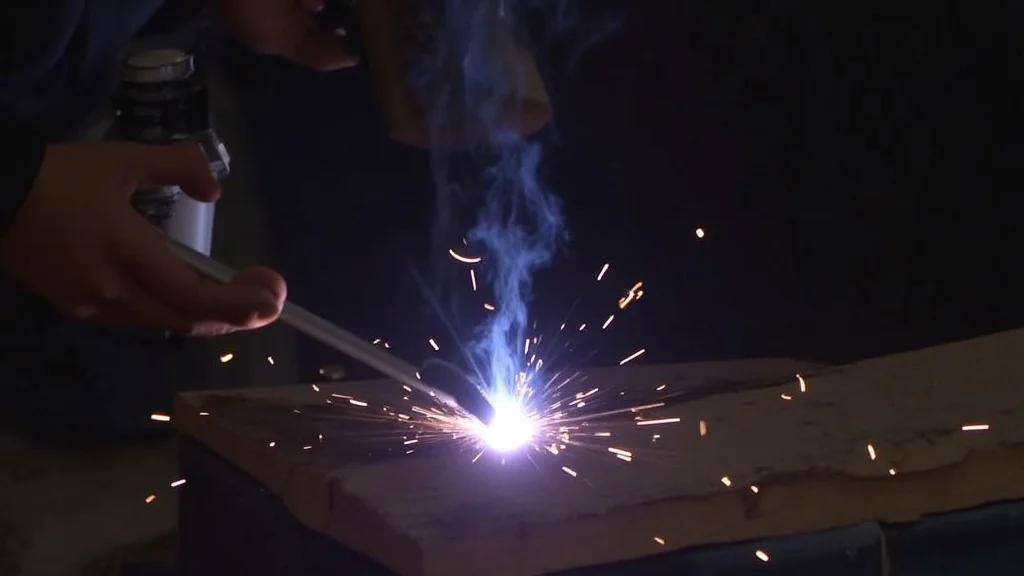
If you’re new to TIG welding, seeing an uneven arc can be confusing and frustrating. It looks jumpy or wobbly instead of smooth. Many beginners wonder why this happens and how to fix it.
Don’t worry! It’s a common issue, and we’ll show you simple steps to get that nice, steady arc. We’ll go through the common causes and how to fix them so you can weld with confidence.
Key Takeaways
- You’ll learn why a TIG welder’s arc might become uneven.
- We will explain common causes like contaminated tungsten or incorrect gas flow.
- You’ll get clear, step-by-step instructions to troubleshoot and fix these problems.
- Discover how to prepare your tungsten properly for a stable arc.
- Understand the role of correct amperage and arc length in achieving a smooth weld.
- Learn about common mistakes beginners make and how to avoid them.
Why Does a TIG Welder Arc Become Uneven?
A steady, focused TIG arc is the goal for clean, strong welds. When it becomes uneven, it’s like trying to draw with a shaky hand. This can lead to a messy bead, poor penetration, and weak joints.
For beginners, it’s often one of the first big challenges they face. They might be doing everything right, or so they think, but the arc just won’t behave. This can be discouraging, making you question your skills before you’ve even really started.
But the good news is that most reasons for an uneven arc are pretty straightforward to fix. We just need to find the cause.
Common Causes of an Uneven TIG Arc
There are several common culprits behind a TIG welder’s uneven arc. These range from simple setup errors to issues with your consumables. Let’s break down the most frequent problems and how they affect your weld.
1. Contaminated or Incorrectly Shaped Tungsten Electrode
Your tungsten electrode is the heart of your TIG arc. If it’s dirty, melted, or shaped wrong, your arc will suffer. Tungsten is a special metal that doesn’t melt like filler metal.
It creates the arc by carrying the electricity to the workpiece.
Dirt and Contamination
If your tungsten touches the filler metal or the weld puddle, it picks up contaminants. This can also happen if you accidentally touch it to the metal you’re welding. When this happens, the tip of the tungsten can get dirty or even melt a bit.
A dirty tip can’t maintain a stable arc. It might sputter or deflect. Think of it like trying to light a wet match – it won’t burn cleanly.
Incorrect Shape
Tungsten electrodes need to be ground to a specific shape. For DC welding (like steel or stainless steel), you want a sharp point. This sharp point helps focus the arc.
If the point is too rounded or dull, the arc will spread out and become less controlled. For AC welding (like aluminum), you might grind it to a ball shape, but even then, it needs to be consistent. A poorly ground tip is a major cause of a wobbly arc.
2. Improper Gas Flow
The shielding gas (usually Argon for TIG) is critical. It protects the molten weld pool from the air. The air contains oxygen and nitrogen, which can cause weld defects like porosity (tiny holes) and make the arc unstable.
Too Little Gas
If you don’t have enough gas flowing, the shielding gas won’t cover the weld puddle properly. This can cause the arc to flicker and become uneven as it’s exposed to the air. You might also see discoloration on the metal around the weld.
The gas flows from the TIG torch through a ceramic cup. If the flow is too low, this protection isn’t strong enough.
Too Much Gas
On the flip side, too much gas flow can also be a problem. High gas pressure can create turbulence. This turbulence can agitate the shielding gas, making it harder for it to form a stable envelope around the arc.
It can actually pull contaminants into the weld area. You might hear a lot of noise from the gas flowing too strongly.
Incorrect Gas Type
While Argon is standard, using the wrong gas or a mix for the material you’re welding can affect arc stability. For most TIG applications on steel, aluminum, or stainless steel, pure Argon is ideal. Other gases might be used for specialized applications, but for beginners, sticking with Argon is best.
3. Incorrect Amperage Settings
The amperage on your TIG welder controls the heat. Setting the amperage too high or too low for the material thickness and joint type can lead to arc problems.
Amperage Too High
If your amperage is too high, you’ll create a very wide and unstable arc. The metal will melt too quickly, making it hard to control. You’ll likely see a lot of spatter, and the arc will jump around.
It’s like trying to hold a large, burning candle – it’s hard to keep steady.
Amperage Too Low
Conversely, if the amperage is too low, you won’t have enough heat to create a stable arc. The arc will be weak, thin, and might struggle to even get started or maintain itself. You’ll have trouble melting the base metal and adding filler, and the arc will feel jumpy.
4. Incorrect Arc Length
The distance between the tungsten electrode tip and the workpiece is called the arc length. This is a critical factor in arc stability and weld quality.
Arc Length Too Long
When you hold the arc too far away from the metal, it becomes unstable. The arc has to travel a longer distance, making it more susceptible to interference from air currents or imperfections. It will spread out, become wobbly, and lead to a wide, flat bead with poor penetration.
It’s also harder to control filler metal at this distance.
Arc Length Too Short
Holding the tungsten too close to the metal can also cause problems. If it’s too close, you risk touching the tungsten to the workpiece. This contaminates the tungsten and can create a short circuit.
The arc might become erratic, and you could end up with a small, focused but potentially unstable arc that’s hard to manage.
5. Problems with the TIG Torch and Cables
Sometimes, the issue isn’t with your settings or consumables, but with the equipment itself.
Damaged Torch Cable
A worn or damaged torch cable can lead to inconsistent power delivery to the tungsten. This can manifest as an uneven arc, sputtering, or even complete loss of arc. Check your cable for any cuts, kinks, or signs of wear.
Loose Connections
Ensure all connections are tight. This includes the connection from the welder to the torch, the ground clamp connection, and the gas hose connection. Loose connections create resistance and can lead to inconsistent power, affecting the arc.
Dirty or Damaged Torch Body/Collet
The collet holds the tungsten electrode. If it’s dirty or damaged, it can affect how well the tungsten is held and how power is delivered. The torch body itself should also be clean.
Debris inside the torch head can disrupt gas flow or interfere with the electrode.
6. Material Contamination
The material you’re welding can also contribute to an uneven arc if it’s not properly prepared.
Oil, Grease, or Rust
If the metal surface is dirty, oily, or rusty, it won’t weld cleanly. These contaminants will burn off when you start welding, but they can cause the arc to sputter and become uneven. They can also get into the weld pool, causing defects.
Always clean your metal thoroughly before welding.
7. Electrical Interference
While less common for beginners, strong electrical interference from other equipment nearby can sometimes affect a TIG arc. This is usually only an issue in industrial settings with lots of machinery.
How to Fix an Uneven TIG Welder Arc: Step-by-Step
Now that we know the common causes, let’s walk through how to fix them. Following these steps will help you get that smooth, consistent arc you’re looking for.
Step 1: Inspect and Prepare Your Tungsten Electrode
This is usually the first and most important step.
- Remove the tungsten: Carefully take the tungsten electrode out of your TIG torch collet.
- Check for contamination: Look at the tip of the tungsten. Is it discolored, melted, or rounded? If it looks dirty or has a ball on the end (unless you’re doing AC aluminum and want a ball), it needs to be addressed.
- Grind a new point: For DC welding (steel, stainless steel), use a dedicated tungsten grinder (never use a grinder for other metals, as this contaminates it). Grind the tungsten to a sharp point. Aim for a long, tapering point rather than a stubby one. This helps focus the arc.
- Clean the collet and torch: While the tungsten is out, clean the collet and the inside of the torch body.
- Reinsert the tungsten: Put the freshly ground tungsten back into the collet. Ensure it’s seated properly.
Step 2: Verify Your Shielding Gas Settings
Proper gas flow is essential for arc stability and weld quality.
- Check gas cylinder valve: Make sure the Argon cylinder valve is fully open.
- Use a flowmeter: Set your flowmeter to the recommended setting. For most TIG applications, this is between 15-25 cubic feet per hour (CFH), or 7-12 liters per minute (LPM). The exact setting can depend on your torch cup size and welding environment.
- Perform a sniff test: With the gas flowing, hold your hand about 6-8 inches away from the torch cup. You should feel a steady flow of gas, not a turbulent blast or a weak puff.
- Check for leaks: Listen for any hissing sounds that might indicate a gas leak in your hoses or connections.
Step 3: Set the Correct Amperage
The right heat setting is crucial for a stable arc.
- Consult charts: Refer to welding charts for recommended amperage settings based on the material type and thickness you are welding.
- Start conservatively: If unsure, start at the lower end of the recommended range and gradually increase it until you achieve a good arc.
- Observe the arc: A good arc will be steady and focused. If it’s too wide and jumpy, your amperage might be too high. If it’s weak and thin, it might be too low.
Step 4: Maintain the Correct Arc Length
This takes practice but is vital for a good weld.
- Aim for consistency: Try to keep the arc length as consistent as possible throughout the weld.
- General rule: For most TIG welding, the arc length should be about the same as the diameter of your tungsten electrode. For example, if you’re using a 3/32-inch tungsten, aim for an arc length of about 3/32 inch.
- Visual cues: A consistent arc length will produce a focused arc and a nice, consistent weld puddle.
Step 5: Clean Your Workpiece
Don’t skip this step!
- Remove contaminants: Use a stainless steel wire brush (dedicated for welding) or degreaser to thoroughly clean the metal surface.
- Ensure it’s dry: Make sure the metal is completely dry before you start welding.
Step 6: Check Your Torch and Cables
Ensure your equipment is in good working order.
- Inspect the torch cable: Look for any damage, kinks, or frayed wires.
- Tighten all connections: Make sure the ground clamp is securely attached to the workpiece, and the torch connection to the welder is tight.
- Check the torch body and collet: Ensure they are clean and free from debris.
Step 7: Practice and Observe
The more you weld, the better you’ll get at recognizing and correcting arc issues.
- Make test welds: Practice on scrap material to get a feel for the arc and settings.
- Watch the puddle: Pay close attention to how the weld puddle forms and behaves. This will give you clues about whether your arc is stable.
Troubleshooting Table
Here’s a quick table to help you pinpoint problems and their solutions:
| Symptom | Possible Cause | Solution |
|---|---|---|
| Arc is jumpy/wobbly | Contaminated or dull tungsten | Grind a sharp point on clean tungsten. |
| Arc is sputtering | Low gas flow, dirty metal, or contaminated tungsten | Increase gas flow, clean metal, regrind tungsten. |
| Arc is too wide and uncontrollable | Amperage too high, arc length too long | Lower amperage, shorten arc length. |
| Arc is weak and thin | Amperage too low, arc length too long | Increase amperage, shorten arc length. |
| Arc is erratic with strange noises | Turbulent gas flow, loose connections | Adjust gas flow, check all connections. |
Frequently Asked Questions
Question: Why does my TIG arc sound like crackling bacon?
Answer: This sound often means your arc is unstable. It could be due to contaminated tungsten, insufficient shielding gas, or the arc length being too long. Try grinding your tungsten, checking your gas flow rate, and shortening your arc.
Question: Can I use a regular grinder to sharpen my tungsten?
Answer: No, it’s strongly advised against. Using a regular grinder can transfer unwanted metal particles onto your tungsten, which will then contaminate your weld. Use a dedicated tungsten grinder.
Question: How do I know if my shielding gas flow is too high or too low?
Answer: If it’s too low, you’ll see discoloration on the metal and potential porosity in the weld. If it’s too high, you might hear a lot of noise and see turbulence around the arc. A good indicator is a gentle flow that covers the weld area without causing disruption.
Question: My arc seems okay, but the weld beads are uneven. What’s wrong?
Answer: An uneven bead can be caused by inconsistent arc length, improper filler metal addition, or inconsistent travel speed. Even with a stable arc, maintaining a consistent distance and moving steadily is key to an even bead.
Question: Is AC welding different for arc stability than DC welding?
Answer: Yes. AC welding (for aluminum) often uses a balled or slightly rounded tungsten tip, which naturally creates a wider arc. The arc can feel softer.
DC welding (for steel and stainless) uses a sharp point for a focused arc. Both require proper settings and technique for stability, but the visual and feel of the arc differ.
Final Thoughts
Getting a stable TIG arc is key to good welding. Remember to keep your tungsten sharp and clean, use the right amount of shielding gas, and practice maintaining a consistent arc length. Checking your settings and ensuring your equipment is in good shape will also make a big difference.
With a little attention to these details, you’ll be welding smooth, clean beads in no time. Keep practicing, and you’ll master the TIG arc.